Pakistan's Music Scene — From Nusrat Fateh Ali Khan to Coke Studio, a Journey Through the Nation's Soul
KARACHI — Pakistan's music scene is a story of extraordinary richness and resilience — a tradition that spans centuries, from the mystical qawwali of Sufi shrines to the electronically-infused pop of contemporary Karachi. The country has produced some of the most globally influential musicians of the 20th and 21st centuries, and its music continues to evolve in ways that reflect the dynamism and complexity of Pakistani society itself.
The Legacy of the Maestro — Nusrat Fateh Ali Khan
No conversation about Pakistani music can begin without acknowledging Nusrat Fateh Ali Khan, the qawwali singer who became a global phenomenon. With his extraordinary vocal range and ability to build devotional songs into transcendent crescendos of spiritual ecstasy, Nusrat introduced the world to qawwali — a 700-year-old Sufi devotional music tradition. His collaborations with Western artists like Eddie Vedder, Peter Gabriel, and Jeff Buckley created some of the most memorable cross-cultural musical moments of the 1990s.
Nusrat's legacy continues to inspire new generations. In October 2024, the British Council, Saiyna Bashir Studios, and Real World Records held a celebration of the legendary singer's life and work in Islamabad, marking the release of his lost album 'Chain of Light' — previously unreleased recordings from 1990 that were discovered and restored. The event, attended by dignitaries including British High Commissioner Jane Marriott, demonstrated that Nusrat's music remains as vital and powerful as ever, decades after his passing.
His influence extends far beyond traditional qawwali. Pakistani rock bands cite him as inspiration. Pop singers study his techniques. Musicians around the world sample his recordings. Nusrat Fateh Ali Khan is not just a musician — he is a cultural institution, a symbol of Pakistan's spiritual and artistic depth that continues to resonate globally.
The Golden Age of Pakistani Pop
The 1990s and early 2000s were a golden era for Pakistani pop music. Artists like Nazia Hassan — whose 1980 breakthrough 'Aap Jaisa Koi' made her a global star at age 15 — paved the way for a vibrant pop scene. Vital Signs, with their anthem 'Dil Dil Pakistan', became the country's most iconic band, creating music that transcended generational and cultural divides. Junoon, led by Salman Ahmad and with lyrics by poet Sabir Zafar, pioneered Pakistani rock, blending traditional Sufi themes with hard rock guitar to create what they called 'Sufi rock'. Their anthem 'Sayonee' remains one of the most beloved songs in Pakistani history.
Other iconic acts of the era include: Strings, the soft-rock duo that produced timeless ballads like 'Duur' and 'Sajni'; Awaz, who addressed social issues through their music; the pop-rock band Fuzön, whose video for 'Meri Teri' became one of the most-watched Pakistani music videos of its time; the rock band Entity Paradigm, which pioneered a new wave of Pakistani rock; and solo artists like Hadiqa Kiyani, whose powerful vocals made her a household name, and Ali Zafar, who crossed over into film and became a Bollywood star.
Coke Studio — Reinventing Pakistani Music for the Digital Age
The launch of Coke Studio in 2008 transformed the Pakistani music landscape. The television series, which brings together musicians from different genres and regions to collaborate on original productions, became an unprecedented cultural phenomenon. Under the direction of producers like Rohail Hyatt, Strings, and now Zohaib Zain and Abdullah Siddiqui, Coke Studio has showcased the incredible diversity of Pakistani music — from classical ragas and folk traditions to contemporary pop, rock, and electronic music.
Coke Studio has done more than any other platform to revive interest in Pakistan's folk and classical music traditions. It has introduced younger audiences to the richness of Punjabi, Sindhi, Pashtun, Balochi, and Saraiki musical heritage, often by pairing veteran folk musicians with young pop artists. The platform has also been instrumental in launching the careers of some of Pakistan's most prominent contemporary musicians, including Atif Aslam, who was introduced to a massive audience through his Coke Studio performances.
In 2025, Coke Studio's lineup of artists continued to generate excitement, reflecting the platform's ongoing relevance in an era of fragmented media consumption. Atif Aslam's rendition of a Nusrat Fateh Ali Khan hamd in Coke Studio Season 12 demonstrated how the platform continues to bridge traditional and contemporary Pakistani music.
Contemporary Music Scene — Genres and Movements
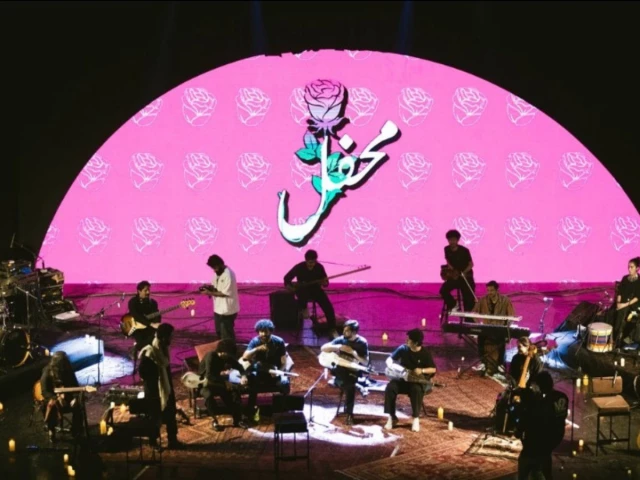
Pakistan's contemporary music scene is diverse and dynamic. The year 2025 saw a mix of nu-metal revivals and electronic experiments. Rock music remains vibrant, with bands like KARMA performing in cities like Lahore and Rawalpindi, while newer genres like hip-hop and rap have exploded in popularity, driven by young artists in Karachi and Lahore who use music to express the experiences of urban Pakistani youth.
The underground music scene in major cities is thriving, with independent artists using social media and streaming platforms to reach audiences without traditional label support. Platforms like Patari and Saavan, along with international streaming services like Spotify (which launched in Pakistan in 2021), have made Pakistani music more accessible than ever, both domestically and globally.
Electronic music has also found a foothold, with producers blending traditional Pakistani instruments and melodies with electronic beats to create a distinctive Pakistani electronic sound. The fusion of genres — rock with folk, pop with classical, hip-hop with traditional poetry — is a defining characteristic of the contemporary scene.
Regional and Folk Traditions
Beyond the commercial music industry, Pakistan's regional and folk music traditions remain vibrant and essential. Each province has its distinct musical heritage: the passionate Sindhi kafi, performed by legendary singers like Abida Parveen; the robust Pashtun tappa and charbetta; the soulful Balochi folk songs accompanied by the sorud and benju; the celebratory Punjabi bhangra and the haunting melodies of the Punjabi tappa; and the rich musical traditions of Gilgit-Baltistan and the northern areas, including the epic poetry sung to the rubab.
These traditions are kept alive by dedicated practitioners and increasingly by younger musicians who incorporate folk elements into contemporary compositions. Music festivals like the Lok Virsa Folk Festival and the Sindh Festival provide platforms for folk musicians, while cultural organizations work to document and preserve these traditions for future generations.
The Film Music Revival
The revival of Pakistan's film industry — often called the 'New Wave' of Pakistani cinema — has been accompanied by a renaissance in film music. Films like 'The Legend of Maula Jatt' (2022) set new standards for film scoring and soundtrack production, with songs that became cultural touchstones. The integration of music into film storytelling has become more sophisticated, with composers creating scores that compete with international standards.
Challenges and Resilience
Despite its richness, Pakistan's music scene faces significant challenges. Economic pressures make it difficult for musicians to sustain careers through music alone. The lack of dedicated music venues in most cities limits performance opportunities. Censorship and social conservatism sometimes restrict artistic expression, particularly for musicians who address political or social themes. The industry has also struggled with the transition to digital distribution, with piracy and inadequate royalty structures limiting revenue.
Yet Pakistani musicians have shown remarkable resilience. The rise of digital platforms, the support of brands like Coca-Cola through Coke Studio and Pepsi through Battle of the Bands, and the growing international interest in Pakistani music are creating new opportunities. The diaspora — Pakistani communities in the UK, US, Canada, and the Gulf — provides both an audience and a source of creative cross-pollination.
Conclusion
Pakistan's music scene is a testament to the country's cultural vitality. From the transcendent qawwali of Nusrat Fateh Ali Khan to the genre-bending experiments of today's young artists, Pakistani music continues to evolve while staying rooted in traditions that go back centuries. The music reflects the contradictions of Pakistan itself — ancient and modern, spiritual and secular, local and global. It is a scene that has faced immense challenges but continues to produce art of extraordinary beauty and power, proving that in Pakistan, as elsewhere, music is not just entertainment — it is an essential expression of the human spirit.