Cambridge A-Level Maths Paper Leaked — Third Year in a Row
The Paper Was Already Out There — And 25,000 Students Paid the Price
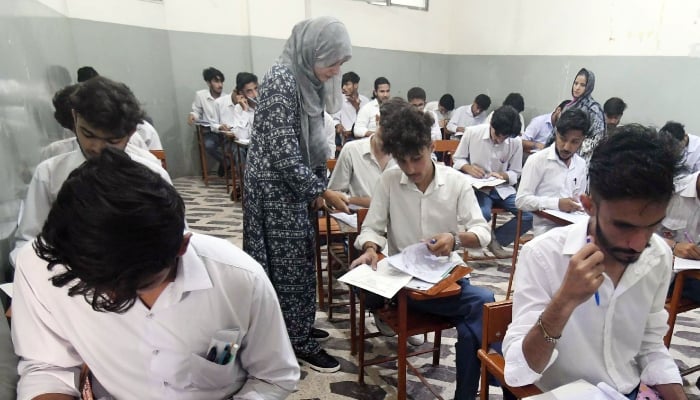
On the morning of April 29, 2026, thousands of Pakistani students woke up and did what students do on exam day — reviewed their notes, went through formulas one more time, ate something, and tried to calm their nerves. Many had been preparing for the AS Level Pure Mathematics Paper 1 for months. Their families had spent tens of thousands of rupees on tuition, on exam registration, on Cambridge fees that stretch household budgets to their limits. This was supposed to be the day all of that preparation paid off.
By the time those students walked into their examination halls, the paper they were about to sit had already been circulating on Reddit and WhatsApp for hours. Both the unsolved version and, in some cases, a pre-solved version were being shared freely across platforms. Some reports indicate the paper first appeared online as early as Tuesday night — the evening before the exam. Others say it was widely available at least six hours before the afternoon session began. Either way, the damage was done before the first answer booklet was opened.
Approximately 25,000 students across Pakistan were registered to sit this paper. For every one of those students, and for the families who sacrificed financially to give them access to the Cambridge qualification they were hoping would open doors, April 29, 2026 was the day a system they trusted failed them — again. Not for the first time. Not even for the second time. For the third consecutive year, Cambridge examination papers have been compromised in Pakistan. Three years running. The same channel. The same country. The same broken promise of security.
How the Leak Happened — What We Know So Far
The trail of how the paper got out begins, based on available reports, with a Reddit account operating under the username "Strict_Paper_6341" — an account that appears to have been created specifically for the purpose of distributing the paper rather than being the account of a regular user who stumbled into something questionable. The paper spread from Reddit into WhatsApp groups with the speed that digital information travels when people are actively looking for it and actively sharing it.
What makes the commercial dimension of this leak particularly disturbing is the reported evidence that the paper was being sold in paid messaging groups even before it became freely available. According to reports, some individuals were charging approximately Rs 40,000 per paper — a figure that is staggering when you consider that this is being layered on top of tuition fees, school fees, and Cambridge exam registration costs that already run to tens of thousands of rupees per subject for the families trying to access this qualification system.
Someone, somewhere in the chain between the Cambridge examination system and the examination halls in Pakistan, had access to the paper before it should have been accessible. Whether that access came through a physical security breach at a printing or storage facility, through a digital compromise of Cambridge's paper distribution systems, or through an individual with legitimate access to pre-exam materials who chose to monetise that access is the central question that Cambridge's investigation needs to answer. The how matters enormously — not just for accountability in this specific case but for preventing the same thing from happening a fourth time.
The situation became even more alarming when an unidentified person on social media publicly claimed responsibility for the leak and went a step further — threatening to release additional papers from the ongoing June 2026 exam series if certain changes were not made to the system. The June 2026 series runs from April 23 all the way through to June 9, meaning that at the time of that threat, weeks of examinations were still ahead. Thousands more students were still scheduled to sit papers that might already have been compromised.
That threat — whether credible or not — forced Cambridge, Pakistani school administrations, and the families of registered candidates into a state of uncertainty about every remaining paper in the series that is both deeply unfair and, on the evidence of what had already happened, not entirely without basis.
Cambridge's Response — Confirmation and Questions
Cambridge International Education's initial response to reports of the leak was cautious — the organisation said it was aware of the reports and was investigating. Within 24 hours, that caution gave way to confirmation. Cambridge issued a statement acknowledging that AS Level Mathematics Paper 12 had been shared prematurely against its regulations — an official admission that the breach was real and not a rumour or a misunderstanding.
The statement said Cambridge was working to understand the full extent of the leak and determine next steps. It assured students that its top priority was ensuring they were not disadvantaged by the incident. It urged candidates to continue preparing for and sitting their upcoming exams.
Those assurances, however well-intentioned, land differently when you are a student whose exam has been compromised, whose university application timeline may be affected by whatever remedial action Cambridge eventually decides to take, or whose family has spent money they could not really afford on an examination system that has now failed to protect the integrity of its papers three years in a row. Being told that your welfare is the top priority is less reassuring when the organisation saying it has failed three consecutive times to prevent the same type of breach.
The specific questions that Cambridge has not yet answered publicly — and that the Pakistani students, families, and schools affected by this breach deserve clear answers to — are the ones that matter most. How did this paper leave the secure chain of custody that should have protected it? At what point in the distribution process did the breach occur? Was it a physical breach in Pakistan or a digital breach upstream? What specific security changes have been made since the 2024 and 2025 breaches, and why were those changes insufficient to prevent a third occurrence? What will happen to the June 2026 series going forward? And what exactly will Cambridge do for the 25,000 students whose exam has been compromised?
Answering those questions with specificity and transparency — not in private communications to exam centres but publicly, in a way that the affected families can access and evaluate — is the minimum that Cambridge owes to the students and families who trust it with their children's futures and their hard-earned money.
Three Years Running — A Pattern That Cannot Be Explained Away
The 2026 leak does not exist in isolation. It is the third chapter of a story that has been developing since 2024, and the repetition is what transforms a serious incident into a genuine institutional crisis that demands a more fundamental response than any single investigation can provide.
In 2024, Cambridge launched an investigation after an A-Level Mathematics paper was leaked in Pakistan. The investigation confirmed that the paper had been seen by a significant number of students before the exam began — a confirmation that validated what affected students and families had been saying and that forced Cambridge to respond with a concrete remedial measure. The board awarded assessed marks to affected students based on their performance in other components rather than marking the leaked paper. It was a reasonable response to an extraordinary situation, and it was presented in a way that suggested Cambridge took the breach seriously and would take steps to prevent recurrence.
Those steps were apparently insufficient. In June 2025, portions of three papers were accessed before exams — AS and A Level Mathematics Paper 12, Mathematics Paper 42, and Computer Science Paper 22. Three papers in a single examination series. Cambridge offered free resits to affected students in November 2025 and, presumably, conducted another investigation into how the breach occurred and how to prevent the next one.
Those investigations and the measures that followed them were also apparently insufficient. Because in April 2026, a full paper — not a portion, not fragments, but the complete AS Level Pure Mathematics Paper 1 — was circulating on Reddit and WhatsApp before the exam began, being sold in paid groups for Rs 40,000, with someone threatening to release more papers if their demands were not met.
Three consecutive years. The same Cambridge examination series. The same country. The same basic mechanism of digital distribution through social media. If the 2024 breach was a failure, the 2025 breach was a warning that the response to 2024 was inadequate, and the 2026 breach is a clear statement that something structural and fundamental about how Cambridge secures its examination papers in Pakistan is broken in ways that cosmetic improvements and case-by-case investigations have not and cannot fix.
The Financial Reality — What Cambridge Fees Mean for Pakistani Families
To understand why the anger of Pakistani parents and students over these repeated breaches is not just understandable but entirely justified, you need to understand what accessing the Cambridge examination system actually costs and what that cost represents for the families making the sacrifice to pay it.
Cambridge International examinations are significantly more expensive than Pakistan's local board examinations. In the same school, a student on the Cambridge system pays double or triple the fees of a student on the local board — and that difference compounds across multiple subjects over multiple years of study. Beyond the school fees themselves, each Cambridge exam paper carries registration and examination fees that run to approximately Rs 50,000 per paper. For a student sitting multiple AS and A Level subjects — which is standard — those fees accumulate to sums that represent a meaningful financial commitment for most Pakistani families and a genuinely significant sacrifice for middle-class and lower-middle-class households.
Families choose the Cambridge system because they believe in what it promises. Cambridge is supposed to offer a qualification that is internationally recognised, rigorously assessed, and — critically — protected by examination security standards that Pakistan's local boards, with their own history of paper leaks and cheating scandals, do not consistently deliver. Parents who send their children through the Cambridge system are explicitly choosing to pay more because they believe they are buying something more reliable, more fair, and more credible.
Three years of consecutive paper leaks through the same channel in the same country is a direct betrayal of that belief. The families paying Cambridge's premium fees for the premium promise of secure examinations are not getting what they paid for. They are getting a system that is being exploited by criminal actors who are selling their children's examination papers for Rs 40,000 each — on top of the fees those families have already paid.
The emotional dimension of this is also real and should not be dismissed. For many Pakistani families, the Cambridge qualification is the key to their child's future — to university admissions in Pakistan and abroad, to scholarships, to the kind of opportunities that a good Cambridge result genuinely does open. The parents making enormous financial sacrifices for the Cambridge system are not doing so casually. They are investing in their children's futures with resources they have worked hard to accumulate. Seeing that investment undermined by repeated institutional failure generates the kind of anger that is entirely proportionate to the stakes involved.
What Happens to the Students Now — The Uncertainty Nobody Can Afford
Cambridge has not yet announced what specific action it will take in response to the 2026 leak, and that uncertainty is itself a significant problem for the 25,000 students affected. Based on what happened in 2024, the most likely options include awarding assessed marks based on performance in other components rather than marking the leaked paper, or offering affected students the option to resit in November 2026.
Both of these options, however reasonable they might sound in the abstract, create real and serious problems for specific groups of students whose circumstances make any delay or change to their results more than a minor inconvenience.
Students who have applied to universities with conditional offers — "we will confirm your place if you achieve X grades by the June 2026 results" — face the possibility that Cambridge's investigation and its remedial process produces results on a timeline that is incompatible with their university's confirmation deadline. If Cambridge awards assessed marks but those marks are not available until after a university's confirmation date, or if the assessment process is disputed and under review, students may lose university places they have worked years to earn through no fault of their own.
Students with visa applications tied to their examination results face similar timing vulnerabilities. International student visas for UK, US, Canadian, and Australian universities frequently require confirmed academic results within specific windows. A Cambridge investigation that delays or changes results can miss those windows in ways that affect visa eligibility and force students to reapply in a later cycle — losing a year of their academic timeline.
Scholarship applications are another category of serious consequence. Many scholarships have specific result deadlines, require minimum grade thresholds that assessed marks may or may not meet in the same way as actual examination results, and cannot simply be deferred because an examination board is processing a breach investigation. A student who was on track for a merit scholarship based on strong examination performance may find that the remedial process for the leak affects their ability to demonstrate the performance that the scholarship requires.
These are not hypothetical concerns. They are the actual situations that real students are sitting in right now — students who did nothing wrong, who prepared thoroughly, who walked into an examination hall not knowing the paper had already been circulating for hours, and who are now waiting for Cambridge to tell them what is going to happen to their future as a result of a security failure that was entirely within Cambridge's responsibility to prevent.
The Local Board Comparison — Why This Hurts More
There is a painful irony at the heart of this situation that the students and families affected by the Cambridge paper leaks feel acutely. Pakistan's local board examinations — administered by the various provincial and federal boards that serve the majority of Pakistani students — have long been criticised for exactly the problems that Cambridge is now exhibiting. Paper leaks, cheating, irregular assessment, results that do not reliably reflect genuine academic ability — these criticisms of the local board system are well documented and widely acknowledged.
Cambridge was supposed to be different. It was the system that Pakistani families turned to specifically because they wanted an alternative to the insecurities of the local board environment. They chose Cambridge for its reputation, its international recognition, and — above all — its supposed commitment to examination integrity and security standards that the local boards could not consistently match.
Three consecutive years of paper leaks have not just damaged Cambridge's reputation in Pakistan. They have collapsed the distinction between the premium system and the system it was supposed to be an alternative to. If Cambridge papers are being leaked through WhatsApp groups and sold on Reddit for Rs 40,000, the families paying Cambridge's significantly higher fees are not actually buying meaningfully more security than the local board offers. They are buying a more expensive version of the same problem.
That collapse of distinction is one of the most damaging long-term consequences of the repeated breaches — not just for Cambridge's commercial position in Pakistan, but for the students who need a credible, internationally recognised qualification and who are running out of options that they can genuinely trust to deliver one.
What Cambridge Must Do — The Response This Situation Requires
The remedial response to the 2026 breach needs to go considerably further than the responses to the 2024 and 2025 breaches did — because those responses, whatever their individual merits, demonstrably did not prevent a third consecutive breach. More of the same approach will produce more of the same outcome.
The first thing Cambridge must do is commission and publish a genuinely independent investigation into how examination papers are being accessed before they reach examination halls in Pakistan. Not an internal review. Not a private investigation whose findings are communicated only to exam centres in regulatory language. A thorough, independently conducted investigation whose findings are published in a form that the affected families can read and evaluate — because those families have paid for the system that failed, and they have the right to understand why it failed and what is being done to prevent it failing again.
The investigation needs to trace the paper's journey from the moment it was finalised to the moment it appeared on Reddit — identifying every point at which it was stored, every person who had access to it, every system through which it passed, and where the specific failure occurred. Without that specific understanding, any security improvements are essentially guesswork about which part of a process needs fixing.
Cambridge also needs to be transparent about what security measures were implemented after the 2024 and 2025 breaches and why those measures were insufficient. If the organisation imposed new protocols and those protocols failed, the public needs to understand what failed and why. If the protocols were not fully implemented, the reasons for that gap need to be examined. If the breaches suggest a category of vulnerability that the existing security model does not adequately address, Cambridge needs to acknowledge that and explain what a more adequate model would look like.
For the affected students, Cambridge needs to develop a remedial process that specifically protects those with time-sensitive university offers, visa applications, and scholarship opportunities — not a one-size-fits-all approach that treats assessed marks as an adequate substitute for actual examination results in every context, but a differentiated response that acknowledges the specific circumstances in which the standard remedial options create real harm for real students.
The Pakistani Government's Responsibility
While Cambridge bears primary responsibility for the security of its own examination system, the Pakistani government and its relevant regulatory bodies are not without responsibility in this situation. Pakistan's Higher Education Commission, the Federal Board of Intermediate and Secondary Education, and the other institutions that regulate the examination environment in Pakistan have roles to play in how Cambridge's examinations are administered within the country — and those roles have not been discharged adequately if three consecutive annual breaches can occur through essentially the same mechanism.
The Rs 40,000-per-paper market for leaked Cambridge examination content is a criminal operation running openly enough that it was reported widely within hours of the breach becoming known. Law enforcement has a role in investigating and prosecuting the individuals who created and profited from that market — not just as a matter of justice for the affected students but as a deterrent that changes the risk calculation for anyone considering doing the same thing in future examination series.
The coordination between Cambridge and Pakistani authorities on examination security — how papers are transported, stored, and managed within Pakistan before examination day — is another area where clearer standards, better enforcement, and genuine accountability for failures could contribute to preventing the next breach even if the ultimate security responsibility lies with Cambridge's global systems.
Final Thoughts — Students Deserve Better Than This
Twenty-five thousand Pakistani students walked into examination halls on April 29, 2026, to sit a paper that had already been out in the world for hours. They had prepared honestly. Their families had sacrificed financially. They had done everything right. And they were betrayed by a system that was supposed to protect the integrity of the process they had committed to — not once, not twice, but for the third consecutive year.
The anger of Pakistani families is proportionate, justified, and should be heard by Cambridge not as public relations noise to be managed but as legitimate feedback from paying customers who have received a fundamentally defective product three years running. The students caught in this situation did not choose to be there. They chose a system they trusted, and the system let them down.
Cambridge International Education has built a global reputation on the premise that it delivers something more reliable, more secure, and more credible than the alternatives. In Pakistan, over the past three years, it has systematically failed to live up to that premise in the most fundamental possible way — by failing to protect the papers that its entire credibility rests on keeping secure.
The students waiting to find out what happens to their results, their university offers, their scholarships, and their futures deserve a response that is proportionate to the scale of what they have lost — not just assessed marks and resit options, but a genuine accounting of how this happened, a credible commitment to ensuring it does not happen again, and the kind of institutional change that would make that commitment believable after three years of demonstrated failure.
They deserve better than this. And Cambridge needs to do better than it has.