
The Rise of Gwadar Port — Pakistan's Gateway to a New Era of Regional Trade and Logistics
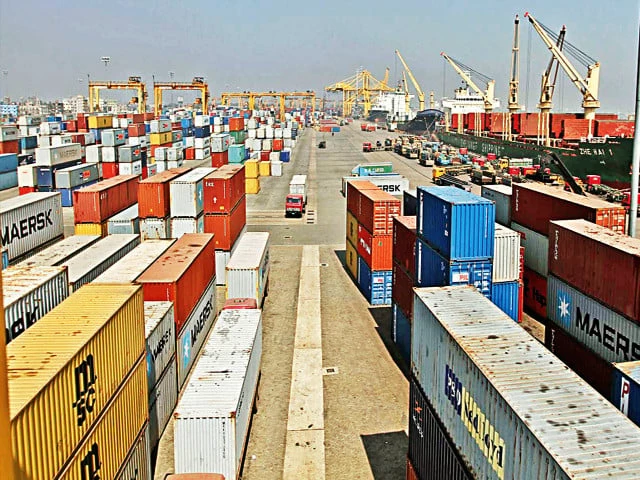
GWADAR — On the rocky coastline of Balochistan, a transformation is underway. Gwadar Port, once a sleepy fishing village with grand ambitions, is emerging as an active participant in global maritime trade. In recent months, the port has witnessed a steady rise in commercial shipping activity, with cargo vessels arriving with increasing frequency, transshipment operations gaining momentum, and the surrounding free zone beginning to attract industrial investment. This is not merely a development project coming to life — it is a strategic shift in Pakistan's economic geography and a potential game-changer for regional trade connectivity.
A Port Transformed
Gwadar Port's journey from concept to reality has been long and often frustratingly slow. The deep-sea port, completed in phases with Chinese investment under the China-Pakistan Economic Corridor, has faced infrastructure gaps, connectivity challenges, and the inherent difficulty of developing a major port from scratch in one of Pakistan's most remote regions. For years, the port operated below capacity, with vessel calls few and far between, leading critics to question whether the ambitious project would ever fulfill its promise.
In 2026, the picture is changing. The special cargo vessel MV H.M.O Leader successfully berthed at Gwadar and handled 35 units of transshipment cargo, with officials describing the smooth operation as evidence of improving port efficiency and expanding operational readiness. Another major vessel, MV Riva Glory, arrived carrying 14,629 metric tons of commercial cargo. Gwadar Port Authority Chairman Noor-ul-Haq Baloch reported that at least five additional vessels were expected in April 2026 alone, reflecting growing international confidence in the port's capabilities.
In total, four transshipment ships were recorded at the port in April 2026, a marked increase from the near-negligible traffic of previous years. While these numbers remain modest by global standards — Gwadar processed approximately 8,300 TEUs in 2025, compared to millions handled by hubs like Singapore and Colombo — the trend is unmistakably upward.
Strategic Location in a Changing World
Gwadar's growing relevance cannot be understood without considering the geopolitical context. The Strait of Hormuz, one of the world's most critical maritime chokepoints, has experienced intermittent disruptions and heightened security risks amid tensions involving Iran and Western powers. Any instability in this narrow waterway, through which a significant share of global oil and container trade passes, has direct implications for international shipping costs, insurance premiums, and route planning.
In this environment, shipping companies are increasingly exploring alternative routes and ports to reduce their exposure to risk. Gwadar, positioned near key Arabian Sea shipping lanes and relatively close to the entrance of the Persian Gulf, is gradually being viewed as a potential fallback and diversification point for cargo movement. Federal Minister for Maritime Affairs Muhammad Junaid Anwar Chaudhry has noted that global shipping firms are reassessing logistics strategies due to geopolitical risks, and Gwadar is being considered as a safer transit and transshipment option. He emphasized that the shifting trade environment is not temporary but part of a broader realignment in global maritime supply chains.
Overland Corridors and Regional Connectivity
Gwadar's significance extends beyond maritime trade. The port is the southwestern anchor of the China-Pakistan Economic Corridor, which aims to create a network of roads, railways, and pipelines connecting China's western Xinjiang region to the Arabian Sea. The Gwadar-Gabd corridor, an 89-kilometer link operationalized as a primary land connection, has significantly reduced travel time to the Iranian border. Pakistan has also activated six land-based transit corridors to move cargo into Iran, clearing over 3,000 containers stuck at Karachi and Port Qasim due to Strait of Hormuz disruptions.
The Gabd-Rimdan border route has emerged as an effective multi-modal corridor for promoting trade with Iran and Central Asia. These overland connections create the potential for Gwadar to function not merely as a port but as the centerpiece of a regional logistics network connecting South Asia, the Middle East, and Central Asia — a role that would transform Pakistan's position in the global trading system.
The Free Zone and Economic Development
Alongside port operations, the Gwadar Free Zone is being developed as an industrial and logistics ecosystem. Spanning approximately 2,800 acres, the Free Zone is intended to host manufacturing industries, logistics companies, storage facilities, and export-oriented businesses. Two industries are already operational within the zone, with more expected to become active as infrastructure expands.
The Free Zone offers significant incentives for investors, including tax exemptions, free storage facilities for transshipment cargo, and streamlined regulatory processes. These incentives are designed to attract both domestic and foreign investment in industrial and logistics sectors, creating jobs particularly in Balochistan — a province that has long felt excluded from Pakistan's economic development. The economic potential of Gwadar's development for Balochistan cannot be overstated. If the port and free zone reach their full potential, they could provide employment for thousands of local residents and create economic opportunities in a region that has historically had few.
Challenges Ahead
Despite the positive developments, significant challenges remain. Gwadar's channel depth of 12.5 meters limits its ability to accommodate the largest container vessels, which require deeper drafts. The absence of a rail link connecting Gwadar to Karachi over the 650-kilometer Makran Coastal Highway presents a significant connectivity gap compared to the established infrastructure at Karachi Port and Port Qasim. No international shipping line has yet announced a scheduled, permanent route to the port, meaning that current activity is largely opportunistic or temporary.
The security situation in Balochistan also remains a concern for investors and shipping companies, though improvements have been noted in recent years. The development of supporting infrastructure — including reliable electricity, water supply, and housing for workers — continues to lag behind the pace of port development. These challenges are not insurmountable, but they require sustained investment and attention from both the government and private sector.
The government has launched a major expansion plan for Gwadar Port operations, focusing on enhancing connectivity, boosting economic activity, and attracting new shipping lines. A new ferry service between Gwadar and Gulf Cooperation Council countries is planned for both passengers and cargo. Pakistan's broader national maritime policy and CPEC strategy are driving these initiatives, with a working group formed to coordinate across port authorities, shipping lines, and regulators.
Pakistan's Broader Trade Transformation
Gwadar's emergence is part of a larger story of Pakistan's economic opening. In late 2025, Pakistan launched an outward-looking trade policy that aims to make the country one of the most open economies in the region by eliminating para-tariffs, streamlining exemptions, simplifying the tax structure, and reducing tariffs on nearly half of all tariff lines. If fully implemented, this policy could position Pakistan among the world's most ambitious tariff reformers, creating a more favorable environment for the trade and logistics sector.
Pakistan's geographic position — at the crossroads of South Asia, Central Asia, the Middle East, and China — gives it a natural advantage as a transit and logistics hub. The development of Gwadar, combined with improvements in road and rail connectivity, could allow Pakistan to capture a share of the growing transshipment and logistics market in the Indian Ocean region. The country's six operational land transit corridors to Iran and the potential for further connections to Central Asia and Afghanistan create a multi-modal logistics network that few countries in the region can match.
Conclusion
Gwadar Port in 2026 stands at a transitional moment. After years of slow development and unfulfilled promises, the port is finally beginning to show signs of meaningful activity. The rise in vessel traffic, expansion of transshipment operations, and development of the free zone represent genuine progress. The geopolitical environment — with disruptions in traditional maritime chokepoints and growing interest in alternative trade routes — is providing a tailwind that could accelerate Gwadar's development.
Yet the challenges remain formidable. Infrastructure gaps, connectivity constraints, security concerns, and the sheer scale of investment required mean that Gwadar's transformation will take years, if not decades, to fully realize. The port is not yet a competitor to Dubai or Colombo, but it is no longer merely a project on paper. As global trade patterns continue to evolve under the pressure of geopolitical tensions, climate change, and technological disruption, Gwadar's role in the wider Indian Ocean trade network is likely to expand, making it an increasingly important node in the global trading system and a transformative force for Pakistan's economy.