Islamabad Reopens Transport, Faizabad Terminal to Remain Closed
Transport Services Resume in Islamabad — But Faizabad Terminal Stays Closed
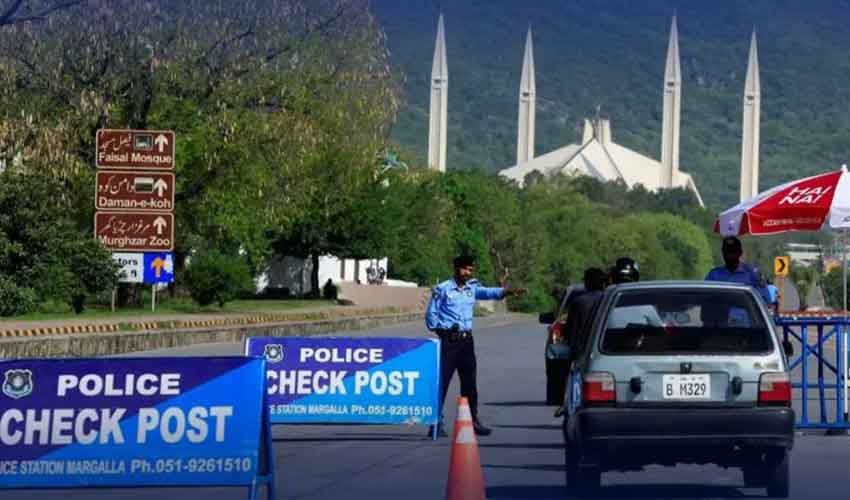
If you have been stuck or inconvenienced by the transport situation in Islamabad over the past few days, there is some good news. The district administration has officially announced that transport services have been restored across the capital, with all types of public transport and goods vehicles now permitted to enter and move through the city without restriction.
For the thousands of daily commuters, workers, students, and business owners who depend on reliable transport to keep their lives running, this announcement brings a measure of relief that is hard to overstate. When transport shuts down or gets restricted in a major city like Islamabad, the ripple effects spread quickly and widely — from people unable to get to work, to goods failing to reach markets, to patients struggling to access hospitals. The restoration of normal movement is not just a logistical matter. It touches almost every aspect of daily life in a functioning city.
There is, however, one important exception that travellers need to be aware of. The Faizabad bus terminal will remain closed until further orders. No timeline has been given for its reopening, and authorities have not yet specified what conditions need to be met before that particular facility comes back online. For anyone who regularly uses Faizabad as a departure or arrival point, alternative arrangements will need to be made until further notice.
What Was the Situation Before — Why Did Transport Stop?
To fully understand why this announcement matters, it helps to have some context about what led to the transport disruption in the first place and what the city has been dealing with during the period of restricted movement.
Islamabad has seen periods of transport disruption tied to security situations, protests, or administrative decisions that require temporary restrictions on movement through certain parts of the city. The capital's geography — with its organised sectors, major arterial roads, and key choke points like the Faizabad interchange — makes it particularly sensitive to disruptions that can quickly cascade from one area into broader citywide movement problems.
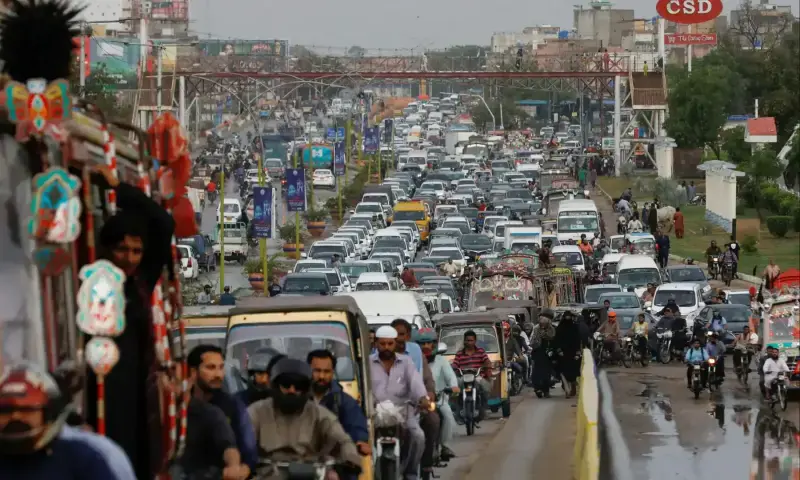
When transport gets restricted in Islamabad, the effects are felt almost immediately. The city's public transport network — which many lower and middle income residents depend on entirely for their daily commute — becomes unreliable or completely unavailable. Intercity travellers find themselves stranded or unable to reach their destinations. Goods vehicles carrying supplies to markets, shops, and storage facilities get held up, creating shortages and price pressure on essential items. The informal economy — the daily wage workers, the small vendors, the people who cannot afford even a day without income — takes some of the hardest hits.
The restoration of services, therefore, is not just a return to convenience. It is a return to economic functionality for a very large number of people whose livelihoods are directly tied to being able to move around the city and its surrounding areas.
Bus Terminals Back Open — What This Means for Travellers
Authorities confirmed that bus terminals across Islamabad have been reopened as part of the transport restoration announcement. This is a significant practical step because bus terminals are the hubs through which intercity travel flows — they are where people from Rawalpindi, Lahore, Peshawar, Karachi, and dozens of other cities and towns arrive in the capital and from where they depart.
For the intercity passenger — the student returning to university after a visit home, the worker travelling between cities for employment, the family making a long journey to visit relatives — the reopening of bus terminals means that normal travel is possible again. Booking a seat, checking in luggage, boarding on schedule, arriving at the other end — the routine mechanics of intercity travel that people take for granted when everything is functioning normally.
For goods movement, the reopening is equally important. A significant volume of commercial cargo moves through Islamabad's transport infrastructure on any given day. Supplies for markets and warehouses, construction materials, manufactured goods, agricultural produce — all of this moves in and out of the city through the terminal and transport network. Disruptions to that flow show up in shop inventories, market prices, and delivery timelines across the city and the wider region it serves.
The confirmation that all types of vehicles — both passenger transport and goods vehicles — are now permitted to enter the city without restriction is the most operationally complete version of a restoration announcement. It means the full transport ecosystem, not just one part of it, is back to normal functioning.
The Faizabad Exception — Why It Matters and Who It Affects
The one significant caveat in the otherwise positive announcement is the continued closure of the Faizabad bus terminal. Officials confirmed that Faizabad will remain shut until further orders, without providing a specific date or set of conditions for its reopening.
Faizabad is not just any bus terminal in Islamabad's transport geography. The Faizabad interchange sits at one of the most strategically important junctions in the twin cities of Islamabad and Rawalpindi. It connects major routes coming from multiple directions and serves as a key point through which a large volume of both intercity and local traffic passes. The Faizabad terminal itself is a major hub for buses and coaches serving various routes, and a significant number of travellers pass through it on any given day under normal circumstances.
The decision to keep Faizabad closed while reopening other terminals and allowing general transport movement suggests that the specific concerns or conditions that led to its closure have not yet been fully resolved, even as the broader transport situation in the city has been normalised. What those specific concerns are has not been publicly detailed by authorities — the statement simply confirmed the closure will continue until further orders.
For regular users of the Faizabad terminal, this means making alternative arrangements. Other bus terminals in Islamabad and the adjacent Rawalpindi area are operating normally, and travellers who would typically use Faizabad will need to plan their journeys through those alternative facilities until the situation at Faizabad is resolved. It is an inconvenience, particularly for people who live or work in parts of the city that are more conveniently located relative to Faizabad than to the other available terminals.
The lack of a timeline for Faizabad's reopening adds a layer of uncertainty that is frustrating for regular users and for the transport operators whose routes pass through that facility. Planning becomes harder when there is no indication of whether the closure will last another day, another week, or longer. Authorities have indicated they will issue further updates as the situation develops, but for now the message is simply — Faizabad remains closed, and no date has been given.
The Practical Impact on Daily Life in Islamabad
It is easy to discuss transport disruptions in abstract terms — services suspended, terminals closed, restrictions in place. The human reality of what those abstractions actually mean for ordinary people is worth spending a moment on, because it is the part of the story that gets lost most easily in official announcements.
Consider the daily wage worker who commutes from a peripheral area into central Islamabad every morning to reach a construction site, a shop, or an office where they work. When public transport is not running, that person either spends money they cannot really afford on a private ride, walks a distance that is not practical, or simply does not go to work and loses a day's income. For someone living close to the financial edge, a single missed day of work has real consequences for their family's immediate situation.
Consider the student with an exam or an important class who needs to get across the city at a specific time. Consider the person with a medical appointment who cannot easily reschedule. Consider the small shop owner waiting for a supply delivery that depends on goods vehicles being able to reach the city. Consider the family that planned to travel intercity and found the terminal they needed was shut without a clear alternative.
These are not edge cases. They are the everyday realities of hundreds of thousands of people whose lives run on the assumption that basic urban infrastructure — including public transport — will be available and functioning. When it is not, the disruption radiates outward from the immediate inconvenience into financial stress, missed opportunities, and complicated daily logistics that take time and energy to manage.
The restoration of services addresses all of those pain points, at least for the majority of travellers and operators. The continued closure of Faizabad continues to affect a specific and significant subset of that population until the situation there is resolved.
Goods Movement and Economic Activity
Beyond the passenger transport dimension, the confirmation that goods vehicles can now move freely in and out of Islamabad without restriction is particularly important for the city's economic functioning.
Islamabad is not only the federal capital — it is also a significant consumption centre and a transit point for goods moving between different parts of the country. The supply chains that keep the city's markets stocked, its restaurants running, its construction projects progressing, and its warehouses filled depend on trucks and goods vehicles being able to move without interruption.
Even a few days of restricted goods movement can create noticeable effects on market availability and prices. Perishable goods like vegetables, dairy products, and fresh meat are particularly sensitive because their shelf life means delays translate directly into waste and shortages. Non-perishable items accumulate backlogs that take time to clear even after the restrictions are lifted.
The full restoration of goods vehicle access to the city means those supply chains can return to normal operation. Backlogs can be cleared. Deliveries that were delayed can be rescheduled. Suppliers can resume their regular schedules. The economic cost of the disruption does not disappear immediately — catching up takes time — but the conditions for recovery are back in place.
For small business owners in particular, who typically operate without the inventory buffers that larger enterprises can maintain, the return of reliable goods movement is a direct improvement in their ability to serve customers and keep their operations running.
Monitoring and Possible Further Updates
Authorities noted that the situation will continue to be monitored and that further updates may be issued if conditions change. This kind of language in official announcements is standard and serves a legitimate purpose — it signals that the administration is not simply making an announcement and walking away, but is actively watching how things develop and is prepared to respond if something changes.
For residents and travellers, it is worth staying connected to official sources for any updates, particularly regarding the Faizabad terminal situation. Given that no timeline has been provided for its reopening, monitoring for announcements is the most reliable way to know when normal service at that facility will resume.
The broader transport restoration appears stable and not subject to imminent reversal based on the official language used. Authorities described the move as aimed at restoring normal life and ensuring smooth movement of people and goods — framing that suggests this is intended as a durable return to normalcy rather than a temporary or conditional measure.
What Passengers and Travellers Should Know Right Now
For anyone planning to travel through Islamabad or use the city's public transport network in the immediate term, a few practical points are worth keeping in mind based on the current situation.
Most bus terminals in Islamabad are back to normal operation. Travellers arriving from or departing to other cities should be able to use those facilities as usual, with normal schedules resuming. It is always worth confirming departure times and availability directly with transport operators, since schedules may need a short period to fully normalise after a disruption period.
Faizabad terminal is not yet open. Anyone who typically uses that terminal needs to make alternative arrangements through other available facilities. Checking with your transport provider about the nearest available alternative terminal and route to your destination will help avoid arriving at Faizabad and finding it closed.
Public transport within the city — local buses, metro services, and other intra-city options — should be operating normally based on the announcement that all types of transport are permitted without restriction. Again, confirming current schedules directly is always the safest approach after any period of disruption.
Goods and commercial vehicle operators have full access to the city and can resume normal delivery and transport schedules. Any backlogs created during the restriction period can now be addressed.
The Bigger Picture — Islamabad's Transport Infrastructure
This episode, like others before it, highlights some broader truths about Islamabad's transport infrastructure and how vulnerable it is to disruption when situations arise that require restrictions on movement.
The twin cities of Islamabad and Rawalpindi share a transport network that was not originally designed to handle the volume of people and vehicles it now carries. The Faizabad interchange, which sits at the junction of the two cities, is a prime example of an infrastructure point that has become critically important precisely because so much traffic flows through it — making its closure for any reason a significant disruption to a wide population.
Investment in diversifying and expanding the transport network — adding capacity, building alternative routes, and reducing the concentration of critical functions in single points that become vulnerability when closed — is the kind of long-term infrastructure thinking that can reduce the impact of future disruptions. The Metro Bus and other public transport investments in recent years have added some capacity, but the underlying pressure on the network continues to grow as the twin cities' population expands.
For now, the immediate situation has been largely resolved. Services are running. Terminals are open. Goods are moving. The city is functioning again in the way that its millions of residents need it to. The Faizabad question remains open, but it is a contained exception rather than a citywide problem.
Final Thoughts
The restoration of transport services in Islamabad is genuinely good news for the hundreds of thousands of people whose daily lives depend on being able to move around the city and connect with the rest of the country through its bus terminals and transport network.
The Faizabad terminal's continued closure is an inconvenience that affects a meaningful number of regular users, and the absence of a clear timeline for its reopening adds uncertainty that the administration should work to resolve and communicate as quickly as possible. People make plans based on available information, and the clearer and more specific that information is, the better they can manage their travel needs in the interim.
For most of Islamabad's commuters, travellers, and business operators, however, today's announcement means that life can get back to normal. And sometimes, that simple fact — that the buses are running, the terminals are open, and the city is moving again — is exactly what people most need to hear.