Pakistan's Football Story in 2026 — From Street Football to European Dreams
ISLAMABAD — While cricket remains the undisputed king of Pakistani sports, a quieter revolution is taking place on football pitches across the country. From the narrow streets of Lyari in Karachi to the mountainous valleys of Chitral, football is experiencing a grassroots resurgence that is capturing the imagination of a new generation. In 2026, with the Pakistan Football Federation united behind a vision of development, the national U-16 team making history in Europe, and the promise of a nationwide club championship, Pakistan's football story is one of hope, struggle, and the enduring power of the beautiful game.
Football in Pakistan — A History of Untapped Potential
Football has a long and rich history in Pakistan, dating back to the colonial era. The Pakistan Football Federation was founded in 1947, the same year as the country's independence. In the 1950s and 1960s, Pakistan enjoyed a golden era, winning the Asian Quadrangular Football Tournament in 1952 and 1954 and participating in the 1960 Summer Olympics qualifiers. However, decades of administrative neglect, lack of investment, and organizational dysfunction caused Pakistani football to fall far behind its regional rivals.
The PFF has been plagued by internal conflicts for years. In 2019, FIFA appointed a Normalisation Committee to run the federation after a hostile takeover of its Lahore headquarters by a rival faction. The PFF's membership was suspended in 2021 after the federation's offices were forcibly seized, and it was only in 2022 that FIFA lifted the suspension after the PFF regained control of its premises. These years of turmoil took a heavy toll on the development of the sport, leaving Pakistan's national team languishing near the bottom of the FIFA world rankings.
The Current Revival — Unity and Purpose
By 2026, the atmosphere within the Pakistan Football Federation has shifted dramatically. Following productive engagements at the FIFA Congress in Vancouver, PFF officials are projecting a new era of unity and purpose. Chief Operating Officer Shahid Khokhar has confirmed that both FIFA and the Asian Football Confederation (AFC) have stressed the importance of institutional stability, and the PFF has assured them of united stakeholder efforts behind the development of the game.
Under PFF President Syed Mohsen Gilani, the federation is pursuing an ambitious agenda. A nationwide club championship structure is being planned, extending from district-level competitions all the way to the national stage. This pyramid structure, modeled on successful football systems around the world, would provide a clear pathway for talent development and create a vibrant competitive ecosystem for clubs across the country.
International support is also flowing in. Countries including Canada, Saudi Arabia, and China have pledged technical and developmental assistance to Pakistan football. These partnerships could bring coaching expertise, infrastructure investment, and exposure opportunities that have long been lacking.
A Historic Step — The U-16 Team in Europe
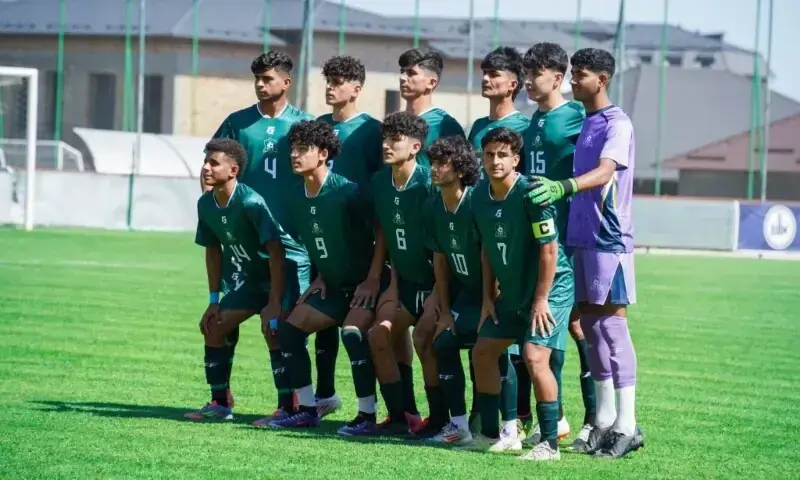
Perhaps the most exciting development in 2026 has been the Pakistan U-16 team's first-ever appearance in a UEFA competition. This was a landmark moment for Pakistani football — the first time a national youth team from Pakistan had played on European soil in an official tournament. The young players, who have primarily competed within South Asia, were given the opportunity to test themselves against some of the best youth teams in Europe.
Although the team faced defeats against Kazakhstan, Russia, and Azerbaijan, the experience was deemed invaluable by coaches and officials. The exposure to European football's intensity, tactical sophistication, and physicality was a learning experience that cannot be replicated in domestic competition. For these young players, the UEFA tournament was a glimpse of the level they must aspire to reach.
The PFF has indicated that this is just the beginning. Plans are already being developed for additional European tours, as well as participation in the U-17 championship and the U-17 SAFF Championship. The goal is to provide extensive opportunities for young footballers to gain international experience and raise their game to a higher level.
Grassroots Football — Where Passion Meets Poverty
The heart of Pakistani football beats in its streets and neighborhoods. In Lyari, the historic neighborhood of Karachi, football is more than a sport — it is an identity. Despite poverty, limited infrastructure, and social challenges, Lyari has produced some of Pakistan's best footballers. The famous Lyari football league, played with passion and flair on dusty grounds, is a testament to the innate talent that exists in communities where football is the sport of choice.
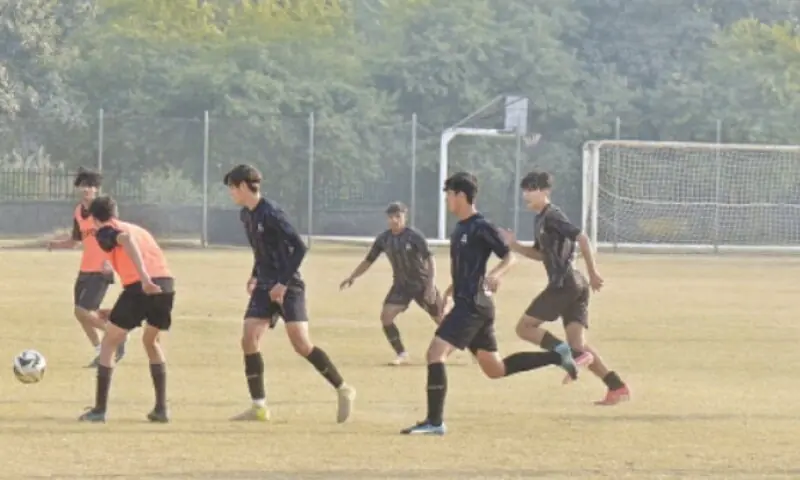
Similarly, in the northern areas of Gilgit-Baltistan and Chitral, football rivals cricket in popularity. The high-altitude terrain and cool climate make football a natural fit, and the region has produced talented players who have represented Pakistan at the national level. In Balochistan and the tribal districts of Khyber Pakhtunkhwa, football is also gaining ground, with local tournaments drawing large crowds and passionate support.
Women's football, while still in its infancy in Pakistan, is also growing. The Pakistan women's national team has participated in SAFF Women's Championships, and grassroots initiatives are working to increase female participation in the sport. However, cultural barriers, lack of facilities, and limited funding remain significant obstacles.
Challenges and Obstacles
Despite the positive momentum, Pakistan football faces daunting challenges. Infrastructure remains woefully inadequate. There are few proper football stadiums in the country, and most grounds lack basic facilities. Training facilities, equipment, and coaching expertise are all in short supply. The lack of a proper domestic league structure means that talented players have few opportunities to develop and showcase their skills.
Funding is a perennial challenge. The PFF operates on a shoestring budget compared to cricket's governing body, the PCB. Corporate sponsorship of football is minimal, and government support is inconsistent. The reliance on FIFA and AFC development grants means that the federation's activities are constrained by the availability of external funding.
Competition from cricket for talent, attention, and resources is another significant factor. The glamour, financial rewards, and media coverage of cricket draw the most athletically gifted young people away from football. Overcoming cricket's dominance in Pakistan's sporting culture is a long-term challenge that requires sustained investment and promotion.
The Road to 2030 and Beyond
The PFF's vision for the future is ambitious. The nationwide club championship, if successfully implemented, could transform the football landscape by providing a structured pathway for talent development and creating a professional ecosystem that can attract investment and support. The international partnerships with Canada, Saudi Arabia, and China could bring much-needed expertise and resources.
Most importantly, the focus on youth development — exemplified by the U-16 team's European tour — represents a shift from short-term results to long-term investment. Developing a generation of footballers who have international experience, tactical awareness, and technical skill is the foundation upon which a competitive national team can be built. It will take years, perhaps decades, but the seeds are being sown.
Countries like India, which have invested heavily in football development in recent years, demonstrate what is possible. The Indian Super League has raised the profile of the sport, attracted international stars, and improved the quality of domestic players. Pakistan, with its passionate fan base, natural athletic talent, and strategic location, has the potential to follow a similar path.
Conclusion
Pakistan's football story in 2026 is one of cautious optimism. After years of administrative chaos and neglect, the federation is united behind a vision of development. The historic U-16 European tour has given a glimpse of what is possible. The planned nationwide club championship could provide the structural foundation for growth. And the grassroots passion for the game, which has never wavered, remains the sport's greatest asset.
The road ahead is long. The challenges of infrastructure, funding, and competition with cricket remain formidable. But for the first time in years, there is a sense that Pakistani football is moving in the right direction. For the millions who love the beautiful game — from the streets of Lyari to the valleys of Chitral — that is reason enough to hope.