
Pakistan Fuel Crisis: Government Makes Public Transport Free to Help the People
The Night That Shocked Every Pakistani
Most people remember exactly where they were when they heard the news. It was the night of April 3, 2026, and Pakistan woke up to something that nobody was fully prepared for — the worst fuel price hike the country had ever seen in a single night.
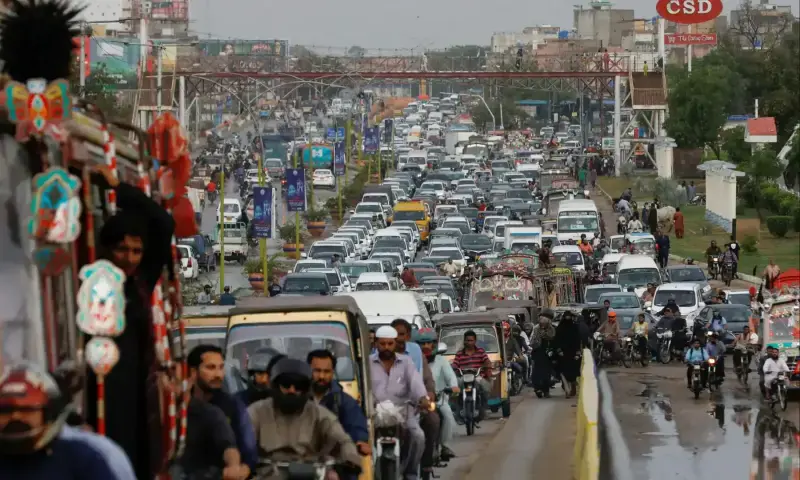
Petrol jumped from Rs 321 to Rs 458 per litre. That is not a gradual increase spread over weeks or months. That is a 43 percent jump overnight. Diesel went even higher — up 55 percent, hitting Rs 520 per litre by morning. Within hours, long queues of motorcycles and rickshaws started forming at petrol stations across Karachi, Lahore, Islamabad, and Peshawar. People were panicking, filling up whatever they could before prices climbed any further. The worry on people's faces was real, and completely understandable.
For a country where millions of people depend on motorcycles to get to work and use diesel-powered vehicles for small businesses, farming, and daily transport — this kind of overnight shock hits harder than most governments in comfortable offices tend to realise. The next few days would test how seriously the government was actually taking this.
Why Did This Happen — And Was Pakistan to Blame?
This is the question a lot of people were asking on social media and in conversations across the country. Was this the government's fault? Was it mismanagement? Was it the IMF again?
The honest answer is — not really, no. The cause of this particular crisis was almost entirely outside Pakistan's control, which doesn't make it hurt any less but does matter when you're trying to understand what actually happened.
The ongoing war involving the United States, Israel, and Iran had caused serious disruption to the Strait of Hormuz — arguably the single most important oil shipping route in the entire world. Around 20 percent of all global oil passes through that narrow stretch of water. When conflict threatens it, global crude oil prices respond almost immediately. And that is exactly what happened. Global crude shot up to $131 per barrel — a level that created immediate pressure on every oil-importing country in the world, not just Pakistan.
What most people didn't know at the time was that Pakistan had actually been quietly absorbing the cost for weeks before the announcement. Since February, the government had been sitting on roughly Rs 129 billion in fuel subsidies, essentially shielding the public from the full impact of rising global prices. That is not a small amount of money for a country with the economic pressures Pakistan carries.
But by early April, the situation had become impossible to hold any longer. The IMF, whose programme Pakistan is still operating under, left no further room for continued absorption of those losses. The government had no choice but to pass on a portion of the increase to consumers. It was a difficult, painful decision — but it was made in a context that was driven entirely by a war happening thousands of miles away, not by domestic policy choices.
The Government's Response — 36 Hours Later
Here is where things get interesting, because the government's reaction was faster than most people expected.
Within just 36 hours of the price hike announcement, Prime Minister Shehbaz Sharif was on national television addressing the country directly. He did not send a spokesperson. He did not release a written statement through the information ministry. He sat in front of the cameras himself and spoke to people in straightforward language.
He announced an immediate cut of Rs 80 per litre on petrol — dropping it from Rs 458 back down to Rs 378. The cut was made by reducing the petroleum levy, which meant the government was absorbing that cost directly from its own budget rather than passing it back to consumers. That is a meaningful distinction. It was not a promise of future relief — it was relief that took effect right then.
"I promise I will not rest until your life is back to normal," he told the nation. Whether people believed that fully or not, the action behind the words came quickly enough that it was hard to dismiss entirely.
For a government that is often criticised for being slow to respond to public pressure, the 36-hour turnaround on this decision was notable. It suggested that someone at the top was genuinely paying attention to how badly the announcement had landed on ordinary households.
Public Transport Made Free — A Decision That Mattered for Millions
The price cut was the headline, but honestly one of the more meaningful decisions came alongside it and did not get as much attention as it deserved.
Interior Minister Mohsin Naqvi announced that all government-run public transport in Islamabad would be completely free of charge for 30 days. No ticket. No fare. Just walk up, board, and travel. The Punjab Chief Minister made the same announcement for the entire province — and Punjab is Pakistan's most populated province by a significant margin.
The government committed Rs 350 million from its own budget to cover the cost of making this happen. That is not a token gesture. For daily wage workers who spend a meaningful percentage of their income on bus fares, students commuting to colleges and universities, and ordinary families trying to manage stretched household budgets — free public transport for a month is direct, immediate, tangible relief. No paperwork. No registration. No waiting for a cheque to arrive. Just free travel.
It is the kind of relief that reaches the people who need it most, rather than filtering down through layers of bureaucracy before arriving months later at half the intended value. And for that reason, it was probably the single most practical decision in the entire response package.
Motorcycle Subsidies and Support for Farmers
The government also recognised that different groups were affected in different ways, and tried to address that rather than just announcing one blanket measure and calling it done.
Motorcycle users — who represent the single most common vehicle category in Pakistan, used by tens of millions of people across every city and small town — received a specific subsidy of Rs 100 per litre, capped at 20 litres per month for three months. For someone filling up a small bike regularly, that adds up to real money saved over the course of a month. It is not a perfect solution, but it is a targeted one that acknowledges that a motorcycle owner and a car owner are not experiencing this crisis the same way.
Farmers received separate attention. Small-scale farmers were given one-time cash support of Rs 1,500 per acre to cover higher diesel costs during the harvest season. This matters for two reasons — first, it directly supports farmers who were facing significantly higher running costs for their machinery and irrigation equipment. And second, it protects food prices across the country. When farmers cannot afford to run their operations at full capacity, it eventually shows up in the cost of vegetables, grains, and other essentials on market shelves. Supporting the farming community during a fuel crisis is not just about the farmers — it is about keeping food affordable for everyone else too.
The Second Price Cut — And a Record on Diesel
Then, on April 10 — just a week after the initial shock — Prime Minister Shehbaz Sharif was back in front of the cameras with more news.
Petrol was cut again, this time to Rs 366 per litre. But the bigger announcement was on diesel. The government reduced diesel prices by Rs 135 per litre in a single move — the largest single diesel price reduction in Pakistan's recorded history. Diesel came down to Rs 385 per litre.
To put that in context — truck drivers, long-haul transport operators, bus companies, and farmers running diesel-powered machinery had been absolutely hammered by the initial increase. Diesel at Rs 520 per litre was creating operational crises for businesses and livelihoods that run on thin margins at the best of times. A Rs 135 cut in one go was not something anyone was expecting, and the reaction across the transport and farming sectors was noticeably positive.
Two price cuts in the space of one week, totalling over Rs 90 on petrol and Rs 135 on diesel, sent a fairly clear message that the government was not treating this as a closed issue after the first announcement. The pressure from the public clearly had an effect, and for once the response came in days rather than weeks.
Where Prices Actually Stand Right Now
As of late April 2026, petrol is sitting at Rs 366.58 per litre and diesel at Rs 385.54. Those are still higher than where prices were before the Iran war began pushing global oil prices upward. Nobody is pretending otherwise. The government has not claimed a full return to normal, because that would not be honest.
But they are a very long way from the peak crisis levels of early April, when petrol touched Rs 458 and diesel hit Rs 520. For the average Pakistani filling up a motorcycle or paying for a bus ticket or running a small delivery vehicle, the difference between those peaks and where prices are now is significant in daily life terms.
The government has also stated clearly that price reviews will continue, and any further relief that becomes available as global oil prices shift will be passed on to consumers. Whether that happens consistently or only under public pressure remains to be seen — but the commitment is on record.
How This Compared to Previous Crises
It is worth stepping back for a moment and putting this crisis in some historical context, because Pakistan has been through difficult fuel price situations before and the response this time was genuinely different in a few ways.
In previous years, when fuel prices increased significantly due to global factors or currency depreciation, the government's typical response was slow, bureaucratic, and often came with complicated subsidy schemes that took weeks to reach ordinary people — if they reached them at all. The announcements would be made, the details would be vague, and the implementation would lag far behind the rhetoric.
This time, the timeline was different. The initial hike happened on April 3. The first cut came within 36 hours. Free public transport was operational almost immediately. The second, larger cut came on April 10. Motorcycle subsidies and farmer support were announced as part of a structured package rather than vague promises. The whole response, from start to the second cut, happened within one week.
That does not mean everything was handled perfectly — the initial communication around the price hike was poor, and many people felt blindsided by the scale of the increase. But in terms of the speed and structure of the relief response, this was measurably better than what Pakistan has typically managed in similar situations.
The Bigger Problem That Has Not Gone Away
It would be dishonest to write about this situation without acknowledging what is still unresolved — and that is the fact that the root cause of all of this has not changed.
The Iran-US war is still ongoing. The Strait of Hormuz remains under stress. Global oil prices, while they have come off their absolute peak slightly, are still elevated compared to where they were at the start of the year. Pakistan imports the vast majority of its oil needs and has very limited ability to insulate itself from those global price movements over the long term.
The government can cut the petroleum levy. It can reduce its own margin. It can find money in the budget for subsidies and free transport schemes. But it cannot control what happens in the Persian Gulf. If the war escalates further, or if the Strait of Hormuz faces new disruptions, Pakistan will be back in the same position again — trying to balance global reality against domestic affordability.
This is also why Pakistan's diplomatic efforts to help mediate the Iran-US conflict are not separate from the fuel crisis story. They are directly connected. Every day that the war continues is another day that Pakistan's energy costs remain under pressure. A peaceful resolution to that conflict would bring more relief to Pakistan's fuel prices than any domestic policy decision ever could.
What Ordinary People Are Still Feeling
It is easy to talk about price cuts and subsidy packages in the language of policy and percentages. But behind every number is a real person making real decisions about how to get through the month.
A motorcycle rider who commutes 40 kilometres a day to work is still paying more than they were in March. A small shop owner running a diesel generator to manage load shedding is still spending more on fuel than their budget was built around. A truck driver moving goods between cities is still factoring higher fuel costs into every trip, and those costs eventually show up in the prices of everyday goods on market shelves.
The relief measures helped. They helped meaningfully, and faster than people expected. But the situation is not back to where it was before the crisis hit. The people who were already living close to the edge financially are still feeling the pressure, even if it is less than it was at the worst point.
That is the reality the government still has to deal with going forward. The announcements were made. The cuts were delivered. But the work of managing this is not finished, and the people watching most closely are the ones who cannot afford for it to be handled carelessly.
Final Thoughts
Pakistan did not start the war that caused this crisis. It did not choose for global oil prices to reach $131 per barrel. It did not decide to disrupt the Strait of Hormuz. The shock that hit Pakistani consumers on the night of April 3 came from thousands of miles away, driven by forces entirely outside the government's control.
What was within the government's control was how it responded — and to its credit, it responded faster and more concretely than most people expected. Free public transport, two price cuts within a week, targeted motorcycle subsidies, and direct farmer support. Not perfect. Not a complete return to normal. But real, delivered quickly, and built around the people who needed it most.
The road ahead is still uncertain. The Iran war is not over. Global oil prices are not back to comfortable levels. Pakistan's economy does not have unlimited room to absorb external shocks. But the country's people did not face this particular storm alone, and that matters — even if the storm itself is not finished yet.