Pakistan Opens New Trade Routes with Iran Under IPEC Initiative
Pakistan Launches Iran-Pakistan Economic Corridor — And the Timing Could Not Be More Strategic
In the middle of one of the most active and consequential diplomatic periods in Pakistan's recent history, Islamabad has made an economic announcement that adds a new and significant dimension to the story of Pakistan-Iran relations. The launch of the Iran-Pakistan Economic Corridor — IPEC — is not just a trade initiative. It is a concrete, practical expression of the trust and the working relationship that Pakistan has built with Tehran through the extraordinary diplomatic engagement of the past several months, translated from the language of diplomatic statements into the language of roads, ports, containers, and commerce.
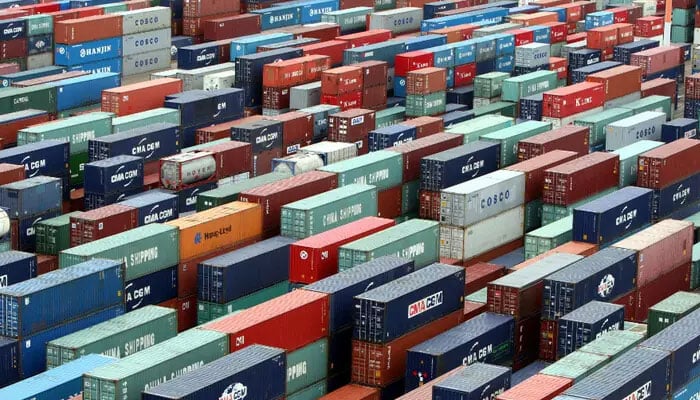
The initiative opens multiple transit corridors connecting Pakistan's major ports and commercial cities to the Iranian border — linking Gwadar, Karachi, and Port Qasim with border crossing points at Gabd and Taftan in ways that create new pathways for goods to move between the two countries faster, more efficiently, and at lower cost than the existing arrangements have allowed. More than 3,000 Iranian containers are already moving through these routes, which tells you that this is not a paper announcement waiting for implementation — the infrastructure is functioning and the trade is happening.
For a country that has been investing enormous diplomatic energy in facilitating dialogue between Iran and the United States, the launch of IPEC sends a signal that is impossible to miss. Pakistan is not just a neutral facilitating venue for other countries' conversations. It is a country that has genuine, deep, and now visibly expanding economic ties with Iran — ties that give Islamabad a direct stake in Iran's stability, in its economic wellbeing, and in the reduction of the regional tensions that have been disrupting trade and commerce across the entire region.
What IPEC Actually Is — Understanding the Initiative
The Iran-Pakistan Economic Corridor draws its conceptual inspiration from CPEC — the China-Pakistan Economic Corridor that has been the defining feature of Pakistan's economic partnership with China for over a decade. Like CPEC, IPEC is built around the idea that physical connectivity — roads, border crossings, port linkages, and the infrastructure that makes goods movement efficient and reliable — is the foundation on which deeper economic integration can be built. Improve the physical infrastructure, reduce the transaction costs of cross-border trade, and the economic activity follows.
But IPEC has its own specific character that reflects the particular geography and economics of the Pakistan-Iran relationship. The border between Pakistan and Iran runs through some of the most challenging terrain in the region — Balochistan on the Pakistani side, Sistan-Baluchestan on the Iranian side — areas that are economically underdeveloped relative to the rest of both countries and that have historically been more characterised by informal cross-border trade and smuggling than by the kind of formal, regulated commerce that generates customs revenue and contributes to official GDP figures.
Formalising and expanding that trade — bringing it within regulated frameworks, supporting it with proper infrastructure, and connecting it to the major commercial hubs on both sides — is one of the central objectives of IPEC. The border crossings at Gabd and Taftan are not new — they have existed as informal and semi-formal crossing points for years. What IPEC does is connect those crossings to Pakistan's major ports through improved transit routes, which transforms them from local border markets into nodes in a genuine international trade corridor.
The connection to Gwadar is particularly significant. Gwadar is the deep-water port that sits at the heart of CPEC's long-term vision — the point where Chinese goods destined for global markets would exit Pakistan and enter the Arabian Sea, and where global goods destined for China would enter the overland route north through Pakistan to Xinjiang. The inclusion of Gwadar in the IPEC routing means that the Iran-Pakistan corridor is potentially connectable to the broader China-Pakistan-Iran trade architecture — a development that has enormous implications for regional trade flows if it realises its potential.
The 3,000 Containers — Why This Number Matters
The figure of more than 3,000 Iranian containers already moving through IPEC routes is not just a statistic — it is evidence that the initiative has moved from announcement to operational reality in ways that many bilateral economic initiatives fail to achieve. It is easy to announce corridors and sign memoranda of understanding. It is considerably harder to actually get goods moving through new routes at scale, because doing so requires resolving the practical challenges of customs clearance, documentation, insurance, financing, and logistics coordination that can frustrate even well-intentioned trade initiatives for years after their official launch.
The fact that 3,000-plus containers are already in motion suggests that the groundwork for IPEC was laid more carefully and more practically than the public announcement might suggest — that the customs procedures were worked out, the documentation frameworks were agreed, the logistics operators were engaged, and the physical route conditions were assessed before the formal launch rather than being left as problems to solve afterwards. That kind of practical preparation is the difference between a functional corridor and a corridor that exists only on paper.
Each container represents real economic activity — goods being produced somewhere, transported, traded, and consumed somewhere else. The 3,000 containers already moving represent Iranian exporters who have found new routes to Pakistani markets, Pakistani importers who have found new sources of goods, and logistics companies on both sides who have built new business models around the corridor's existence. That economic activity, once established, creates its own momentum — businesses that have invested in the corridor have incentives to maintain and expand it, which is the foundation of sustainable trade growth rather than one-time statistical improvement.
Scaling that number up — which is the explicit goal of IPEC — requires maintaining the conditions that make the corridor attractive to traders and logistics operators. Predictable customs processing, reliable physical infrastructure, transparent regulatory requirements, and the security conditions that allow goods to move without the kind of disruption that makes logistics operators avoid a route are all necessary ingredients. Pakistan's ability to deliver those conditions along the Balochistan routes that IPEC depends on is one of the practical challenges that will determine how fast the corridor grows.
Gwadar, Karachi, and Port Qasim — Three Ports, Three Strategic Dimensions
The inclusion of three distinct Pakistani ports in the IPEC routing structure reflects a sophisticated understanding of how trade corridors work in practice and why diversification of port connections makes a corridor more resilient and more commercially attractive than a single-port routing would be.
Karachi is Pakistan's largest and most commercially developed port — the hub through which the vast majority of Pakistan's international trade has historically flowed. Its inclusion in IPEC ensures that the corridor connects to Pakistan's most developed commercial infrastructure, its largest concentration of trading companies and logistics operators, and its deepest integration into global shipping networks. For Iranian goods entering Pakistan, a Karachi routing provides access to Pakistan's largest consumer market and its most sophisticated distribution infrastructure. For goods transiting through Pakistan, Karachi's connections to global shipping lanes provide onward routing options that no other Pakistani port can currently match.
Port Qasim, located near Karachi, has been developing as a complementary port facility with specific capabilities in bulk cargo, liquefied natural gas, and containerised freight. Its inclusion in IPEC adds capacity and cargo-type diversification that makes the corridor capable of handling a wider range of trade than Karachi alone would support. As Pakistan's energy import infrastructure has increasingly been routed through Port Qasim, its inclusion in IPEC also creates potential synergies with Pakistan-Iran energy trade — a dimension of the bilateral economic relationship that has enormous long-term potential.
Gwadar is the most strategically significant of the three ports from the perspective of regional connectivity. Its location on the Arabian Sea coast of Balochistan, close to the Iranian border and at the natural terminus of the CPEC overland route from China, makes it the obvious gateway for trade that connects Iran not just to Pakistan but to the broader China-Pakistan economic architecture. IPEC's connection to Gwadar is therefore potentially transformative in a way that the Karachi and Port Qasim connections, however important commercially, are not — it opens the possibility of Iran's trade connecting to Chinese markets through a Pakistani land route that bypasses the maritime routes that sanctions and geopolitical tensions have made difficult for Iran to use reliably.
The Iran-US Diplomacy Connection — IPEC Is Not Separate From the Big Picture
It would be a serious analytical error to look at the IPEC announcement in isolation from the broader context of Pakistan's extraordinary diplomatic engagement with Iran and the United States over the past several months. These two tracks — the diplomatic and the economic — are not separate stories. They are different expressions of the same fundamental Pakistani strategic calculation about the importance of Iran as a neighbour, a partner, and a country whose stability and economic wellbeing are directly connected to Pakistan's own interests.
Pakistan's ability to serve as a trusted mediator between Iran and the United States rests significantly on the depth and genuineness of its relationship with Tehran. A Pakistan that had only rhetorical sympathy for Iran's concerns but no real economic or strategic stakes in Iran's situation would be a much less credible mediator than a Pakistan that has real trade flowing across its border with Iran, real communities connected by that trade, and real economic interests in seeing Iran's situation stabilise and improve.
IPEC deepens those real stakes in visible and measurable ways. When Pakistan's Foreign Minister or Army Chief engages with Iranian counterparts as a mediator, both sides understand that Pakistan is not acting out of pure altruism or diplomatic opportunism — it has a genuine economic interest in Iran's stability and in the reduction of the tensions that have been disrupting regional commerce. That alignment of interest is part of what makes Pakistan's mediation credible and what gives Iranian officials confidence that Pakistan will engage with their concerns honestly rather than simply serving as a vehicle for American pressure.
Conversely, IPEC's launch in the current environment is partly enabled by the diplomatic work that Pakistan has done. A Pakistan that had not invested in building trust with Tehran through the mediation process would find it harder to launch a major bilateral economic initiative at a moment when Iran is dealing with the pressures of the US-Iran conflict. The diplomatic capital that Pakistan has built is being converted into economic opportunity — and that conversion is itself a demonstration of the practical value of Pakistan's approach to its relationship with Iran.
What IPEC Means for Balochistan — The Local Dimension
Any serious analysis of IPEC has to grapple with what it means for Balochistan — the Pakistani province through which the corridor's land routes run and which has historically been one of Pakistan's most economically underdeveloped and most politically challenged regions. The potential for IPEC to contribute to Balochistan's economic development is one of the most important dimensions of the initiative, and it is one that deserves more attention than the national-level trade statistics typically receive.
Balochistan shares a long border with Iran — a border that has historically been characterised by informal cross-border trade, smuggling, and the kind of grey-market economy that develops when official trade is restricted or underdeveloped. The communities on both sides of the border have economic and cultural connections that predate the modern states that drew the international boundary between them. Formalising and expanding trade through official channels does not replace those community connections — it builds on them in ways that can create formal economic activity, employment, and revenue that informal trade never generates.
The border crossings at Gabd and Taftan that IPEC routes pass through are gateways to Balochistan's interior — and improving the infrastructure, security, and commercial attractiveness of those crossings has potential spillover effects for the broader Balochistan economy. Better road connections to the border, more customs and logistics infrastructure at the crossings, and the commercial activity that a functioning trade corridor generates all create economic opportunities for Balochistan communities that have been chronically underserved by the formal economy.
Pakistan's security challenges in Balochistan are real and significant, and they create genuine risks for the development of any commercial corridor through the province. The history of attacks on infrastructure and personnel associated with CPEC development in Balochistan is a warning that economic corridors through the province require security arrangements that take the actual threat environment seriously rather than assuming that economic development will automatically generate the security conditions that allow it to proceed.
Getting Balochistan's development right — ensuring that the economic benefits of IPEC reach Balochistan communities rather than bypassing them, and that the security conditions for the corridor are maintained through approaches that address rather than exacerbate the underlying political grievances — is one of the most important and most difficult challenges that IPEC's implementation will face.
The Regional Trade Architecture — Where IPEC Fits
IPEC does not exist in isolation — it fits within a broader regional trade architecture that is being shaped by multiple simultaneous developments and that has the potential to fundamentally reorient how goods flow across the broader South Asia-Middle East region.
CPEC established Pakistan as the land bridge connecting China to the Arabian Sea — a role that has strategic and commercial significance well beyond the bilateral Pakistan-China relationship. IPEC extends that land bridge concept westward, connecting Pakistan's ports and its Chinese-linked infrastructure to Iran and through Iran to the broader Middle East and to the Central Asian republics that have their own interest in alternative trade routes that do not depend on Russian or European infrastructure.
Iran itself is a country with significant transit potential — sitting at the intersection of the Caspian Sea, the Persian Gulf, and Central Asia in ways that make it a natural hub for regional trade if the political and sanctions conditions that have restricted its participation in international commerce can be resolved. An Iran whose sanctions are eased or lifted — one of the possible outcomes of the diplomatic process that Pakistan has been facilitating — would be a dramatically more attractive trade partner and transit partner than the sanctions-constrained Iran of recent years.
IPEC is being launched at a moment when the possibility of that outcome is more real than it has been in a long time. If the Iran-US diplomatic process produces a workable arrangement that eases sanctions and normalises Iran's international trade, IPEC will be positioned to become one of the primary beneficiaries of Iran's economic re-engagement with the broader global trading system. Pakistan's early investment in building the corridor infrastructure and the trade relationships that use it gives it a first-mover advantage in a potentially large and growing market.
Energy Trade — The Dimension That Could Transform Everything
One of the most significant potential dimensions of IPEC that official statements have not fully addressed is energy trade — specifically, the possibility of natural gas pipelines and oil trade flowing between Iran and Pakistan through the corridor's infrastructure.
The Iran-Pakistan gas pipeline — sometimes called the Peace Pipeline — has been discussed, negotiated, and partially constructed over many years without ever reaching completion. The pipeline would bring Iranian natural gas to Pakistan, addressing one of Pakistan's most persistent and economically damaging problems — its chronic energy shortage and the high cost of the LNG imports that partially compensate for insufficient domestic gas production. Iran has enormous natural gas reserves and the capacity to supply Pakistan's needs at prices that would be significantly lower than current LNG import costs.
The pipeline has been blocked primarily by American pressure and the threat of sanctions on any country that completes infrastructure that would allow Iran to earn revenue from natural gas exports under the current sanctions regime. Pakistan has been caught between the genuine economic benefit of cheaper Iranian gas and the political and financial costs of defying American sanctions enforcement.
Whether IPEC creates new conditions for progress on the pipeline question — or whether it remains confined to goods trade while energy trade awaits the political resolution of the Iran-US situation — is one of the most consequential questions about the corridor's ultimate potential. A Pakistan-Iran economic relationship that includes both goods trade through IPEC and natural gas through a completed pipeline would be transformatively important for Pakistan's energy security and economic competitiveness in ways that goods trade alone, however significant, cannot match.
Challenges Ahead — Being Honest About What Could Go Wrong
The enthusiasm that surrounds the IPEC launch is warranted, but a complete assessment requires acknowledging the genuine challenges that stand between the current early-stage corridor and the fully functioning trade architecture that the initiative aspires to create.
Sanctions remain the most significant external constraint. American sanctions on Iran affect not just direct US-Iran trade but the ability of third countries to conduct certain types of trade with Iran without risking secondary sanctions — penalties imposed on non-American companies and individuals who do business with Iran in ways that the US determines violates the sanctions regime. The scope and enforcement intensity of these secondary sanctions have varied over different American administrations and in different periods, but they create real legal and financial risk for Pakistani businesses and banks that want to engage in Iran trade through IPEC.
Managing that risk requires either a resolution of the broader Iran-US sanctions situation — which the ongoing diplomatic process is working toward but has not yet achieved — or careful structuring of IPEC trade in ways that avoid the specific transactions most exposed to secondary sanctions risk. Neither solution is simple, and the uncertainty that sanctions create is a genuine deterrent for the private sector investment and commercial activity that IPEC needs to scale beyond its current early-stage volumes.
Infrastructure quality along the Balochistan routes is another challenge. The roads connecting Pakistan's ports to the Iranian border cross terrain that is challenging to maintain and that requires sustained investment to keep in the condition that commercial logistics operators need for efficient and reliable transit. Potholes, seasonal closures, inadequate facilities, and security incidents all increase the cost and reduce the attractiveness of routing goods through Balochistan compared to maritime alternatives.
Customs and regulatory harmonisation between Pakistan and Iran — ensuring that documentation requirements, tariff treatments, and inspection procedures on both sides of the border are compatible and predictable — is the unglamorous administrative work that ultimately determines whether a trade corridor functions smoothly or becomes a source of delays and costs that frustrate traders. The 3,000 containers already moving suggest this work is at least partially done, but scaling to significantly higher volumes will require continued attention to the administrative architecture that makes cross-border trade work in practice.
Final Thoughts
The launch of the Iran-Pakistan Economic Corridor is a significant development that deserves to be understood in its full strategic context — not just as a trade announcement but as a concrete expression of the relationship that Pakistan has built with Iran through sustained diplomatic engagement and of the economic vision that Pakistan holds for its role in the region's future.
IPEC represents Pakistan doing what it does best in its current diplomatic moment — converting the trust and the relationships it has built through extraordinary effort into tangible outcomes that serve both countries' interests and that demonstrate the practical value of engagement over isolation. Three thousand Iranian containers moving through Pakistani ports is not just a trade statistic. It is evidence of a relationship functioning at a level that creates real economic value for real people on both sides of the border.
The corridor's full potential will take years to realise — it depends on infrastructure investment, sanctions resolution, security conditions, and the building of commercial relationships that take time to develop. But the foundation is being laid now, during a period when Pakistan's diplomatic engagement with Iran gives it unique credibility and unique access to build that foundation in ways that will outlast the specific current crisis that brought the two countries' relationship into such sharp international focus.
IPEC is Pakistan's bet that the future of the region runs through connectivity, commerce, and cooperation rather than through conflict, isolation, and missed opportunities. Based on everything Pakistan has demonstrated over the past several months about its capacity to pursue that vision with discipline and with skill, it is a bet that deserves to be taken seriously.