Pakistan's Solar Revolution — Rooftop Panels, Net Billing and the Energy Future
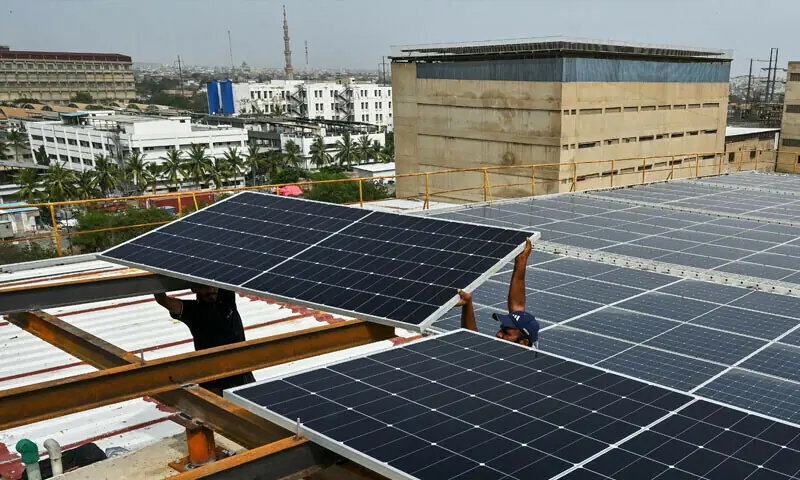
ISLAMABAD/KARACHI — Pakistan is in the midst of a solar energy revolution. What began as a niche solution for wealthy homeowners has transformed into a mass movement, with rooftop solar panels now a common sight across cities, towns, and villages. By June 2025, Pakistan had reached 6.1 GW of cumulative net metering capacity with over 280,000 active connections — and the numbers have only grown since. But the landscape of solar adoption is shifting dramatically, with new regulations, falling panel prices, and a changing policy environment reshaping the industry.
The Solar Boom: Why Pakistan Turned to the Sun
The driving force behind Pakistan's solar revolution is simple economics. Soaring grid electricity tariffs — among the highest in the region — combined with the dramatic fall in solar panel prices have made rooftop solar an increasingly attractive investment for households, businesses, and industrial consumers. A typical residential solar system that cost Rs. 500,000 a few years ago can now be installed for significantly less, with payback periods shrinking to just a few years.
The result has been an unprecedented boom. Target for FY2025-26 is an additional 2,633 MW of new capacity, with installations occurring at a pace that has surprised even industry optimists. In cities like Lahore, Islamabad, and Karachi, it is now common to see neighborhoods where a majority of homes have rooftop panels. Even in smaller cities and rural areas, solar adoption is accelerating, driven by the same economic logic.
The New NEPRA Prosumer Regulations: A Game-Changer
The biggest story in Pakistan's solar sector in 2026 has been the introduction of NEPRA's Prosumer Regulations 2025/2026, which fundamentally changed the economics of solar ownership. Under the previous net metering system, prosumers received a 1:1 credit for surplus electricity exported to the grid, meaning they were compensated at the same rate they purchased electricity, typically Rs. 22-27 per kWh.
The new net billing system, effective from December 2025, has significantly reduced the financial return for exported solar power. Surplus electricity is now compensated at the National Average Energy Purchase Price, approximately Rs. 11-13 per kWh — roughly half the previous rate. Meanwhile, electricity imported from the grid continues to be billed at Rs. 37-55 per unit, depending on the slab.
For existing net-metered consumers, their contracts under the 2015 regulations continue until their seven-year term expires. However, these consumers have been shifted to monthly billing for export credits instead of the previous three-month cycle. Upon expiry, extensions will be for five-year terms under the new rules. New applicants for solar installations now receive five-year contracts with the reduced buyback rate.
The new regulations also include stricter system size limits, preventing prosumers from installing solar systems beyond their sanctioned load, effectively reducing the capacity limit by up to 50%. This shift is designed to encourage self-consumption of solar energy rather than relying on exporting surplus power to the grid.
The Great Battery Revolution
The policy changes have triggered a parallel revolution in battery storage. With the reduced buyback rate making grid export less attractive, homeowners and businesses are increasingly investing in battery systems to store excess solar power for use during non-sunlight hours. Lithium-ion battery prices have also been falling globally, making this option more accessible than ever before.
The shift toward battery storage is transforming the solar industry. Installers who once focused primarily on panel and inverter sales are now becoming full-service energy solution providers, offering integrated systems that combine solar generation with battery storage and smart energy management. This trend is expected to accelerate as battery prices continue to decline and the technology improves.
Challenges and Controversies
The new net billing policy has not been without controversy. Consumer groups and lawmakers have raised concerns about regulatory predictability and the impact on consumer rights. For lower-income households, who typically consume less electricity, the reduced buyback rate could make solar investments less financially viable, potentially slowing adoption among the very consumers who could benefit most from lower electricity bills.
There are also concerns about grid stability. The rapid growth of solar capacity has created challenges for the national grid, with the potential for voltage fluctuations and frequency instability during periods of high solar generation. The government and NEPRA argue that the new regulations are necessary to protect the power system and ensure fair pricing, addressing concerns about the financial burden being shifted to non-solar consumers.
The Path Forward
Despite the regulatory changes, the outlook for solar energy in Pakistan remains bright. The fundamental economics — cheap panels, expensive grid electricity, and abundant sunshine — continue to favor solar adoption. The shift toward battery storage is creating new opportunities for innovation and investment. And Pakistan's commitment to renewable energy, including its international climate obligations, provides a policy framework that supports continued growth.
Solar energy is no longer a niche alternative in Pakistan — it has become a mainstream choice for millions of consumers. The challenge for policymakers and the industry is to manage this transition in a way that is fair, sustainable, and beneficial for all Pakistanis. If they succeed, the solar revolution could be one of the most transformative developments in Pakistan's modern economic history.