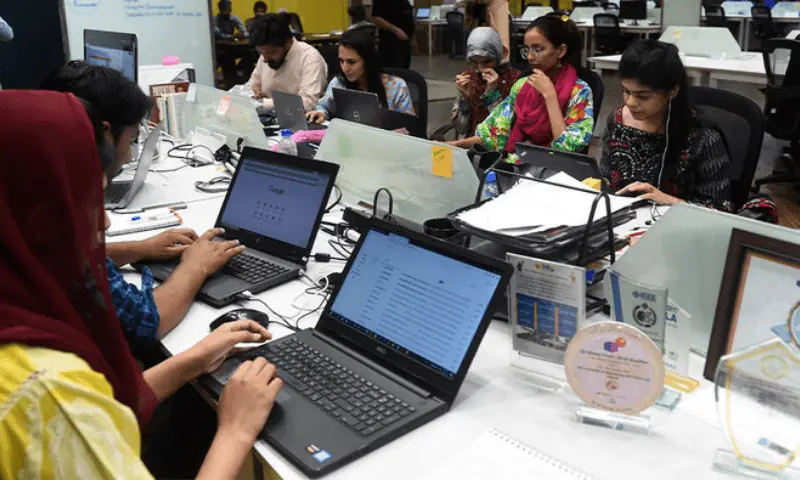

Pakistan's Tech Startup Boom — How Fintech, E-Commerce and Freelancers Are Driving a Digital Revolution
ISLAMABAD — Pakistan's technology ecosystem is experiencing an unprecedented surge, transforming the country from a consumer of digital services into an emerging hub of innovation, entrepreneurship, and tech-driven economic growth. The numbers tell a compelling story: record IT exports of $3.39 billion in just nine months of the current fiscal year, 4,082 new companies incorporated in April 2026 alone with the IT and e-commerce sector driving nearly a quarter of all new registrations, and a freelance workforce contributing over $3.5 billion annually to the economy. This is not merely growth — it is a structural shift in Pakistan's economic landscape.
The Fintech Revolution
Fintech has emerged as the crown jewel of Pakistan's startup ecosystem, dominating venture capital activity both in terms of deal volume and capital raised. The sector has been transformed by a wave of digital payment platforms, lending solutions, and financial inclusion initiatives that are bringing millions of unbanked Pakistanis into the formal financial system.
Companies like NayaPay, SadaPay, and Keenu have led the charge, offering digital wallets, debit cards, and payment solutions that bypass traditional banking infrastructure. The Securities and Exchange Commission of Pakistan has played a facilitating role, creating regulatory sandboxes that allow fintech startups to experiment with new products while managing risk appropriately.
The impact of fintech goes beyond convenience. Digital payments are being recognized as essential for financial inclusion, economic documentation, and transparency. Accelerating the shift from a cash-based economy to a digital one has become a national priority, with the State Bank of Pakistan actively promoting digital payment adoption through policy measures and infrastructure investments.
Visa's focus on digital lending and tokenization in Pakistan has accelerated the country's transition from cash to digital, with the adoption of tokenized payments in Pakistan outpacing many other regions globally. Blockchain technology is also gaining traction, recognized for its potential to enhance efficiency in the financial ecosystem by enabling instant settlements and opening up cross-border investment opportunities.
The E-Commerce Explosion
Pakistan's e-commerce sector has grown exponentially, driven by increasing internet penetration, improved logistics infrastructure, and changing consumer habits. Daraz, the country's largest e-commerce platform, has expanded from its initial base in major cities to reach customers in hundreds of towns and cities across the country, offering everything from electronics to groceries.
The growth of e-commerce has created a virtuous cycle. As more consumers shop online, logistics networks improve, delivery times shorten, and the range of available products expands. This has enabled small and medium-sized businesses to reach customers far beyond their physical locations, democratizing access to markets in ways that were previously unimaginable.
However, the sector faces challenges. Recent policy changes, including a reversal of the Digital Presence Proceed Tax on overseas vendors and a reduction in the duty-free limit for online purchases from Rs5,000 to Rs500, have impacted international online retail platforms. Stakeholders have warned that if tax policies are not carefully managed, they could slow the positive momentum of digital business growth.
Pakistan's Gig Economy and Freelance Revolution
Pakistan has emerged as one of the world's largest markets for freelance talent, with an estimated 2 million freelancers working on platforms like Upwork, Fiverr, and Freelancer. Pakistani freelancers have built a reputation for excellence in fields ranging from software development and graphic design to content writing and digital marketing, contributing over $3.5 billion annually to the country's foreign exchange reserves.
The freelance economy has proven to be a powerful engine of economic empowerment, particularly for young people and women who face barriers to traditional employment. Freelancing offers flexibility, merit-based compensation, and direct access to global markets — advantages that have made it an increasingly attractive career path for Pakistan's educated youth.
Partnerships like the collaboration between DIB Pakistan and Pocket Money, which facilitates seamless US Dollar-to-rupee cashouts for freelancers, are bringing more of Pakistan's growing freelance workforce into the formal economy. These initiatives improve speed, compliance, and convenience for cross-border remittances and international transactions, addressing one of the key pain points for freelancers.
The Startup Investment Landscape
After a period of global funding winter that affected startup ecosystems worldwide, Pakistan's venture capital landscape is showing signs of recovery and maturation. While the frenzy of 2021-22 has normalized, the quality and sophistication of deals have improved. Investors are now focusing on startups with solid unit economics, clear revenue models, and sustainable growth trajectories.
KE Ventures has announced investment plans that include fintech services and technology solutions, signaling continued corporate interest in the startup ecosystem. The rise of alternative capital, particularly debt financing, and an increasing number of bank-fintech partnerships where banks extend capital and fintech companies leverage their distribution networks, are creating new funding avenues for startups.
The government has also stepped up its support for the startup ecosystem. Plans to invest $1 billion in artificial intelligence by 2030, with a focus on human capital development, expanding AI education, and supporting advanced research, signal a long-term commitment to building a knowledge economy. The Islamabad AI Declaration unveiled during Indus AI Week 2026 marked Pakistan's formal entry into the global AI conversation.
IT Exports and Global Competitiveness
Pakistan's IT exports have been a standout performer in the country's otherwise challenging balance of payments situation. The sector hit a record $3.39 billion in just nine months, with a 20 percent increase year-on-year. March 2026 saw a monthly export peak of $413 million, demonstrating the sector's growing capacity.
The success of IT exports is largely attributable to the efforts of thousands of young freelancers and tech professionals who are earning precious foreign exchange despite limited resources and infrastructure challenges. The sector's growth has been organic, driven by individual initiative rather than government policy, though recent government attention to the sector is beginning to create a more enabling environment.
Challenges and the Road Ahead
Despite the impressive growth, Pakistan's tech ecosystem faces significant challenges. Infrastructure gaps, including unreliable electricity and limited broadband penetration in rural areas, constrain the sector's potential. The regulatory environment, while improving, still presents obstacles for startups navigating complex compliance requirements. Access to late-stage funding remains limited, with most venture capital concentrated in early-stage deals.
The talent pipeline, while strong in quantity, needs quality improvements in specialized areas. The education system must produce graduates with the skills demanded by the digital economy, and existing professionals need continuous upskilling to remain competitive in rapidly evolving fields.
There are also concerns about adapting global technology models for local use, particularly regarding algorithmic bias and data protection. As Pakistan integrates foreign AI systems and digital platforms, the potential export of sensitive user information without adequate data protection laws has raised privacy concerns among experts and civil society.
Conclusion
Pakistan's technology sector is at a transformative moment. The convergence of fintech innovation, e-commerce growth, a thriving freelance economy, and increasing government support has created conditions for sustained expansion. The numbers — record IT exports, surging company registrations, growing venture capital investment — point to a sector that is not just growing but maturing. The challenges are real, but the trajectory is unmistakably positive. As Pakistan continues to invest in its digital infrastructure and human capital, the technology sector is poised to become an increasingly important driver of economic growth, job creation, and global competitiveness.