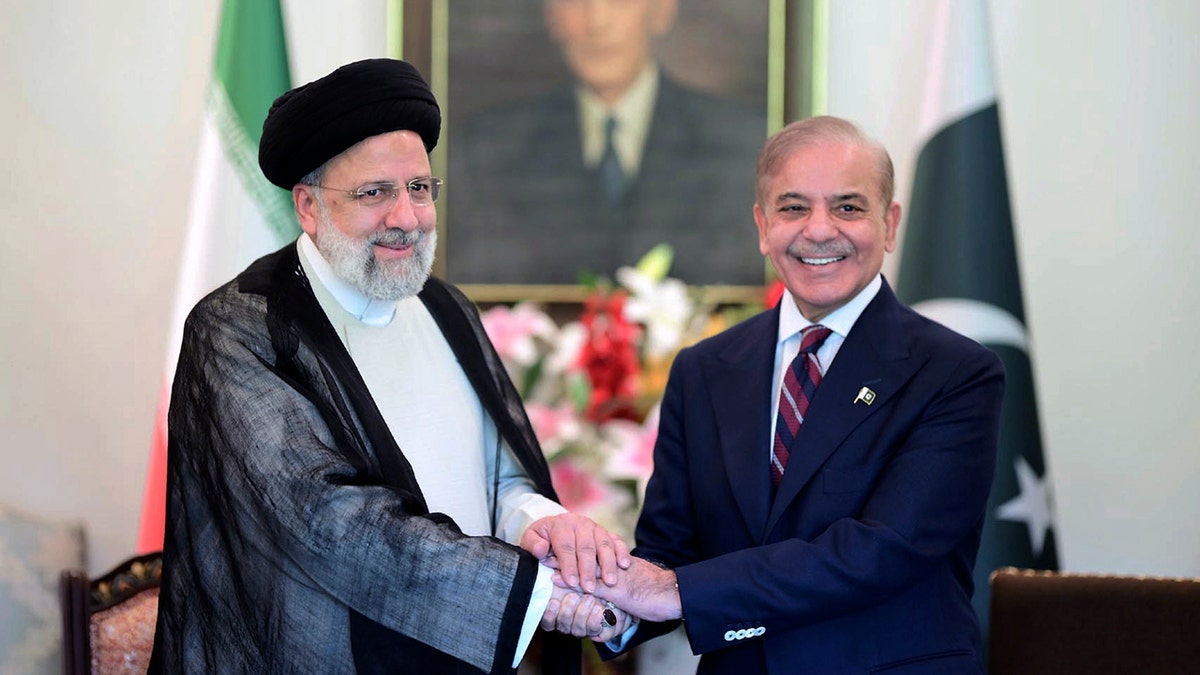
Pakistan's Historic Role as Peacemaker Between the US and Iran
A Moment That Changed Everything — Pakistan Did What No One Else Could
Let's be honest — when the news broke that the United States and Iran had actually gone to war, most people assumed it would drag on for months, maybe longer. These two countries have been bitter enemies for decades. Real, deep-rooted, historical enemies. And when the fighting started earlier this year, oil prices shot up overnight, shipping routes became uncertain, and the entire Middle East looked like it was heading toward something catastrophic.
Nobody really expected what happened next.
Pakistan walked into the middle of all this and said — we'll handle it. Not with weapons. Not with threats. Just with diplomacy, patience, and a level of trust that both sides happened to have in Islamabad. And surprisingly, it actually worked. At least for now.
How Did Pakistan Get Involved in the First Place?
This didn't happen overnight. It wasn't some big dramatic announcement that came out of nowhere one morning. For several weeks before those historic April talks, Pakistan was working quietly behind closed doors — the kind of work that rarely makes front page news but matters more than almost anything else.
Prime Minister Shehbaz Sharif was making phone calls — a lot of them. Army Chief Field Marshal Asim Munir was flying between capitals, carrying messages, meeting leaders, building the kind of personal trust that no official document can create on its own. Foreign Minister Ishaq Dar was sitting through long, urgent meetings that probably went well into the early hours of the morning more than once.
The goal was straightforward to describe but genuinely difficult to pull off — stop the fighting and get both sides into the same room together. Anyone who understands international diplomacy knows that sounds simple but is almost impossible in practice, especially between two countries with this much history between them.
Then came the moment that really showed how far Pakistan's influence had grown. Iran's ambassador to Pakistan said it publicly — "We will do talks in Pakistan and nowhere else, because we trust Pakistan." That one sentence said everything. Iran, a country that trusts very few outside players, was essentially telling the world that Islamabad was the only place it felt safe enough to even consider sitting down for negotiations. That's not a small thing. That's the result of years of careful, consistent relationship building finally paying off.
April 11 and 12, 2026 — The Day History Was Made in Islamabad
This is where things become genuinely historic — and that word gets overused these days, but here it actually fits.
On April 11 and 12, 2026, the United States and Iran sat down for direct, face-to-face negotiations for the first time since the 1979 Islamic Revolution. That is 47 years of complete silence, hostility, and zero direct communication between two of the most powerful players in global politics — broken by Pakistan.
The American delegation was substantial. Nearly 300 people, led by Vice President JD Vance. Alongside him were special envoys Steve Witkoff and Jared Kushner — people with direct personal access to President Trump. This was not a low-level team sent just to keep appearances. Washington sent serious people.
Iran came with a 70-member delegation led by Parliament Speaker Mohammad Bagher Ghalibaf and Foreign Minister Abbas Araghchi. Also senior. Also serious. Not people sent to fill a seat and go home.
And right there in the middle of everything — coordinating both sides, managing the tensions, making sure nobody got up and walked out — was Pakistan's own trio. Prime Minister Shehbaz Sharif, Field Marshal Asim Munir, and Foreign Minister Ishaq Dar. Three people carrying the weight of what might honestly be the most important diplomatic effort of this entire decade.
The talks ran for 21 hours across three separate rounds. That is an exhausting amount of time under any circumstances — but when you are trying to bridge 47 years of deep mistrust between two countries that have publicly called each other enemies for most of living memory, every single hour of that counts. No final deal came out of those sessions. But real, direct conversation happened. And in diplomacy, breaking that kind of silence is itself a massive achievement.
Why Pakistan? The Question Everyone Is Asking
This is the question that analysts, journalists, and foreign policy experts have been trying to answer ever since April. Why did both America and Iran — two countries that can barely stand each other — agree to let Pakistan sit in the middle as mediator?
The honest answer comes down to one word: trust. But it's worth going a little deeper than that because the reasons are actually more interesting.
Pakistan shares a long border with Iran. There are deep religious and cultural connections going back centuries that no diplomatic cable can manufacture. Pakistan genuinely understands Iran in ways that Washington never fully can. So when Pakistani officials tell Tehran that they understand their concerns and their red lines, Tehran actually believes it. That kind of credibility cannot be built in a few weeks.
On the American side, Field Marshal Asim Munir had personally met with President Donald Trump at the White House. That is an unusually direct relationship between a Pakistani military chief and a sitting US president. Experts at the Stimson Center pointed out that Pakistan would never have been hosting these talks if it did not have that strong personal connection with Washington and that level of direct trust with the Trump administration.
There is also a historical dimension here that is worth understanding. Back in the early 1970s, Pakistan played almost exactly this same kind of role — acting as the quiet bridge that helped the United States and China come together after decades of hostility. Henry Kissinger's famous secret trip to Beijing was made possible largely because Pakistan facilitated it. That was over fifty years ago, and many people have forgotten about it. But it happened.
Half a century later, Pakistan is doing the same thing again. Different countries, different era, but the same fundamental challenge — getting two sworn enemies to trust each other enough to sit in the same room. And once again, Islamabad is the one making it happen.
Asim Munir — The Man Behind Most of This
If you really want to understand how Pakistan managed to pull this off, you need to look closely at Field Marshal Asim Munir. Because a very significant part of this entire diplomatic effort traces back to what he personally did.
He traveled to Tehran himself for three full days. Not a quick visit for one meeting and back home — three days of back-to-back, intensive conversations. He met Iran's president. He sat with the foreign minister. He spoke with the parliament speaker. He had direct conversations with military commanders. He was not just a messenger delivering written notes — he was personally present, answering difficult questions, addressing concerns, and carrying direct communication between Washington and Tehran in both directions.
On the American side, he had direct conversations with Vice President JD Vance and with Trump's personal envoys. He was essentially the live, human connection between two sides that had no direct line of communication with each other whatsoever.
What really cemented Munir's central role in all of this was something President Trump said publicly. When Trump announced the extension of the ceasefire, he specifically named Asim Munir by name — saying he had agreed to hold off military action upon the personal request of both Field Marshal Asim Munir and Prime Minister Shehbaz Sharif. A sitting US president publicly naming a Pakistani Army Chief in a major foreign policy statement is genuinely rare. It tells you exactly how seriously Washington is taking Pakistan's involvement right now.
The Ceasefire Is Still Fragile — Let's Be Realistic
Before anyone starts celebrating too loudly, it is important to be clear about where things actually stand — because the job is very far from finished, and things could still go wrong fairly quickly.
Iran has been publicly hesitant about returning for a second round of talks. Officially their statements have been cautious, while privately the signals have been somewhat more flexible. That gap between what is said in public and what is communicated privately is exactly where real diplomacy lives — and Pakistan is trying to navigate that gap very carefully.
The ceasefire has been extended, yes. But a permanent, written, agreed deal with real guarantees is still not on the table. And then there is the added complication of how public messaging has been handled. Trump has made several public statements claiming agreements or understandings that Iran quickly came out and denied, saying those things were never actually finalised or never happened the way they were described. That kind of public confusion makes an already sensitive process considerably harder to manage.
Pakistan essentially has to hold both sides at the same time — reassuring Iran that they will not be pushed into anything unfair, while keeping the Americans engaged and patient enough to remain at the negotiating table. It is a constant balancing act that requires attention every single day.
But Pakistan has not stepped back. Prime Minister Shehbaz is still making calls. Foreign Minister Ishaq Dar spoke directly with Iran's foreign minister just days ago, continuing to push for dialogue and keeping communication open. Pakistan's foreign ministry has stated clearly — Islamabad sees this as its genuine responsibility, not simply an opportunity to improve its international image.
What Does This Actually Mean for Pakistan?
For a country that has spent a lot of recent years making headlines for difficult reasons — economic instability, political turmoil, security challenges — this particular moment feels genuinely different. And it should.
Pakistan is being seen right now as a responsible, capable, and mature actor in international affairs. Not just in the region — on the actual global stage. That kind of reputation takes a long time to build and is hard to maintain. But it matters enormously for how the country is treated in international institutions, trade negotiations, and future diplomatic conversations.
Earlier in 2026, Pakistan joined the Board of Peace — a new international body focused on conflict resolution and dialogue. And almost immediately after joining, Pakistan delivered something concrete and visible. That timing sends a clear message to the rest of the world about what kind of role Pakistan intends to play going forward.
Hosting the first direct US-Iran talks in nearly five decades. Keeping a fragile ceasefire alive when it was clearly on the verge of collapsing. Getting two deeply hostile nations into the same building for 21 hours of real, substantive conversation. These are not minor footnotes. These are the kinds of achievements that define a country's international standing for the next generation.
Regardless of whether the full peace process ultimately succeeds — and there is still a very long road ahead — Pakistan has already demonstrated something that matters: when the world needed someone to step in, Islamabad stepped in. And both Washington and Tehran let it happen because they trusted it.
The Bigger Picture — A Different Kind of Pakistan
There is a version of Pakistan that the world has grown used to seeing — a country dealing with internal economic crises, navigating difficult relationships with its neighbors, managing security challenges, and generally being discussed as a problem to manage rather than a partner to rely on.
What is happening in 2026 looks different. This is a Pakistan that is actively, deliberately inserting itself into major global crises and making a measurable difference. Field Marshal Munir flying to Tehran on his own initiative. Prime Minister Shehbaz personally engaging world leaders. Ishaq Dar working continuously to keep dialogue channels open. These are not reactive, defensive moves. This is a foreign policy strategy that someone thought through carefully and is now executing with real discipline.
The comparison to Pakistan's role in the 1970s China-US rapprochement is not just flattery or historical nostalgia. It reflects something real about Pakistan's unique position in the world. Its geographic location sits at the crossroads of the Middle East, Central Asia, and South Asia. Its religious and cultural connections give it credibility in Muslim-majority countries that Western nations simply do not have. And its ability to maintain working relationships with countries that are hostile to each other — like the US and Iran, or the US and China before that — is a genuine and rare form of strategic leverage.
Iran trusts Pakistan because of shared religion, shared culture, and a long history of not being betrayed. America trusts Pakistan because of direct personal relationships built at the highest level of leadership on both sides. Having simultaneous trust from two sworn enemies is something almost no other country in the world can honestly claim right now. That is Pakistan's real strength in this situation, and it did not happen by accident.
Will the Peace Actually Hold? An Honest Assessment
It would be irresponsible to write something entirely optimistic without acknowledging the real difficulties that still lie ahead. Peace between the United States and Iran — if it is ever fully achieved — will require many more rounds of talks, much more patient diplomacy, and probably several more crises that will need to be managed before any final agreement is possible.
Iran's internal politics are genuinely complicated. There are powerful voices inside Iran who are completely opposed to any deal with America under any circumstances. Those voices are not going away and they have real influence over policy. On the other side, Trump's communication style introduces a level of unpredictability that makes careful, structured diplomacy significantly harder. One unexpected statement can undo weeks of quiet progress.
And the wider regional situation — with multiple conflicts, shifting alliances, and volatile public opinion in several countries — can change things very quickly in ways that nobody can fully predict or control.
So no, this is not over. The hard work is still very much in progress. And Pakistan is more aware of that than anyone.
But what Pakistan has proven is that progress is genuinely possible. That after 47 years of absolute silence, two countries that have publicly despised each other can sit in the same room and have a real conversation — if the right person is in the middle, and if both sides trust that person. Right now, that person is Pakistan.
Final Thoughts
The world is watching Islamabad very carefully right now. Every phone call matters. Every diplomatic visit matters. Every quiet background conversation that never appears in the newspapers carries just as much weight as the ones that make front page news.
Pakistan is walking an extremely fine line — trying to keep both Washington and Tehran comfortable and engaged while pushing firmly for a solution that protects the entire region from sliding back into open conflict. It is not glamorous work. It does not always get the recognition it deserves. And it can come undone quickly if either side runs out of patience or trust.
But here is the thing — Pakistan has walked this kind of line before. It did it in the 1970s when the idea of China and America coming to the table together seemed almost impossible. It is doing it again now, half a century later, with a different pair of countries but the same essential challenge: getting two enemies to trust each other just enough to talk.
History does not repeat itself exactly. But sometimes it comes close enough to matter. And right now, the world is genuinely, sincerely hoping that Pakistan can do it one more time.