Petrol and Diesel Prices Increased by Rs 26 Per Litre in Pakistan
Fuel Prices Go Up Again — Petrol and Diesel Both Hiked by Rs 26 Per Litre
Just when Pakistani consumers were hoping for some stability at the pump, the government has announced another increase in fuel prices. Petrol and diesel have both been raised by Rs 26 per litre, with the revised rates taking effect nationwide immediately after the announcement.
After this latest adjustment, petrol now stands at Rs 393 per litre and diesel at Rs 380 per litre. For anyone filling up a motorcycle, a car, a rickshaw, or a delivery vehicle, that increase is not an abstract number — it is money that comes directly out of a budget that, for most Pakistani households, is already being stretched fairly thin.
The government has framed the decision as part of its regular fuel price review process, linked to changes in international oil market rates and exchange rate movements. That explanation is technically accurate and reflects the genuine reality that Pakistan, as a country that imports the vast majority of its oil, does not have the luxury of setting fuel prices independently of what is happening in global energy markets. But for the person standing at a petrol station watching the numbers on the pump, the reason for the increase does very little to soften the impact of paying more than they did last week.
How We Got Here — The Recent History of Pakistan's Fuel Prices
To put this latest increase in proper context, it helps to look at where Pakistan's fuel prices have been over the past few months, because the story is not a simple straight line and understanding the full picture changes how you read the current situation.
Earlier this year, Pakistan experienced one of the most dramatic fuel price shocks in its history. In April 2026, the ongoing conflict involving the United States, Israel, and Iran caused serious disruption to the Strait of Hormuz — the critical waterway through which a significant portion of global oil supply travels. Global crude oil prices surged sharply in response, and Pakistan, already carrying a significant subsidy burden, was eventually forced to pass on a portion of the increase to consumers.
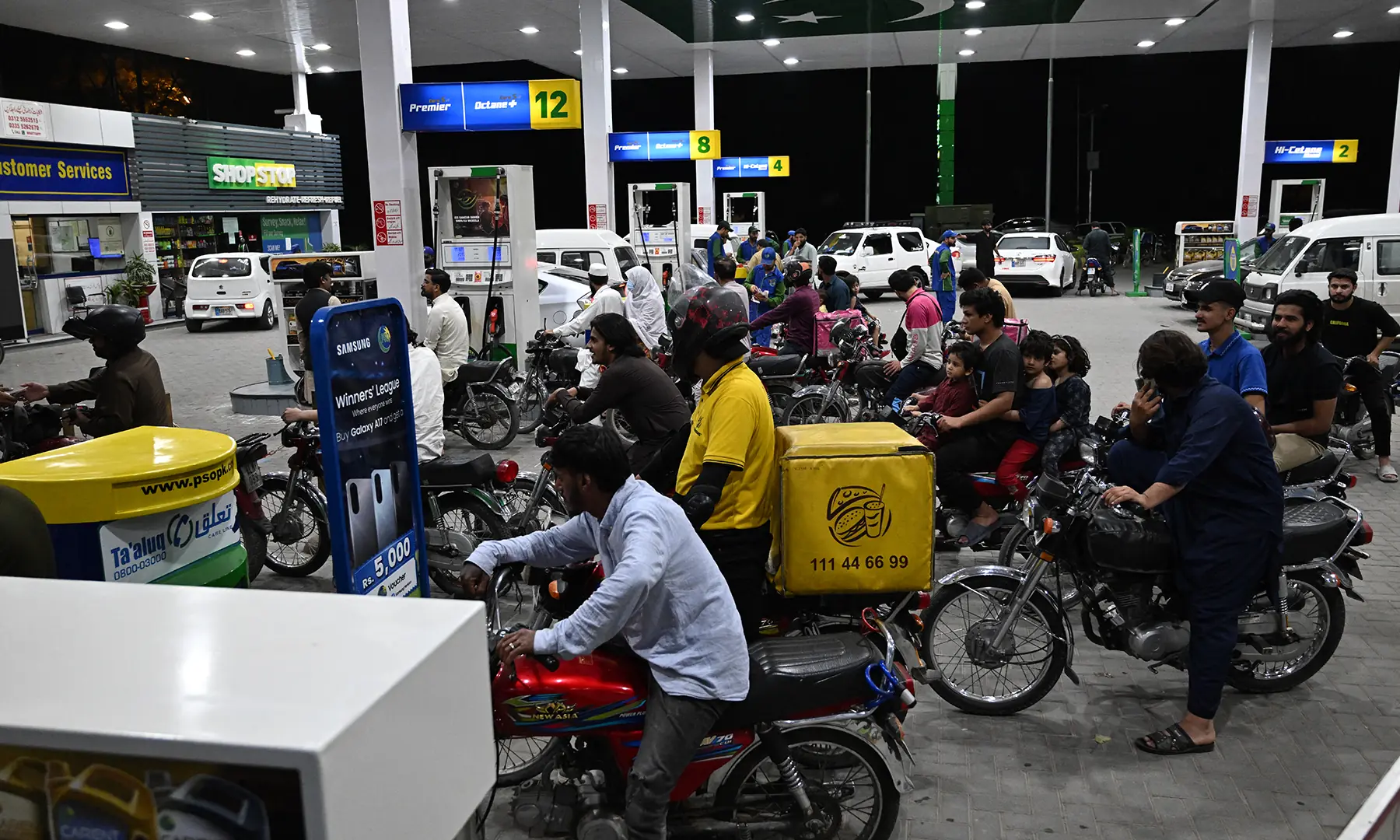
Petrol hit Rs 458 per litre at its peak. Diesel reached Rs 520 per litre. Those were numbers that shocked even people who had lived through previous fuel price crises in Pakistan. Motorcycle queues at petrol stations, panic buying, and widespread public anxiety about the cost of basic transportation all followed in the days after that announcement.
The government responded with unusual speed. Within 36 hours, a cut of Rs 80 per litre on petrol was announced. A week later, another significant reduction came through, including a record single-cut of Rs 135 per litre on diesel. Those reductions brought prices down substantially from their peak levels and were accompanied by free public transport in Islamabad and Punjab, motorcycle subsidies, and farmer support payments — a relief package that, whatever its limitations, arrived faster than most people expected.
The prices that resulted from those cuts — petrol at Rs 366 and diesel at Rs 385 — held for a period. But global oil market dynamics do not stay still, and the latest adjustment brings petrol to Rs 393 and diesel to Rs 380. Diesel is actually slightly lower than its post-cut level, while petrol has moved upward. The net position is still significantly better than the April peak, but the direction of movement — prices going up again — is the part that people notice and that generates concern.
The Real Impact — Who Feels This Most Directly
Fuel price increases do not affect everyone equally. Some people feel them immediately and significantly. Others feel them more gradually through secondary effects. Understanding that distribution of impact is important for getting an honest picture of what this increase means in practice.
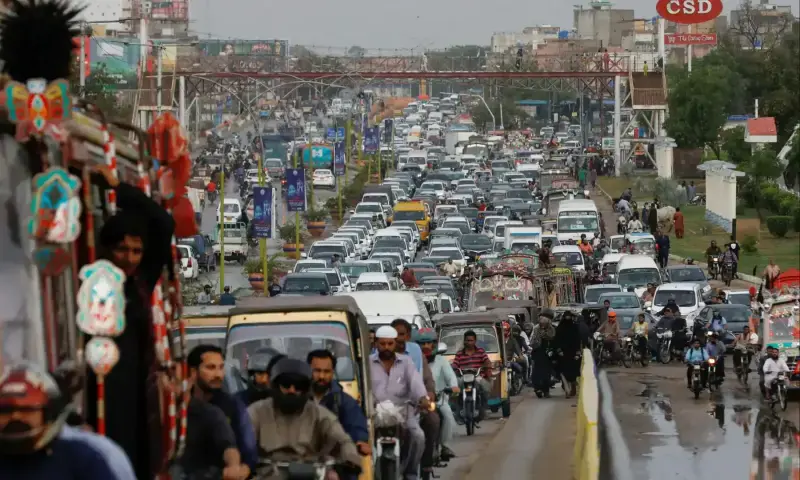
Motorcycle users are probably the single most directly affected group. Pakistan has an enormous motorcycle population — tens of millions of bikes are used every day for commuting, for small business deliveries, for getting children to school, and for the hundred other daily tasks that two-wheeled transport handles in Pakistani urban and semi-urban life. A Rs 26 per litre increase on a tank that holds 10 to 12 litres is not devastating in isolation, but for someone who fills up multiple times a week and is managing a tight household budget, it adds up to a meaningful monthly cost increase.
Rickshaw drivers — auto-rickshaws and motorcycle rickshaws alike — face an immediate cost increase that most will pass on to passengers through higher fares. The negotiation over rickshaw fares, already a daily reality of urban Pakistani life, will shift upward as drivers recalibrate what they need to charge in order to cover their fuel costs and still make a living. Passengers who rely on rickshaws for short-distance urban travel will absorb that increase whether they like it or not.
Public transport operators running minibuses, coaches, and larger buses face similar dynamics. Fuel is one of their most significant operating costs, and increases feed directly into either reduced margins — which they cannot sustain indefinitely — or higher fares, which passengers pay. In the informal transport sector that handles much of Pakistan's urban mobility, fare adjustments happen quickly and without formal announcement. Commuters simply find themselves being asked for more when they board.
Long-haul truck drivers and freight operators are another heavily affected group. Diesel is the lifeblood of Pakistan's goods movement sector — virtually everything that moves from a factory to a warehouse to a shop travels in a diesel-powered vehicle at some point. When diesel prices move up, so does the cost of moving goods, and those increased costs eventually show up in the price of whatever is being moved. The connection between diesel prices and the cost of food, clothing, building materials, and everything else on market shelves is direct and fairly quick — typically visible within days to a week or two of a price change.
Farmers using diesel-powered machinery and irrigation equipment face increased running costs that feed directly into the cost of agricultural production. Those costs, over time, flow through into food prices — which affects every household in the country regardless of whether they own a vehicle or not.
The Inflation Connection — Why Fuel Prices Touch Everything
One of the things that makes fuel price increases particularly significant in an economy like Pakistan's is how thoroughly fuel costs are embedded in the price of almost everything else. This is not unique to Pakistan — it is true in most developing economies with significant road-based transportation infrastructure — but it is worth spelling out clearly because people sometimes think of fuel prices as primarily affecting drivers rather than understanding their broader inflationary effect.
Think about what happens when petrol and diesel prices go up. Transport costs increase for every vehicle on the road. Those vehicles carry goods — food from farms to markets, manufactured products from factories to distributors, imported goods from ports to warehouses. The increased transport cost gets added, at each step of the supply chain, to the price of whatever is being transported. By the time the product reaches the end consumer, the fuel price increase has compounded through multiple steps and shows up as a higher price on the shelf.
This effect is particularly pronounced for food prices, because food travels through several stages of transport between production and consumption. Agricultural produce moves from farms to wholesale markets to retail markets to homes. Each transport leg costs more when fuel is more expensive. Bread, vegetables, cooking oil, meat, dairy products — the staples of a Pakistani household's grocery basket — all carry the embedded cost of the fuel used to move them.
The inflationary effect of a Rs 26 per litre fuel increase is therefore not limited to the direct cost of filling a tank. It ripples through the entire price level of goods and services across the economy. The exact magnitude depends on how broadly transport operators and businesses pass on the increased costs, but the direction is predictable and consistent — fuel prices up means prices generally up, with a lag of days to weeks.
For households already dealing with inflation from multiple sources — currency depreciation, imported goods costs, utility prices — an additional fuel-driven inflationary push is a real and unwelcome development regardless of the technical reasons behind it.
The Government's Position — Regular Review, International Markets
The official framing of this price adjustment — regular review linked to international market changes and exchange rate movements — reflects the genuine mechanics of how Pakistan's fuel pricing works under the current IMF programme framework.
Pakistan's fuel prices are not set arbitrarily by the government. They follow a formula that is tied to international crude oil benchmark prices, the exchange rate between the Pakistani rupee and the US dollar, and the various taxes, levies, and margins that are built into the retail price. The petroleum levy, which the government adjusts when it wants to provide relief or when it needs additional revenue, is the main lever available for managing the domestic retail price relative to what international markets dictate.
Under the IMF programme that Pakistan has been operating under, there are commitments around fiscal discipline that constrain how much room the government has to absorb international price increases through the petroleum levy rather than passing them on to consumers. The IMF's view — which has shaped Pakistani fuel pricing policy in recent years — is that large fuel subsidies are fiscally unsustainable and distort price signals in ways that are economically harmful over the long term.
That argument has economic logic to it, and the IMF is not wrong that unlimited fuel subsidies are incompatible with fiscal sustainability in a country with Pakistan's debt and revenue profile. But the argument lands differently on a family in Lahore or Karachi that is trying to manage a monthly budget than it does in the language of a fiscal policy document. The tradeoff between macroeconomic stability and immediate household affordability is real, and the people on the losing end of that tradeoff in any given price cycle are the ones with the least financial cushion to absorb it.
Officials have noted that future price changes will depend on international market trends and overall economic conditions. That is the honest answer — nobody in the government or anywhere else knows exactly where global oil prices will be in the coming weeks and months, because they depend on geopolitical developments, production decisions by major oil producing countries, demand changes in major consuming economies, and a range of other factors that are genuinely unpredictable in the short term.
The Iran Conflict Factor — Still in the Background
The broader context of global oil market volatility that has driven Pakistan's fuel price drama in recent months has not fully resolved. The Iran-US conflict that disrupted the Strait of Hormuz and sent global crude prices surging earlier this year has not produced a final peace settlement. The ceasefire that Pakistan helped negotiate and maintain has held, but it remains fragile, and the diplomatic process toward a more durable arrangement has been moving slowly and unevenly.
Global crude oil prices came off their April peak levels as the immediate crisis phase of the conflict appeared to stabilise, which is what allowed the government to cut prices in mid-April. But they have not returned to pre-conflict levels, because the underlying uncertainty about the regional situation continues to create a risk premium in oil markets that keeps prices elevated relative to where they would be in a calmer geopolitical environment.
The latest Rs 26 per litre increase reflects, at least in part, this continued elevated price environment. Pakistan is not in the crisis situation it was in during the worst weeks of April — but it is also not back to the baseline it was at before the conflict started affecting global energy markets. The current price levels sit somewhere in between, which is better than the worst case but worse than the best case.
If the diplomatic process around the Iran-US conflict eventually produces a more stable and durable arrangement, the easing of tension in the region could allow global oil prices to move back toward more normal levels. That would create the conditions for potential fuel price reductions in Pakistan. Whether and when that happens depends on diplomatic and geopolitical developments that remain genuinely uncertain.
What Relief Measures Are Still in Place
It is worth noting that some of the relief measures announced during the April fuel price crisis are still in effect, which provides at least partial mitigation for specific groups of consumers.
The motorcycle subsidy scheme — providing Rs 100 per litre discount capped at 20 litres per month for three months — was introduced in April and covers a period that is still running. Motorcycle users who are registered for this scheme are not paying the full market price at the pump, which means the effective cost increase for them from this latest adjustment is partially offset by the subsidy they are receiving.
The farmer support payment provided earlier in the year was a one-time measure rather than an ongoing subsidy, so it does not directly offset the current increase for the agricultural sector. Farmers facing higher diesel costs for the current growing season are dealing with those costs without the specific support that was provided during the initial crisis period.
Free public transport in Islamabad and Punjab, which was announced as a 30-day measure, will have expired by this point — it was not intended as a permanent arrangement. Commuters in those areas who benefited from that measure during its active period are now back to paying normal fares, on top of which transport operators may now increase those fares in response to the latest fuel price increase.
Managing the Impact — Practical Adjustments for Households
For ordinary Pakistani households trying to manage the impact of higher fuel prices, there are some practical adjustments that can help reduce the direct cost of the increase, even if they cannot eliminate it entirely.
Consolidating trips and reducing unnecessary journeys is the most direct way to lower fuel consumption. Planning errands more carefully so that multiple tasks can be done in a single outing, rather than making separate trips for each, adds up to meaningful savings over a month. It sounds like obvious advice, but the discipline of actually doing it consistently makes a real difference to the fuel bill.
For motorcycle users, maintaining the bike in good condition — proper tyre inflation, clean air filter, well-tuned engine — makes a noticeable difference to fuel efficiency. A poorly maintained motorcycle can use significantly more fuel than a well-maintained one covering the same distance. Basic maintenance is not expensive and the fuel savings it produces over time more than cover the cost.
For households with access to public transport options, using them more consistently during this period of elevated fuel prices is a rational response to higher private transport costs. Buses and mass transit spread the fuel cost across many passengers, making the per-person transport cost substantially lower than driving privately for the same distance.
For those running small businesses that depend on fuel — delivery services, transport operators, small-scale logistics — reviewing pricing structures to ensure they reflect current fuel costs is a necessary business adjustment, even if it is an uncomfortable one to communicate to customers. Businesses that absorb increased fuel costs rather than adjusting their pricing will face unsustainable margin pressure over time.
Looking Ahead — What Drives the Next Price Change
The question that everyone with a vehicle and a fuel budget is asking is a simple one — are prices going to go up further, or is there a chance they come back down?
The honest answer is that it depends on factors outside Pakistan's control, and anyone who tells you they know with confidence which way prices will move in the next few weeks is probably overconfident. There are scenarios in which prices could ease — if global crude prices fall, if the rupee strengthens against the dollar, or if the government decides to reduce the petroleum levy to provide some relief. There are also scenarios in which they could rise further — if global oil markets tighten, if the regional geopolitical situation deteriorates, or if exchange rate pressure increases.
The government's commitment to pass on any future relief from international market improvements directly to consumers is on record. Whether that commitment is honoured consistently will be tested by whatever the next review cycle brings. Pakistan's track record on this is mixed — there have been periods when international price falls were passed on promptly and fully, and periods when they were used to rebuild government margins before consumers saw any benefit.
The public, understandably, watches these cycles with a degree of scepticism that comes from experience. Promises about future price relief are less valuable than actual reductions at the pump, and the credibility of those promises depends on what the government actually does when the opportunity to deliver them arises.
Final Thoughts
The Rs 26 per litre increase in petrol and diesel is a real and unwelcome development for Pakistani consumers who were hoping that the worst of this year's fuel price volatility was behind them. It is not a return to the crisis levels of April, and petrol at Rs 393 and diesel at Rs 380 are significantly better than the peak figures of Rs 458 and Rs 520 that shocked the country just weeks ago. But the direction of movement — prices going up again after a period of cuts — is the part that matters most for how people feel about the situation.
The underlying drivers are genuine and largely beyond Pakistan's control in the short term. International oil markets, global geopolitical tensions, exchange rate movements — these are not things that any Pakistani government can simply wish away or fix through domestic policy decisions. The country is a price-taker in global energy markets, and that reality shapes the fuel price situation no matter how much anyone would prefer it otherwise.
What the government can control is the speed and fairness with which it passes on international relief when it becomes available, the consistency with which it maintains the subsidy commitments it has made to specific groups, and the quality of its communication with the public about why prices are moving and what the realistic outlook is. Getting those things right does not solve the underlying problem, but it makes the management of an unavoidable situation considerably more credible and more fair.
For now, Pakistani consumers fill their tanks, adjust their budgets, and wait to see what the next review cycle brings. It is a familiar position, and most people have gotten reasonably good at navigating it. That does not make it any less frustrating — but it does mean that Pakistan has the resilience and the adaptability to manage through it, as it has managed through similar periods before.