Red Warrants Issued for Malik Riaz’s Son in Rs 900 Billion Corruption Cases
Red Warrants for Malik Riaz's Son and Arrest Plans for Bahria Town Chief — What This Case Is Really About
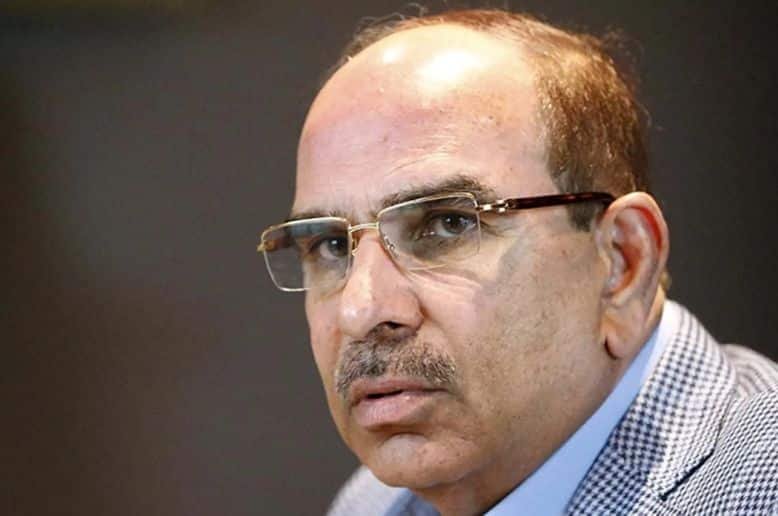
Pakistani authorities have taken a significant and public step in what has become one of the country's most consequential accountability cases — issuing red warrants for the son of Bahria Town owner Malik Riaz in connection with corruption cases reportedly worth over Rs 900 billion, while simultaneously announcing plans to pursue the arrest of Malik Riaz himself and bring him back to Pakistan. The numbers involved are staggering by any measure, and the fact that authorities are now pursuing international enforcement mechanisms rather than simply managing the case domestically signals a seriousness of intent that previous chapters of this long-running saga have not always demonstrated.
Rs 900 billion. To put that figure in some context — that is a sum that exceeds the annual development budgets of several Pakistani provinces combined. It is money that, if the allegations hold up through legal proceedings, was extracted from the public and from ordinary property buyers through a combination of land grabs, regulatory manipulation, and financial arrangements that allegedly operated at a scale only possible with connections at the highest levels of Pakistani government and society for decades.
Red warrants — formal requests issued through Interpol that ask member countries to locate and provisionally arrest individuals pending extradition — are not issued casually. They require formal legal processes, coordination with the Federal Investigation Agency, approval through appropriate institutional channels, and the kind of documented legal basis that makes the request credible to the international law enforcement community that would be asked to act on it. The issuance of these warrants for Malik Riaz's son is therefore a concrete legal step rather than a political announcement, and it changes the practical situation of the individuals named in ways that domestic warrants alone cannot.
Who Is Malik Riaz and Why This Case Matters
For anyone outside Pakistan who encounters this story, Malik Riaz Hussain is one of the country's wealthiest and most powerful businessmen — the founder and head of Bahria Town, a private real estate development company that has built large-scale gated communities in Karachi, Lahore, Rawalpindi, and other cities that are among the most visible and most controversial real estate developments in Pakistan's modern history.
Bahria Town's developments are physically impressive — large, well-maintained, security-controlled communities with amenities that contrast sharply with the infrastructure conditions of surrounding areas. They have been enormously commercially successful, attracting middle and upper-middle class buyers willing to pay premium prices for the security and amenity standards that Bahria Town offers. That commercial success made Malik Riaz one of Pakistan's richest individuals and gave Bahria Town a profile that extended far beyond real estate into philanthropy, media, and political influence.
But the story of how Bahria Town acquired the land on which many of these developments were built is the source of the legal and accountability issues that have been building for years. Land acquisition processes in Pakistan involve a complex interaction of government land records, revenue authorities, regulatory approvals, and in some cases the conversion of agricultural or government land to residential use — all processes that are vulnerable to manipulation when there is sufficient money and influence to work the system in ways that ordinary developers cannot access.
Allegations against Bahria Town and Malik Riaz have consistently centred on land acquisition irregularities — claims that land was acquired at below-market rates through regulatory manipulation, that government land was converted to private use through improper processes, that revenue records were altered to facilitate land grabs affecting both the state and small landowners who found their holdings absorbed into Bahria Town developments without fair compensation. The Rs 900 billion figure attached to the current cases represents the alleged scale of financial benefit derived from these practices over an extended period.
Malik Riaz has had an extraordinary ability throughout his career to navigate Pakistan's legal and political landscape in ways that have repeatedly seen cases against him settled, withdrawn, or resolved through arrangements that critics have described as institutionalised impunity. His relationships with powerful figures across political parties, his media presence, and his philanthropic activities have all been part of a profile that made direct legal accountability appear, at various points, politically and practically difficult to pursue. Whether the current red warrants and arrest plans represent a genuine departure from that pattern is the central question that observers of Pakistani accountability are asking.
The Red Warrants — What They Mean in Practice
The issuance of red warrants for Malik Riaz's son through Interpol is a meaningful escalation of legal pressure that has specific practical implications for the individuals named and for the broader case.
Interpol red notices — often loosely called red warrants — are requests to law enforcement agencies in member countries to locate and provisionally arrest a person pending extradition proceedings. They do not constitute an international arrest warrant in the strict sense — Interpol is a coordination body rather than an enforcement agency, and the decision to act on a red notice rests with the individual member country's law enforcement and legal system. But they do create a situation in which the named individual cannot travel internationally without significant risk of detention in any of Interpol's 195 member countries.
For someone like Malik Riaz's son, who is reportedly outside Pakistan, a red notice changes the practical geography of his situation significantly. Countries that have extradition arrangements with Pakistan and that take Interpol notices seriously would be obligated to notify Pakistani authorities if the named individual is located on their territory and to initiate the legal process for provisional arrest and extradition proceedings. Even countries without extradition arrangements would be aware of the notice and the individual's status.
The coordination with international agencies that officials have mentioned as the next step is exactly this process — working through Interpol channels, through bilateral law enforcement cooperation agreements, and through diplomatic channels to ensure that the red notices are acted upon rather than ignored. The effectiveness of this coordination will depend significantly on which country the named individuals are currently in, what extradition arrangements exist with that country, and the political willingness of that country's government to act on Pakistani legal requests.
Pakistan has had mixed experiences with extradition and international legal cooperation in high-profile cases. Some wanted individuals have been successfully brought back through formal legal processes. Others have remained beyond reach for extended periods, either because the host country's legal system creates procedural obstacles that take years to navigate or because the political conditions for cooperation are complicated by other bilateral considerations. The outcome in this case will depend on the specific legal and diplomatic landscape that Pakistani authorities are navigating.
The Decision to Pursue Malik Riaz Himself
The announcement that authorities have decided to take steps toward arresting Malik Riaz himself and bringing him back to Pakistan is in some ways the more significant element of this development — because Malik Riaz is the principal figure whose accountability has been the central question in this entire long-running saga, and previous legal actions against him have a complicated history.
Malik Riaz reached a landmark arrangement with Pakistan's Supreme Court in 2018 — an agreement under which Bahria Town would pay Rs 460 billion to the government in exchange for regularising its land acquisitions in Karachi. That arrangement, reached under the supervision of the apex court, was presented at the time as a resolution of the major land-related cases and as a mechanism for Bahria Town to formalise its position by compensating the state for land use that had been irregular.
The controversy around that arrangement never fully settled. Critics argued that the amount agreed was far below the actual value of the land and that regularisation through a negotiated payment effectively rewarded years of irregular land acquisition rather than genuinely holding the company accountable. The question of who benefited from the terms of that arrangement and how it was negotiated became part of the broader accountability narrative around Bahria Town.
The current cases, reportedly worth over Rs 900 billion — nearly double the 2018 settlement amount — suggest that the accountability issues were not fully resolved by that arrangement and that additional irregularities and financial flows are under investigation that were either not covered by the 2018 settlement or that have come to light through subsequent investigation. The specific nature of the additional cases — what transactions they involve, which regulatory processes were allegedly manipulated, and how the Rs 900 billion figure was calculated — would need to be fully detailed in formal legal proceedings to understand the complete picture.
The decision to pursue Malik Riaz's arrest represents a more direct form of accountability pursuit than settlement negotiations — it signals that the current institutional actors responsible for accountability believe that the appropriate resolution involves criminal accountability rather than another financial arrangement. Whether that signal translates into actual arrest and prosecution will depend on the legal processes that follow, the evidentiary basis of the cases, and the institutional capacity and political will to see those processes through.
The Scale of Alleged Corruption — Rs 900 Billion in Context
The figures involved in these cases deserve more careful contextualisation than simply being noted as very large numbers, because understanding the scale helps explain why this is not just another corruption case but one whose alleged dimensions have consequences for Pakistan's broader development and governance story.
Rs 900 billion at current exchange rates represents tens of billions of US dollars — a sum that exceeds the annual foreign direct investment Pakistan receives by many multiples. It is a figure that represents resources that, if they had flowed through legitimate channels and been appropriately taxed and regulated, would have generated significant government revenue, would have compensated the landowners whose holdings were allegedly absorbed without fair payment, and would have contributed to the public infrastructure and services that Pakistan chronically underfunds.
Land corruption in Pakistan is not a minor or peripheral issue — it is one of the most significant governance failures in the country's development story. Land records that can be manipulated, regulatory processes that can be captured, and officials who can be pressured or incentivised to facilitate illegal land acquisitions create a system in which large-scale developers with the right connections can accumulate vast landholdings at the expense of small farmers, government land banks, and the public interest. The consequences of that system show up in inadequate government revenues, in the displacement of vulnerable communities, and in the fundamental unfairness of a property market where connected insiders play by different rules than everyone else.
Accountability for corruption at the Bahria Town scale is therefore not just about this specific case — it is a signal about whether Pakistan's accountability institutions are capable of addressing the highest levels of alleged financial wrongdoing, or whether the pattern of cases against powerful interests being managed through arrangements that never fully resolve the accountability question will continue.
Pakistan's Accountability Track Record — Honest Assessment
Any honest analysis of this development has to grapple with Pakistan's mixed and often frustrating track record on accountability for powerful individuals. The country has a long history of high-profile cases that begin with dramatic announcements — arrests, charges, asset freezes, international cooperation requests — and end either with acquittals on procedural grounds, sentences that are appealed endlessly without resolution, arrangements that settle cases on terms that critics consider inadequate, or simply cases that drag on for years without substantive progress while the accused continue their lives largely undisturbed.
That track record is not the result of any single failure. It reflects structural weaknesses across multiple dimensions of Pakistan's accountability architecture. Courts are overloaded with backlogs that allow cases to be delayed almost indefinitely through legitimate procedural manoeuvres. Prosecutorial capacity — the ability to build and present complex financial cases with the quality of evidence and legal argument that successful prosecution requires — has historically been insufficient for the scale of financial crimes that Pakistan's most significant corruption cases involve. Witness protection systems are inadequate, which discourages testimony against powerful accused. And the intersection of legal cases with political dynamics creates pressure on institutions that can deflect cases from their proper legal course.
The National Accountability Bureau, the Federal Investigation Agency, and other institutions tasked with accountability have all faced periodic criticism for selective prosecution — pursuing cases against political opponents while leaving similarly situated individuals with different political connections largely undisturbed. Whether the current action against Malik Riaz and his son is genuinely driven by an impartial accountability process or is shaped by the current political configuration and who has what relationship with whom in the present government is a question that Pakistani observers of accountability will be asking, and it is a fair question even for those who believe the underlying allegations deserve serious legal attention.
What Genuine Accountability Would Require
If Pakistani authorities are genuinely committed to accountability in the Bahria Town case rather than using the legal machinery for other purposes, certain things would need to happen that go beyond the current announcement of red warrants and arrest plans.
The legal cases would need to be built on evidence that is specific, documented, and capable of withstanding rigorous legal scrutiny — not on charges that are broadly drafted but poorly evidenced in ways that make successful prosecution difficult while serving short-term political purposes. The prosecution team would need the resources, the expertise, and the institutional support to handle complex financial cases of this scale — which requires investment in prosecutorial capacity that Pakistan's accountability institutions have not always received.
The process would need to be insulated from political interference — both the interference that might accelerate the case for the wrong reasons and the interference that might slow or derail it if political calculations shift. Institutional independence, judicial capacity, and the kind of sustained institutional commitment that does not change with political winds are all necessary conditions for accountability that is real rather than performative.
The interests of those most directly harmed by the alleged irregularities — the small landowners whose holdings were allegedly absorbed without fair compensation, the ordinary property buyers whose investments may have been affected by regulatory irregularities, and the public whose government land was allegedly converted to private use — would need to be central to the remedy rather than afterthoughts to a process primarily focused on generating political headlines.
And the process would need to follow the evidence wherever it leads — including to any government officials, regulatory authorities, or political figures whose actions may have facilitated the alleged irregularities over the years. Accountability that stops at the business side of a corruption story without pursuing the public official side is incomplete by definition, because corruption at this scale requires complicity in official systems that goes beyond what any private actor can accomplish alone.
International Cooperation — The Practical Challenges Ahead
The international dimension of this case — the red warrants, the coordination with international agencies, the effort to locate and potentially extradite individuals currently outside Pakistan — will be one of the most challenging and consequential aspects of what happens next.
Pakistan's experience with international legal cooperation in high-profile cases provides both encouraging examples and cautionary tales. Some cases have resulted in successful extraditions and the return of accused individuals to face charges. Others have stalled for years in the legal systems of host countries where accused individuals have been able to access legal defences that create procedural obstacles lasting far longer than anyone initially anticipated.
The host country's relationship with Pakistan, the quality of the legal documentation supporting the extradition request, the specific charges and whether they correspond to offences recognised in the host country's legal system, and the willingness of the host country government to prioritise the extradition proceedings are all variables that will shape how quickly and how successfully the international dimension of this case progresses.
Pakistani authorities will need to engage with this process with the same quality of legal preparation and diplomatic coordination that they are bringing to the domestic dimension of the case. Poorly prepared extradition requests, inadequate documentation, or legal arguments that do not meet the standards required by the host country's courts are all avoidable failures that could significantly delay or derail the international enforcement of the red warrants.
What This Means for Pakistan's Property Sector
Beyond the immediate legal proceedings and the accountability narrative, the Bahria Town case has implications for Pakistan's broader property sector that are worth acknowledging — because the way this case resolves will send signals to every major developer, every land acquiring entity, and every regulatory official in Pakistan about the consequences of operating outside the law.
Pakistan's property sector has long been characterised by opacity, regulatory irregularities, and a culture in which the rules that apply to small buyers and ordinary developers do not apply equally to large, well-connected players. That culture creates a fundamentally unfair market, undermines investor confidence, reduces the efficiency with which land is used, and deprives government of revenue that legitimate land transactions would generate.
Genuine accountability in the Bahria Town case — regardless of how it ultimately resolves in legal terms — creates a precedent that scale and connection are not permanent protection against the consequences of irregular practices. That precedent has value for the broader reform of Pakistan's property sector that goes beyond any amount of money that might eventually be recovered or any prison sentence that might eventually be imposed.
Final Thoughts
The red warrants for Malik Riaz's son and the announced plans to pursue Malik Riaz's arrest represent a significant escalation in the legal accountability process around one of Pakistan's most consequential and most watched corruption cases. The scale of the alleged irregularities — Rs 900 billion — is not an abstract number but a measure of resources that were allegedly extracted from the public, from small landowners, and from government land banks over decades.
Whether this escalation leads to genuine, sustained accountability or becomes another chapter in Pakistan's long history of high-profile accountability cases that generate dramatic beginnings and unsatisfying endings will depend on institutional capacity, political will, legal quality, and international cooperation that cannot be assessed from announcements alone.
The families displaced by alleged land grabs, the buyers whose investments were built on irregular foundations, and the Pakistani public whose governance resources were allegedly depleted by these practices all have a stake in this case that is more direct and more personal than the political or reputational dimensions that dominate most public discussion of it. Their interests deserve to be at the centre of what accountability in this case means — not the sideline of a story primarily told through the lens of power, influence, and institutional positioning.
The legal process will tell us, over the coming months and years, what Pakistan's accountability institutions are genuinely capable of when the stakes are as high as they are in this case. The world, and Pakistan's own citizens, will be watching carefully.