Somali Pirates Seize Bangladesh-Flagged Tanker with 11 Pakistanis Onboard
Bangladesh-Flagged Tanker Seized by Somali Pirates — 11 Pakistani Crew Members Onboard
News of a piracy incident off the Somali coast is always alarming. News of a piracy incident with Pakistani nationals among the crew onboard is something that immediately becomes a matter of national concern — for the families waiting at home, for the government agencies scrambling to respond, and for the broader Pakistani public watching anxiously for updates on the safety of their countrymen in a situation that is both dangerous and deeply uncertain.
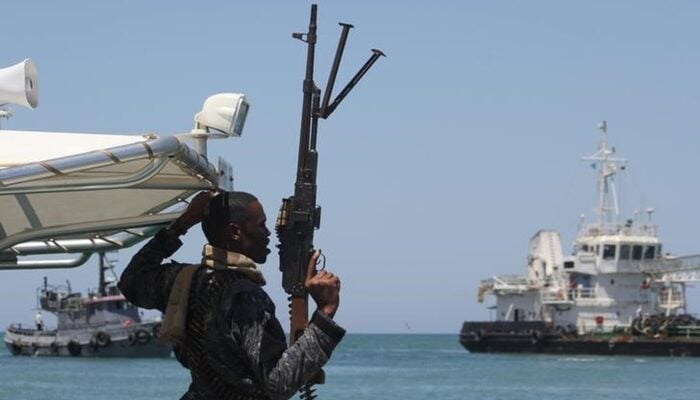
A Bangladesh-flagged oil tanker has been seized by Somali pirates in waters near the Somali coast, and reports have confirmed that 11 Pakistani nationals are among the crew members currently held on the vessel. Pakistan's Ministry of Maritime Affairs has stated that immediate steps are being taken, that diplomatic channels are being activated, and that all possible measures are being pursued to secure the safe release of the crew.
For the families of those 11 Pakistani crew members, the official language of "immediate steps" and "diplomatic channels" provides some reassurance that the situation is being taken seriously — but it cannot substitute for the specific, concrete information about the safety and condition of their loved ones that those families most urgently need. Maritime piracy situations are notoriously difficult and slow to resolve, and the experience of waiting for news from a vessel held by pirates is one of the most agonising situations a family can be placed in.
What We Know About the Incident
The seizure of a vessel by Somali pirates follows a pattern that has been documented extensively over the past two decades — opportunistic attacks on commercial shipping in the waters off the Horn of Africa, typically targeting vessels that are considered vulnerable due to their size, speed, routing, and the level of security personnel onboard.
The vessel in this case is a Bangladesh-flagged oil tanker — a commercial cargo ship carrying oil, which by its nature involves valuable cargo that increases the incentive for pirates to seize and hold it pending ransom negotiations. Oil tankers are also typically slower-moving vessels than other types of commercial ships, which makes them more vulnerable to interception by small, fast pirate craft in open water.
The crew composition — involving Pakistani nationals alongside presumably Bangladeshi and possibly other nationalities given the typical make-up of international commercial shipping crews — reflects how genuinely international the maritime workforce is. Crew members on commercial vessels are often recruited from multiple countries, with Pakistani, Filipino, Indian, and Bangladeshi seafarers making up a significant proportion of the global maritime labour force. Pakistani maritime workers serve on vessels flying flags from dozens of different countries, and their welfare when those vessels encounter danger is a direct responsibility of the Pakistani state even when the ship itself is not Pakistani-flagged.
The exact circumstances of the seizure — how it happened, where precisely it occurred, how many pirates were involved, and what the current status of the vessel and crew is — are still being confirmed by authorities. Maritime incidents in the waters off Somalia can be difficult to verify quickly because of the distance from major population centres, the limited communication infrastructure in the region, and the deliberate effort by pirates to control information flow once a vessel is in their hands.
Pakistan's Response — What the Ministry Is Doing
The Pakistan Ministry of Maritime Affairs' confirmation that immediate steps are being taken and that officials are in contact with relevant international authorities is the expected and appropriate response to an incident of this kind — but it is worth understanding what those steps actually involve, because the mechanics of responding to a maritime piracy incident are considerably more complex than the official language might suggest.
The most immediate priority is establishing contact with the vessel or with the pirates holding it, to determine the condition of the crew and to begin the process of communication that eventually leads to negotiations for their release. This typically involves multiple intermediaries — shipping company representatives, maritime security specialists, diplomatic contacts in the region, and international organisations that have experience facilitating communications in exactly these situations.
Pakistan's diplomatic missions in the relevant region — including in Somalia, in neighbouring East African countries, and in countries that have significant influence over Somali affairs — will be mobilised to whatever extent possible to gather information and support the effort to secure the crew's release. The Pakistani government will also be in direct contact with the shipping company that operates the vessel, which has its own crisis management procedures and its own commercial incentives to resolve the situation as quickly as possible.
International maritime organisations — including the International Maritime Organization, which coordinates global responses to piracy incidents — will be informed and will contribute to the response through their established channels. Naval forces from various countries that maintain a presence in the region specifically to address the Somali piracy threat will also be part of the broader picture, though their ability to intervene directly in an active hostage situation is constrained by the risks that direct action poses to the crew.
The assurance that "all possible measures" are being taken is not empty language in this context. The range of tools available for responding to a maritime piracy incident is genuinely broad, and Pakistani officials and the international community have experience deploying those tools from previous incidents in the region. But the process is rarely fast, and the uncertainty for families during the period between seizure and resolution is a genuine and difficult human reality that official statements can acknowledge but cannot eliminate.
The 11 Pakistani Crew Members — Who They Are and What Their Families Are Facing
Behind the number — 11 Pakistani nationals — are 11 individual people with families, with lives, with stories that have nothing to do with geopolitics or maritime security policy. They are seafarers who chose a profession that takes them far from home for months at a time, a profession that carries inherent risks that most people on land never have to think about, and a profession that provides livelihoods for thousands of Pakistani families who depend on the remittances that merchant seamen send home from wherever their vessels take them.
Pakistan has a significant maritime workforce — tens of thousands of Pakistani seafarers serve on commercial vessels around the world at any given time, contributing to an industry that plays an important but often invisible role in the global economy. The Karachi-based maritime community, in particular, has a long tradition of seafaring that stretches back generations. Families in which one or more members has worked at sea are common, and the culture of that community involves both pride in the profession and an intimate understanding of its risks.
For the families of the 11 crew members currently held on the seized tanker, the news of the piracy incident will have arrived with the particular shock that seafaring families learn to dread — the phone call or the news report that turns the background anxiety of having a family member at sea into an immediate and urgent crisis. Those families will be waiting for information, for contact, for any signal that their loved ones are safe and that a process toward their release is genuinely underway.
The Pakistan government's responsibility to those families extends beyond official statements and diplomatic contacts. It includes keeping them informed to the maximum extent possible, providing them with access to the support and counselling services that families in crisis situations need, and treating their loved ones' safe release as a genuine priority rather than a bureaucratic obligation to be managed through standard procedures.
Somali Piracy — A Threat That Returned
For anyone following maritime security over the past decade, the seizure of a vessel off the Somali coast carries a particular resonance because it echoes a period of intense piracy activity that the international community spent enormous resources and effort addressing — and believed it had largely brought under control.
The peak of Somali piracy activity came in the years between roughly 2007 and 2012, when attacks on commercial shipping in the Gulf of Aden and the wider Indian Ocean reached levels that were genuinely alarming for global trade. At the height of this period, dozens of vessels were being seized annually, hundreds of seafarers were being held hostage at any given time, and the ransoms being paid by shipping companies and their insurers were running into hundreds of millions of dollars annually.
The response that eventually brought this wave of piracy under control was a combination of factors — increased naval patrolling by international coalitions including EU Naval Force Operation Atalanta, NATO, and individual country contributions; the deployment of armed private security teams on commercial vessels; changes in routing and operational practices by shipping companies; and some degree of capacity building within Somalia itself to address the conditions that made piracy an attractive livelihood option for young men in coastal communities with very limited economic alternatives.
By the mid-2010s, the combination of these measures had dramatically reduced the number of successful piracy attacks off Somalia. The threat had not been eliminated — the underlying conditions in Somalia that generate piracy had not fundamentally changed — but it had been suppressed to a level that allowed shipping to return to more normal patterns in the region.
The current incident is a reminder that suppression is not elimination. The capacity for piracy off the Somali coast has not gone away, and when the pressure from counter-piracy measures eases or when economic conditions in Somalia deteriorate further, that capacity tends to reassert itself. The current global environment — with significant maritime security resources stretched by multiple simultaneous tensions in different regions, including the ongoing disruption to Red Sea shipping from Houthi attacks — may have created conditions where Somali piracy groups have assessed that the risk-reward calculation has shifted in their favour.
The Broader Maritime Security Picture
The seized tanker off Somalia does not exist in isolation. It is one incident in a broader maritime security environment that has been more turbulent over the past year than it has been for some time, and that turbulence has significant implications for global trade, energy supply, and the safety of the hundreds of thousands of seafarers who keep the world's supply chains moving.
The Red Sea has been a particular flashpoint — Houthi attacks on commercial shipping in the waters off Yemen have forced major rerouting of vessels that would previously have passed through the Suez Canal, adding weeks and significant costs to journeys that now have to go around the Cape of Good Hope instead. That disruption has already had measurable effects on global shipping costs and timelines, with knock-on effects on the prices of goods that depend on those supply chains.
The Iran-US conflict and the disruption to the Strait of Hormuz added another layer of maritime security concern to an already stressed environment. The Strait of Hormuz is one of the most strategically critical chokepoints in global energy logistics, and its disruption sent immediate shockwaves through oil markets and shipping industries worldwide.
In this context, a piracy incident off Somalia — while geographically and operationally distinct from the Red Sea and Hormuz situations — adds to a picture of significant maritime insecurity across multiple important shipping corridors simultaneously. For countries like Pakistan that have significant numbers of nationals working in international shipping, and for the global trading system that depends on relatively safe and predictable maritime routes, the cumulative effect of these multiple security challenges is a genuine concern that deserves sustained international attention rather than being treated as a series of isolated incidents.
What International Cooperation Can Achieve
Pakistan's decision to immediately activate diplomatic channels and engage with international authorities reflects an understanding that maritime piracy incidents cannot be resolved effectively through unilateral national action alone. The geographic distance involved, the jurisdictional complexity of incidents in international waters involving vessels flagged in one country and crewed by nationals of multiple others, and the practical realities of negotiating with pirates holding hostages require international coordination and cooperation that no single country can provide on its own.
The international framework for responding to Somali piracy is well established from the peak years of the threat. Contact groups, information-sharing mechanisms, coordinated naval patrolling, and established protocols for incident response all exist and have been tested extensively. Pakistan's engagement with these existing mechanisms — rather than trying to manage the situation entirely bilaterally — is the right approach and is likely to produce better outcomes for the crew than any attempt to handle it purely as a Pakistani national matter.
The Bangladesh government, whose flag the vessel flies, also has a direct stake in the resolution of this incident and will be coordinating its own response. The relationship between Pakistan and Bangladesh in managing this situation together — ensuring that the crew members of both nationalities are equally prioritised in the response — is itself a dimension of the incident that diplomatic channels will need to manage carefully.
International naval forces that maintain a presence in the region — several European navies, the US Navy, and others — have the capability to monitor the situation and to provide a deterrent backdrop to whatever negotiations unfold. Their involvement, even at a monitoring and standby level rather than through direct intervention, is part of the pressure environment that eventually shapes how piracy situations resolve.
The Human Cost of Maritime Piracy
Statistics about piracy incidents — numbers of attacks, vessels seized, ransoms paid — can make the phenomenon sound like an abstract security and economics problem. It is not. It is a human problem with very direct and very serious consequences for the individuals caught in it and for the families who love them.
Seafarers held by Somali pirates have historically been detained for months and sometimes over a year while negotiations for their release proceed. During that time, they are held in conditions that range from basic to genuinely harsh, with limited access to communication with their families, uncertain food and medical care, and the constant psychological stress of living in captivity in a dangerous and unpredictable environment. The mental health consequences of extended captivity for seafarers — and for their family members waiting at home — have been documented and are serious.
The 11 Pakistani seafarers currently onboard the seized tanker are facing exactly this kind of situation. Whether their experience resolves quickly or drags on for months will depend on factors that are largely outside their control — the priorities and calculations of the pirates holding them, the speed and effectiveness of negotiations, the decisions of the shipping company and its insurers, and the engagement of the various governments and international bodies with roles in the response.
What the Pakistani government, the international community, and everyone with any capacity to contribute to the resolution of this situation owes those 11 people is a genuine, sustained, and prioritised effort to bring them home safely. They went to sea to earn a living, to support their families, to do the work that keeps the global economy moving. They deserve better than to be treated as a footnote in a maritime security report.
Final Thoughts
The seizure of a Bangladesh-flagged tanker with 11 Pakistani crew members onboard is a serious incident that demands and is receiving serious attention from Pakistan's government and from the international maritime community. The Ministry of Maritime Affairs' quick response and activation of diplomatic channels reflects the appropriate urgency for a situation involving Pakistani nationals in danger far from home.
The broader context — a maritime security environment that has been under significant stress from multiple simultaneous challenges across different regions — gives this incident a significance beyond the immediate situation of the specific vessel and crew. It is a reminder that the suppression of Somali piracy that was achieved over the past decade was not a permanent solution to a problem whose root causes have not been addressed, and that sustained international vigilance and cooperation in maritime security is not optional if the gains of the past decade are to be maintained.
Most immediately and most importantly, 11 Pakistani families are waiting for news of their loved ones. The government's commitment to using every available channel to secure their safe release needs to be matched by the sustained, specific, and prioritised action that commitment requires. Those seafarers — and the families counting the days until they come home — deserve nothing less.