Iran Sets Condition for US Talks After Call with PM Shehbaz
Iran Links Talks to End of Blockade — And the Message to Washington Is Clear
If anyone was hoping that the diplomatic momentum from the Islamabad talks would carry smoothly into a second round of negotiations, Iran's president just made things considerably more complicated.
In a direct phone call with Pakistani Prime Minister Shehbaz Sharif, Iranian President Masoud Pezeshkian laid out Tehran's position without much ambiguity — negotiations with the United States cannot move forward as long as the blockade remains in place. Not slowed down. Not adjusted. Cannot move forward. That is a firm condition, not a suggestion, and it puts the ball squarely back in Washington's court before any further dialogue can realistically happen.
For Pakistan, which has invested significant diplomatic energy into keeping both sides engaged, this development is a serious complication. Not a collapse — but a serious complication. The kind that requires careful handling and a lot of patience.
The Phone Call and What Led to It
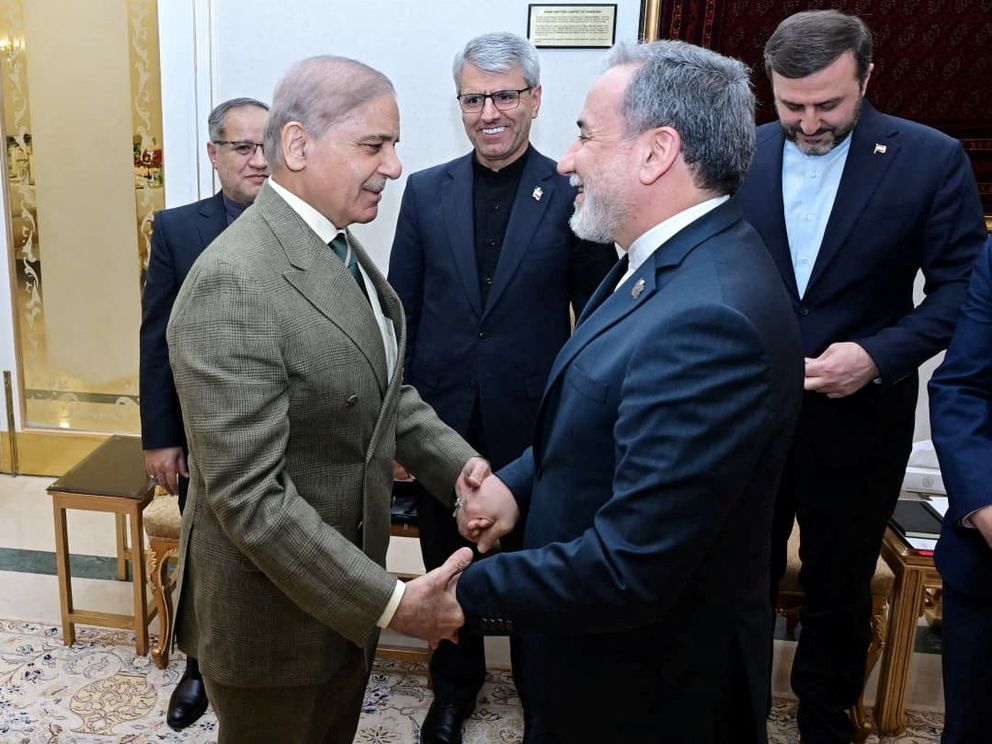
The conversation between Pezeshkian and Shehbaz Sharif happened shortly after Iran's Foreign Minister Abbas Araghchi made an in-person visit to Islamabad for a round of meetings with Pakistani officials. That visit itself was a signal that the communication channel between Tehran and Islamabad remains active and functional — which matters a great deal given how much of this entire process depends on Pakistan being trusted by both sides.
Araghchi's visit was part of Pakistan's ongoing effort to keep the diplomatic process alive even when the bigger picture looks uncertain. Islamabad has been doing a lot of this kind of quiet, consistent groundwork — hosting delegations, facilitating conversations, carrying messages in both directions — without always making noise about it publicly. The phone call between the two heads of state that followed was a natural extension of that work.
But the content of the call was harder to manage than the logistics of it. Pezeshkian's message to Shehbaz was not a green light for resuming talks anytime soon. It was an explanation of exactly what conditions need to change before Iran is willing to come back to the table in any meaningful way.
What Pezeshkian Actually Said — Breaking It Down
The Iranian president made two distinct but related points during the call, and both of them are worth looking at carefully because they tell you something important about where Tehran's thinking actually is right now.
The first point was about the blockade specifically. Pezeshkian said that operational obstacles — and he named the blockade directly — must be removed before new negotiations can begin. This is not a vague diplomatic grievance. It is a concrete, specific condition. Iran is saying: remove this particular thing, and then we can talk about talking. Leave it in place, and there is nothing to discuss.
The second point was about the broader environment for negotiations. He said Iran will not hold talks under pressure or under the threat of military action. It needs a fair environment — one where both sides come to the table on equal footing rather than one side sitting under the shadow of potential military strikes while the other side applies maximum pressure and demands concessions.
Put those two points together and you get a clear picture of how Tehran sees the current situation. From Iran's perspective, asking them to negotiate while a blockade is actively squeezing their economy and while military threats remain on the table is not diplomacy — it is coercion dressed up as diplomacy. And Iran is telling Pakistan, in clear and direct language, that it will not participate in that version of events.
Whether that position is reasonable or not depends entirely on which side of the table you are sitting on. Washington would argue that the pressure is precisely what brought Iran to the table in April in the first place, and that removing it prematurely would simply allow Tehran to slow-walk any agreement. Tehran would argue that no country can negotiate seriously with a gun pointed at its head. Both arguments have some logic to them, which is exactly why this is so difficult.
Pakistan's Position — Still Committed, Still Working
Prime Minister Shehbaz Sharif's response during the call was measured and consistent with the role Pakistan has been playing throughout this entire process. He reaffirmed Pakistan's commitment to supporting dialogue and working toward regional peace. He did not take sides on the blockade question. He did not push back on Pezeshkian's conditions in a way that would risk damaging the trust Iran has placed in Islamabad.
That balancing act — staying close enough to Iran to remain useful as a mediator while not alienating Washington by appearing to endorse Tehran's demands — is genuinely difficult to maintain. Pakistan has been doing it remarkably well so far, but every development like this one tests that balance a little more.
What Pakistan can realistically do in this situation is continue being the channel through which both sides communicate their positions to each other, try to identify areas of potential flexibility that neither side is willing to state publicly, and keep pushing gently for conditions that might allow talks to resume without either side feeling like they have publicly surrendered their position. That is not glamorous work. It does not produce dramatic headlines. But it is the actual substance of what mediators do.
Islamabad has also been working alongside Oman in this process — Oman has its own long history of facilitating quiet US-Iran communications and has been an important parallel channel throughout this period. The combination of Pakistan's direct personal relationships with both Washington and Tehran and Oman's specialized expertise in US-Iran back channels gives the mediation effort more depth than it might appear from the outside.
The Blockade Question — Why It Matters So Much to Iran
To understand why the blockade condition is such a hard line for Tehran, it helps to think about what a blockade actually means for a country on the receiving end of it.
A naval or economic blockade is not a neutral act. It is an active, ongoing application of pressure that affects real economic activity, real trade, and real living conditions for ordinary people inside the country. Iran's economy, already under significant strain from years of sanctions, is particularly sensitive to disruptions in its ability to move goods and oil through maritime routes.
From Tehran's perspective, sitting down to negotiate while a blockade actively squeezes the country is not a position of dignity or equality. It signals to the Iranian public — and to Iranian hardliners who are already skeptical of any talks with America — that the government is negotiating from weakness rather than choosing dialogue from a position of confidence. That internal political dimension is not something Western analysts always give enough weight to, but it matters enormously for what any Iranian government can actually agree to without losing domestic credibility.
Iran's leadership has been navigating a very difficult internal balance throughout this entire process. There are genuine moderates who believe dialogue with the US is necessary and potentially beneficial. And there are powerful hardline factions who view any talks with Washington as a betrayal of revolutionary principles and an invitation to be exploited. Every concession Iran makes in public — or is perceived to make — strengthens the hardliners' argument and weakens the reformists'.
Pezeshkian linking talks to the end of the blockade is partly a genuine policy position and partly a way of managing that internal political reality. He needs to be able to tell domestic audiences that Iran is not negotiating under duress — that it negotiates on its own terms, when conditions are right, not when America decides it is convenient.
Washington's Likely Response — Reading Between the Lines
The Trump administration's approach to the Iran situation has been a mix of genuine interest in a deal and a style of public communication that makes careful diplomacy harder. Trump has publicly claimed agreements that Iran immediately denied. He has made statements about military options that Tehran has cited as evidence of bad faith. And his negotiating philosophy — maximum pressure as the baseline, with any relief conditional on Iran meeting specific demands — is almost the opposite of what Iran says it needs to come back to the table.
At the same time, there are people within the American diplomatic team who understand that the process requires careful management and that public statements do not always reflect private flexibility. Steve Witkoff and the other envoys involved have experience in complex, multi-party negotiations where the public posture and the private conversation are deliberately different.
The question is whether there is enough private flexibility on the blockade question — or on the conditions surrounding talks — to give Iran what it needs to justify coming back to the table. That probably cannot be resolved through public announcements. It would have to happen through exactly the kind of quiet back-channel work that Pakistan and Oman have been doing.
If Washington is willing to show some movement on the blockade, even partial or conditional movement, it creates space for Tehran to say that conditions have improved sufficiently to justify resuming dialogue. If Washington holds completely firm and insists on talks continuing under current conditions, Iran has now publicly committed to a position that makes accepting that very difficult.
Why No Breakthrough Has Come Yet — And What That Actually Means
The April talks in Islamabad ran for 21 hours across three rounds and produced no final agreement. In the weeks since, despite continued diplomatic contacts, no major breakthrough has emerged. Both sides remain firm on their core positions. The ceasefire has been extended but not consolidated into anything permanent. And now Iran has added the blockade condition as a prerequisite for returning to substantive talks.
It would be easy to read all of that as failure. But that is probably the wrong frame for this particular situation.
US-Iran diplomacy has historically moved in very slow, non-linear ways. The 2015 nuclear deal — the JCPOA — took years of patient, painstaking negotiation through multiple channels before it was finally reached. And it was reached precisely because both sides decided at some point that an agreement, even an imperfect one, was better than the alternative. Getting to that point required a lot of conversations that went nowhere, a lot of meetings that ended without progress, and a lot of moments where outside observers concluded that talks were dead.
The current situation is not that different structurally. The fact that Iran is still communicating through Pakistan, that Araghchi visited Islamabad in person, that Pezeshkian took the time to call Shehbaz Sharif and explain Tehran's position clearly — none of that is the behavior of a side that has decided to walk away entirely. It is the behavior of a side that is frustrated and setting conditions, but still keeping the door open enough to stay in the conversation.
That distinction matters. A closed door and a door with conditions are not the same thing.
The Regional Stakes — Why This Cannot Just Be Left to Stall
Whatever diplomatic fatigue might be setting in among the negotiators and the observers, the stakes of this process are too high for anyone to simply shrug and wait it out indefinitely.
The Strait of Hormuz remains under stress as long as the conflict continues. Global oil prices stay elevated. Pakistan's own fuel costs — which already caused a serious domestic crisis in early April — remain higher than they would be in normal circumstances. Regional countries that depend on stable shipping routes are watching nervously. And the risk of escalation, while currently contained, does not disappear just because a ceasefire is in place.
Every week that passes without progress toward a more durable arrangement is a week where something could go wrong in an unpredictable way — a military incident, a miscalculation, a domestic political shift in either Tehran or Washington that changes the calculus entirely. The longer the situation stays in this fragile, unresolved state, the more opportunities there are for it to get worse rather than better.
That is the urgency that Pakistan and other mediating parties carry with them into every phone call and every meeting, even when the public communications look calm and measured. The pressure to find a path forward is not just diplomatic — it is practical and regional in a very direct sense.
Final Thoughts
Iran linking the resumption of talks to the lifting of the blockade is a significant development — not because it ends the diplomatic process, but because it clarifies exactly what the next obstacle is and how high the bar has been set for the next stage of negotiations.
Pakistan now has to carry that message to Washington while keeping Tehran engaged enough to stay in the conversation. That is a hard thing to do well. But Islamabad has been doing hard things well throughout this entire process, and there is no obvious reason to assume it cannot continue doing so.
The situation remains genuinely uncertain. A breakthrough is possible. A prolonged stalemate is equally possible. What is clear is that the work continues, that the channels of communication remain open, and that Pakistan is still very much in the middle of one of the most consequential diplomatic efforts of this decade.
The world is still watching. And so is Islamabad — carefully, patiently, and with a great deal riding on getting this right.