Pakistan and Climate Change — How One of the World's Most Vulnerable Countries Is Fighting for Its Future
ISLAMABAD — In 2022, unprecedented monsoon rains submerged one-third of Pakistan, affecting 33 million people, destroying 2.2 million homes, and causing over 0 billion in economic losses. The catastrophe was described by UN Secretary-General António Guterres as a 'climate catastrophe' — a devastating illustration of how a country that contributes less than one percent of global greenhouse gas emissions can bear the heaviest burden of climate change. Four years later, the crisis has only deepened. Pakistan in 2026 is confronting accelerating glacial melt, record-breaking heatwaves approaching 50°C, shifting monsoon patterns bringing up to 26 percent more rainfall, and the inexorable pressure of environmental change on every aspect of national life.
The Unfolding Crisis — 2026 in Review
The year 2026 has been relentless for Pakistan's climate. In February, unusually warm winter temperatures saw daytime readings in Gilgit-Baltistan reach 3-5°C above normal, with reduced overnight refreezing that accelerates glacial melt. By April and May, temperatures had soared above 40°C across much of Sindh, Balochistan, and Punjab, with areas like Dadu, Jacobabad, and Larkana projected to reach 46-50°C. The intense heat is attributed in part to a Super El Niño phenomenon converging with existing global warming trends.
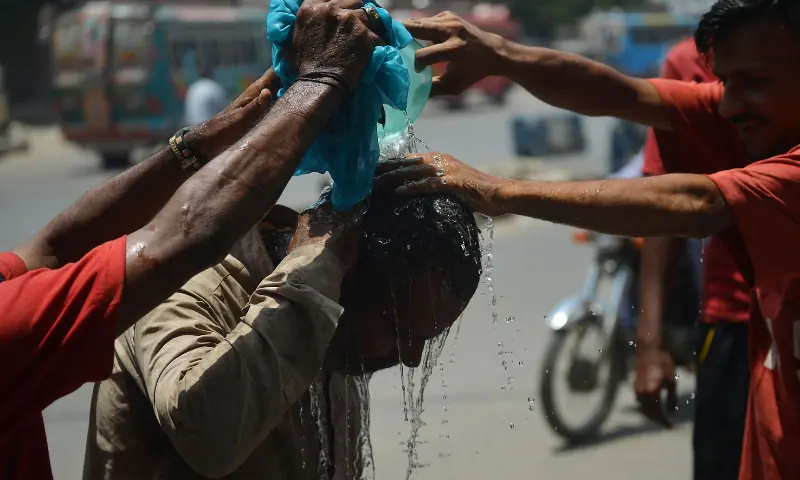
The Pakistan Meteorological Department has issued repeated warnings, advising the public to take precautions against severe heat conditions. Hospitals report a surge in heatstroke cases, and power grids have come under severe strain as air conditioner use skyrockets, causing load-shedding blackouts across major cities. The heat has been particularly devastating for outdoor workers, farmers, and the urban poor, who lack access to cooling and bear the brunt of the extreme conditions.
The situation is further compounded by devastating monsoon rains and flash floods in March and April, which caused fatalities and extensive damage to infrastructure and homes, particularly in Khyber-Pakhtunkhwa and Balochistan. Karachi experienced heavy rains and severe flooding in March, leading to casualties and paralysis of the city's already strained infrastructure. The 2026 monsoon season is anticipated to be up to 26 percent more intense than that of 2025, elevating the risk of widespread destruction and threatening the gains made in post-2022 flood recovery.
Glacial Melt — The Third Pole in Crisis
Perhaps the most alarming dimension of Pakistan's climate crisis is the accelerated melting of the glaciers in the Hindu Kush-Himalaya-Karakoram region. These glaciers, often called the 'Third Pole' for the vast amount of freshwater they store, are vital for sustaining over 220 million people in Pakistan and irrigating 90 percent of the country's agricultural land. They are receding annually at an accelerating rate, threatening both short-term flood risks and long-term water security.
The National Disaster Management Authority has issued warnings about Glacial Lake Outburst Floods, flash floods, and landslides in mountainous regions of Khyber-Pakhtunkhwa, Gilgit-Baltistan, and Azad Kashmir. When glacial lakes formed by melting ice suddenly burst their moraine dams, they unleash torrents of water and debris that can devastate communities in the valleys below. As the pace of glacial melt quickens, the frequency of these events is increasing. The government has identified over 3,000 glacial lakes in northern Pakistan, with dozens classified as potentially dangerous.
The long-term implications of glacial melt are even more profound. As the glaciers that feed the Indus River system recede, the seasonal flow of water that supports Pakistan's agriculture, hydropower, and domestic water supply will become more erratic. 'Peak water' — the point at which glacial meltwater begins to decline permanently — may arrive within decades, after which Pakistan will face a permanent reduction in its primary water source. This prospect, combined with the country's already severe water scarcity, represents an existential challenge.
Heatwaves — A New Normal
Heatwaves have become a defining feature of Pakistani summers, and 2026 has been among the hottest on record. The extreme heat is more than an inconvenience — it is a direct threat to life, health, and economic productivity. The heatwave conditions are associated with a phenomenon where high temperatures persist for extended periods, preventing the body from cooling down overnight, leading to cumulative heat stress that can be fatal, particularly for the elderly, children, and those with pre-existing health conditions.
Urban areas are particularly vulnerable due to the heat island effect, where concrete and asphalt absorb and re-radiate heat, making cities significantly hotter than surrounding rural areas. Poor urban planning, lack of green spaces, and inadequate building design compound the problem. In Karachi, the country's largest city, summer temperatures regularly exceed 40°C, with humidity pushing heat index values even higher. The city's inadequate power infrastructure means that many residents cannot afford or access air conditioning, even when electricity is available.
The economic impact of heatwaves is substantial. Reduced labor productivity in sectors that require outdoor work, increased healthcare costs, damage to infrastructure, and reduced agricultural yields all take a toll on the economy. The World Bank has estimated that climate change could reduce Pakistan's GDP by up to 18 percent by 2050 if adaptation measures are not implemented at scale.
National Response and Policy
Pakistan has not been passive in the face of these challenges. The government has developed a National Climate Change Policy, a National Adaptation Plan, and sectoral strategies for water, agriculture, and disaster management. The country has also been a leading voice in international climate negotiations, advocating for loss and damage financing and climate justice for developing nations.
Initiatives like Recharge Pakistan, which focuses on ecosystem-based adaptation through wetland restoration and floodplain management, and the Living Indus project, which aims to restore the ecological health of the Indus River basin, represent innovative approaches to building climate resilience. The Breathe Pakistan International Climate Change Conference, hosted in partnership with Dawn in 2026, brought together policymakers, experts, and stakeholders to discuss climate change as a national priority, cutting across governance, security, and development.
Federal Minister for Finance Muhammad Aurangzeb declared climate change an existential threat to Pakistan, impacting its economic stability and growth potential. Despite these high-level declarations, a significant challenge remains in the lack of technical expertise in climate science and adaptation planning within government bodies. Pakistan ranks 15th in the Climate Change Performance Index but receives low ratings in Climate Policy and Renewable Energy, indicating a gap between ambition and implementation.
The Human Cost
Behind the statistics and policy documents are the lived experiences of millions of Pakistanis who cope with climate impacts daily. The farmers whose crops fail due to erratic rainfall, the families displaced by floods, the laborers who cannot work during heatwaves, the children who miss school due to climate-related disruptions — these are the human faces of the climate crisis. The most vulnerable communities, including women, children, the elderly, and the poor, bear a disproportionate share of the burden despite having contributed the least to the problem.
Pakistan's climate crisis also drives displacement and migration, with people moving from affected rural areas to cities in search of livelihoods. This internal migration places additional pressure on urban infrastructure and services, creating new challenges for city governments already struggling to meet the needs of existing populations.
Conclusion
Pakistan's confrontation with climate change is a story of vulnerability, resilience, and the urgent need for action on a scale that matches the magnitude of the threat. The country is already experiencing the effects of a warming world in ways that more developed nations have yet to face — from the catastrophic floods of 2022 to the accelerating glacial melt, intensifying heatwaves, and shifting monsoon patterns of 2026. Pakistan's response, including innovative adaptation programs and a strong voice in international climate forums, is commendable but insufficient given the scale of the challenge.
The road ahead requires sustained investment in climate adaptation, improved disaster preparedness, better urban planning, a transition to renewable energy, and the technical expertise to design and implement effective climate policies. It also requires the international community to fulfill its commitments on climate finance and technology transfer, recognizing that climate justice demands that those who have contributed most to the problem support those who are suffering its worst consequences. For Pakistan, climate change is not a distant threat — it is a present reality that demands immediate and sustained action.