PM Shehbaz Approves Spectators for PSL Final in Major Decision
PM Approves Fans at PSL Final — And Cricket Fans Across Pakistan Are Celebrating
If you follow Pakistani cricket even casually, you already know that the Pakistan Super League final is not just another match. It is the biggest domestic cricket event in the country — the kind of occasion that stops conversations, fills screens in homes and chai shops across every city and town, and generates the sort of collective national energy that very few sporting events can produce. People care about it deeply, passionately, and sometimes unreasonably loudly.
So when news broke that Prime Minister Shehbaz Sharif had approved a decision to allow spectators back into the stadium for this year's PSL final, the reaction from fans was immediate and enthusiastic. After earlier matches in the tournament had been played without crowds — due to a combination of administrative decisions and cost control measures — the prospect of a packed stadium for the final felt like something genuinely worth celebrating.
This is not a trivial decision. It came after strong and sustained requests from franchise owners who have significant commercial stakes in the tournament's atmosphere and viewership, and from the Pakistan Cricket Board, which understands better than most how fundamentally a live crowd changes the experience of a cricket final — for the players on the field, for the broadcasters transmitting the event to millions of homes, and for the fans who make the whole enterprise worth caring about in the first place.
Why Were Crowds Absent in Earlier Matches?
Before getting into what the return of fans means for the PSL final, it is worth understanding why crowds were not present for the earlier matches in the first place — because that context matters for appreciating just how significant the PM's approval actually is.
The decision to play matches without spectators was not made lightly or without reason. Administrative considerations around the management of large crowds in the current security environment, combined with decisions aimed at controlling costs and logistics during what has been a demanding period for Pakistan's security and administrative apparatus, led to the earlier matches proceeding in empty or restricted stadiums.
Anyone who has watched cricket in an empty stadium knows what that feels like on television. The game is still happening — the bowlers are still running in, the batsmen are still trying to hit the ball to the boundary, the fielders are still diving and celebrating. But something essential is missing. The roar that follows a crucial wicket, the collective sharp intake of breath when a boundary is inches away, the chants and songs and noise that give a live match its emotional texture — all of that disappears when the stands are empty, and the product that goes out to viewers loses something real and irreplaceable.
Franchise owners felt this acutely. The PSL is not just a cricket competition — it is a commercial enterprise built around entertainment, engagement, and the kind of spectacle that attracts sponsors, broadcasters, and the investment that keeps the whole tournament functioning at a high level. Empty stadium cricket is harder to sell to sponsors, harder to broadcast in a compelling way, and harder to justify the financial investment that franchises make to compete at this level.
The PCB felt it too. The board's responsibility is not just to run a cricket competition but to grow the game in Pakistan — to build audiences, inspire young players, and maintain the culture of passionate, engaged cricket fandom that has always been one of Pakistan's genuine sporting strengths. Playing the biggest match of the PSL calendar without fans in the stands was always going to feel like a compromise of everything the tournament is supposed to represent.
Both sets of stakeholders made their case to the government. And the Prime Minister's approval shows that the case was heard and accepted.
What a Packed Stadium Actually Does to a Cricket Final
If you have never been to a live cricket match in Pakistan — or if you have only experienced the somewhat sanitised atmosphere of franchise cricket in other countries — it is genuinely difficult to describe what a Pakistani crowd brings to a big game. It is not just noise. It is something more specific and more powerful than that.
Pakistani cricket crowds have a particular energy that players and coaches from visiting teams consistently describe as one of the most intense sporting atmospheres they have experienced anywhere in the world. The combination of genuine, deep cricketing knowledge — these are fans who understand the game intimately and react to it with educated passion — and the kind of unrestrained emotional investment that Pakistani supporters bring to every ball makes for something that really does change the dynamics of what is happening on the field.
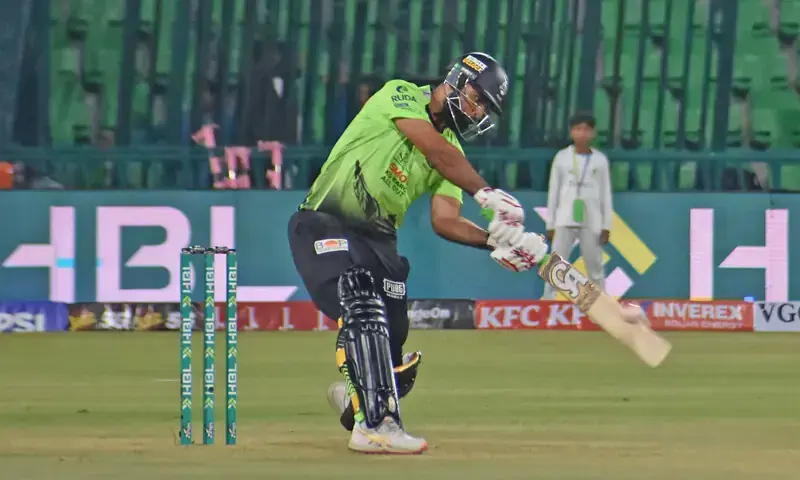
Bowlers bowl differently in front of a full crowd. The energy lifts them. A wicket celebration in front of 30,000 screaming fans hits differently than the same celebration in an empty stadium. Batsmen under pressure feel the weight of the crowd's expectation in ways that show up in their body language and sometimes in their shot selection. The mental dimension of cricket — already enormous at the highest level — gets amplified by the presence of a passionate, engaged crowd in ways that are real and measurable in what happens during the match.
For a PSL final specifically — where the two best teams in the tournament face each other in a knockout match where every ball, every run, and every wicket carries maximum consequence — having a full crowd transforms the occasion from a high-quality cricket match into a genuine sporting spectacle. The difference is not marginal. It is the difference between watching something and experiencing something.
And for the players themselves, many of whom have come through Pakistan's domestic system and dreamed of playing in exactly this kind of game, the chance to perform in front of a full house at the PSL final is the kind of opportunity that defines careers and creates memories. That matters beyond the entertainment value — it matters for what Pakistani cricket means to the people who play it.
The PCB's Response and What Comes Next
The Pakistan Cricket Board welcomed the Prime Minister's decision and expressed its thanks to the government for supporting the return of fans for the final. The board's response was measured and professional, but the relief behind it was probably significant — the PCB has a strong institutional interest in the PSL final being the kind of occasion that lives up to its billing as Pakistan's premier cricket event.
With the approval in place, the board now faces the practical work of making the crowd return happen safely and effectively. This is not as simple as just opening the gates and letting people in. A major cricket final with a full stadium capacity involves detailed preparation across several areas that all have to work together smoothly on match day.
Seating arrangements and ticket allocation are the most immediate practical task. Deciding how many tickets are available, how they are distributed between different categories of fans — season holders, general public, VIP and corporate allocations — and the pricing structure that applies to each category all need to be worked out and communicated clearly before the public can plan their attendance.
Security arrangements for a high-profile event of this nature in the current environment are necessarily extensive and detailed. Coordinating between the PCB's own security arrangements, local law enforcement, and any additional security resources that are deployed for an event of this profile requires careful planning and clear communication between multiple agencies. Getting this right is non-negotiable — the safety of fans inside and outside the stadium is the foundation on which everything else rests.
Crowd management — the systems for getting large numbers of people into and out of a stadium efficiently and safely, managing behaviour inside the ground, and responding to any issues that arise during the match — is another area where careful preparation makes the difference between a smoothly run event and a chaotic one. The PCB has experience running large cricket events, but the specific arrangements for this final will need to reflect the particular venue, the expected crowd size, and the security context.
Officials confirmed that details about ticket availability and specific stadium arrangements will be shared with the public soon. For fans planning to attend, keeping an eye on official PCB communications is the best way to get accurate information as it becomes available.
What This Means for Franchise Owners
The franchise owners who pushed hard for the return of crowds to the PSL final had both commercial and competitive reasons for doing so, and it is worth spending a moment on both.
On the commercial side, the presence of a live crowd at a major match affects the entire revenue picture around the event. Ticket sales are the most obvious component, but the crowd's presence ripples through sponsorship value, broadcast production quality, merchandise sales at the venue, and the kind of brand visibility that sponsors pay premium prices to secure. An empty stadium is a significantly weaker commercial proposition than a full one — the energy, the visuals, and the engagement that paying crowds provide are central to the value that the PSL offers to its commercial partners.
Franchise owners have invested substantial sums in building their teams, their brands, and their fanbase. The PSL final is the highest-visibility moment of the entire season — the occasion when the investment in players, coaching, and marketing either pays off in the most public possible way or falls short on the biggest stage. Having that moment happen in front of a full, passionate crowd rather than in an empty stadium is not just a preference — it is the difference between a commercial success and a significantly diminished version of one.
On the competitive side, home crowd support — or the lack of it — can genuinely influence outcomes in closely contested cricket matches. Both finalists will have their own fanbase who will want to travel to the stadium and support their team. The presence of those supporters creates an atmosphere that can lift a team that is under pressure and make life harder for the opposition. Cricket is fundamentally a mental game at the highest level, and crowd dynamics are part of that mental environment. Franchise owners understand this, and the return of fans to the final means the competitive element of the match is as complete as it should be.
Fan Reaction — The People Who Matter Most
Beyond the official statements and the commercial considerations, the most important reaction to this decision comes from the fans themselves. And by any measure, the reaction has been overwhelmingly positive.
Pakistani cricket fans are among the most passionate and knowledgeable in the world. The culture of cricket fandom in Pakistan runs deep — it is passed down through families, it shapes social conversations, and it produces the kind of genuine emotional investment in the national game that no marketing campaign can manufacture or replicate. The PSL taps into that culture and has built its own specific fandom around the franchise teams and the players who have made the tournament their own.
For fans who had watched earlier PSL matches on television and felt the absence of a live crowd as a real diminishment of the experience, the news that the final will have spectators was genuinely exciting. Social media reactions captured something real about how deeply Pakistani cricket supporters had missed being part of the live occasion — the sense that watching cricket in a packed stadium is a different and richer experience than watching the same match on a screen, however high the production quality.
For the fans who will now be able to attend the final in person, the experience they will have — the noise, the colour, the shared tension and celebration of watching a major match live — is one that stays with people for a very long time. Cricket finals are the kind of occasions that become memories, and giving fans the chance to be part of that memory rather than watching from a distance matters beyond the immediate entertainment value.
Ticket availability will be the next critical factor in determining how broad the fan participation in the final actually is. If tickets are priced accessibly and distributed in a way that gives genuine cricket supporters — not just corporate guests and VIP allocations — a real chance to be in the stadium, the atmosphere will reflect the passion of Pakistan's actual cricket fanbase. If the accessible portions of the ground are limited and most tickets go to higher-priced categories, the crowd will be present but may not generate the kind of energy that makes a PSL final special.
The PCB and the government would do well to keep this in mind as they finalise the ticketing arrangements. The decision to allow fans back was taken partly because of commercial pressures, but it was also explicitly about bringing back the atmosphere and excitement of live cricket for Pakistani fans. That stated goal is best served by making sure those fans can actually get into the stadium.
The PSL's Journey and Why the Final Matters So Much
To fully appreciate the significance of this decision, it is worth reflecting briefly on what the Pakistan Super League has meant for Pakistani cricket since it was launched and how it has grown into the institution it is today.
The PSL was created partly to bring high-quality franchise cricket back to Pakistan at a time when international teams were reluctant to tour the country due to security concerns. By building a tournament around Pakistan's domestic talent and supplementing it with international players willing to come and compete, the PCB created something that served multiple purposes simultaneously — developing Pakistani players by exposing them to high-pressure franchise cricket, providing entertainment for Pakistani fans who had been deprived of top-level live cricket, and gradually demonstrating that Pakistan was a safe and welcoming host for international cricketers.
The tournament has grown steadily in quality, in commercial value, and in the passion it generates among Pakistani cricket supporters. It has produced players who have gone on to represent Pakistan at international level with distinction. It has created rivalries between franchises that fans follow with genuine intensity. And it has become, in the space of a decade, a genuine institution in Pakistani sporting culture.
The final is the culmination of all of that — the match that crowns a champion, produces the moments that get replayed for years, and sends fans home either celebrating or devastated in the way that only sport at its best can achieve. It deserves to happen in a full stadium, with the noise and the colour and the collective energy that Pakistani cricket fans generate when they are all in the same place caring about the same thing.
The Prime Minister's decision ensures that this year's final gets that chance. And that is genuinely good news for Pakistani cricket.
Looking Ahead — Tickets, Security, and Match Day
With the political approval secured, the focus now shifts to the practical work of making the fan experience at the PSL final as good as it can be. A few things will determine how well this plays out in practice.
The speed and clarity with which ticket information is communicated to fans matters enormously. Fans need time to plan — to arrange travel, to coordinate with family and friends, to take time off work if necessary. The sooner the PCB can confirm pricing, availability, and the process for purchasing tickets, the better the fan experience will be even before match day arrives.
The security arrangements need to be thorough but not so intrusive that they undermine the experience of attending the match. Long, slow entry processes, excessive restrictions on what fans can bring into the ground, and heavy-handed crowd management all reduce the enjoyment of attending a live event. Getting the balance right — rigorous enough to ensure safety, streamlined enough not to ruin the occasion — is a real operational challenge that requires careful planning.
The venue and its facilities need to be ready for a full crowd. Catering, toilet facilities, seating condition, and the general state of the stadium all contribute to whether fans leave feeling that they had a great time or feeling that the experience was not worth the effort and expense. Pakistani cricket deserves better than a great match played in a poorly prepared venue, and the preparations between now and match day should reflect that.
If all of those elements come together — accessible tickets, smooth entry, good facilities, strong security, and of course a closely contested and exciting final on the pitch — this year's PSL final has the ingredients to be exactly the kind of occasion that Pakistani cricket has always been capable of producing at its best.
Final Thoughts
Prime Minister Shehbaz Sharif's approval of crowds for the PSL final is a decision that will be felt most directly by the fans who get to be in that stadium when the best two teams in Pakistani franchise cricket face each other for the championship. For them, this is about the experience of being part of something larger than themselves — the collective energy of a crowd united in caring about the same match, the same players, and the same outcome.
For Pakistani cricket more broadly, it is a reminder that the game's real home is not on a television screen or a streaming platform — it is in a stadium filled with people who love cricket deeply and express that love loudly. The PSL has built something genuinely valuable in Pakistani sporting culture over the past decade, and its final deserves to be celebrated in the way that Pakistani fans celebrate cricket — fully, noisily, and together.
The tickets are coming. The arrangements are being made. The players are preparing. And somewhere across Pakistan, cricket fans are already making plans to be part of a PSL final that, for the first time in too long, will sound exactly the way a final should sound.