
Putin Says Russia Will Support Iran to Achieve Peace Quickly
Putin Promises Support for Peace — But Russia's Role Is More Complicated Than It Sounds
When Vladimir Putin says Russia will do everything possible to support peace in the Middle East, the statement lands differently depending on who is listening and what they know about the history of Russian involvement in the region. For some, it is a welcome signal that one of the world's most powerful countries is throwing its weight behind a diplomatic resolution to a conflict that has already disrupted global energy markets and destabilised an entire region. For others, it is a carefully worded declaration from a country whose definition of supporting peace has historically aligned very closely with its own strategic interests rather than any abstract commitment to stability.
Putin made these remarks during a meeting with Iran's Foreign Minister Abbas Araghchi in Saint Petersburg — the latest stop on Araghchi's regional diplomatic tour that had already taken him through Islamabad and Muscat before arriving in Russia. The choice of Saint Petersburg rather than Moscow for this meeting is itself a small but interesting detail — it reflects the personal significance Putin places on the city and the more intimate, less formal diplomatic setting it provides compared to the Kremlin.
The meeting was substantive and the signals from both sides were deliberately warm. Putin expressed hope that peace would return to the region soon and said Russia's actions would be guided by the interests of Iran and all countries in the region. Iranian officials expressed appreciation for Russia's support. On the surface, it looked like exactly what it was officially described as — two close partners coordinating their positions during a sensitive diplomatic moment. Below the surface, the dynamics are considerably more layered.
What Putin Actually Said — Reading the Specifics
The specific language Putin chose in his statement to Araghchi is worth examining carefully, because the phrasing reveals something about how Russia is positioning itself in this situation rather than just what Russia is claiming to support.
He said Russia will do "everything possible" to support Iran and the wider region in achieving peace quickly. That formulation — everything possible — is simultaneously generous and carefully hedged. It promises maximum effort while building in the qualifier that what is possible is determined by Russia's own assessment of its capabilities and interests. It is a commitment that sounds unconditional but is actually defined by its conditions.
He also said Russia's actions will be guided by "the interests of Iran and all countries in the region." That is a broader framing than simply saying Russia supports Iran — it extends the scope of Russian concern to the entire regional situation, which gives Moscow the flexibility to engage with multiple parties and to present itself as a neutral or at least multi-directional actor rather than simply Iran's advocate. For a country that wants to maintain relationships with Gulf states, with various regional governments, and with the parties on all sides of the conflict, that broader framing is diplomatically useful.
What Putin did not say is as revealing as what he did. He did not commit to any specific actions. He did not offer concrete steps that Russia would take to support a ceasefire or a negotiated settlement. He did not publicly address the naval blockade that has been the central point of contention in the US-Iran diplomatic process. The statement was rich in expressed intent and short on operational specifics — which is characteristic of how Russia tends to position itself in diplomatic situations where it wants maximum influence with minimum binding commitment.
Why Araghchi Came to Russia — And What Iran Needed From This Visit
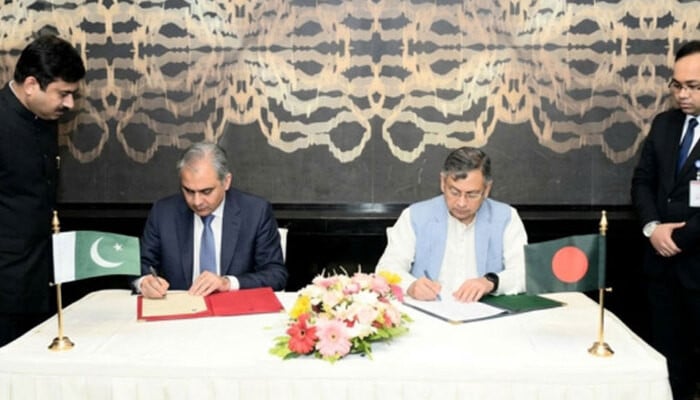
Araghchi's stop in Saint Petersburg came directly after his visit to Islamabad — where the second round of proximity talks between the United States and Iran, facilitated by Pakistan's extraordinary mediation efforts, was either underway or on the immediate horizon. The sequence of those visits — Pakistan first, then Oman, then Russia — reflects a deliberate Iranian diplomatic strategy that is worth understanding clearly.
Iran came to Russia after Islamabad for several specific reasons that go beyond the general maintenance of bilateral relations. The most immediate was the need to keep Moscow fully informed of what had been discussed in Pakistan and to ensure that Russia was not caught off guard by any developments in the Iran-US diplomatic process that might affect Russian interests or Russian calculations.
Russia has significant stakes in how the Iran-US situation resolves, and those stakes are not straightforwardly aligned with Iran getting the best possible deal. A comprehensive Iran-US settlement that lifts sanctions on Iranian oil exports would increase global oil supply and put downward pressure on prices — directly reducing the revenue that Russia depends on to finance its own ongoing conflict in Ukraine. A less isolated Iran might also be a less dependent strategic partner for Moscow, reducing Russia's leverage over Tehran in ways that matter for Russian interests in the broader regional picture.
Iran is aware of all of this. Araghchi, as one of Iran's most experienced and sophisticated diplomats, understands Moscow's calculation as well as anyone. The visit to Saint Petersburg was partly about reassuring Russia that Iran's engagement with the United States through Pakistan's mediation does not represent a pivot away from the Russia-Iran partnership, and partly about ensuring that Russia does not take any steps — in UN Security Council debates, in its own diplomatic communications, or in its military and economic relationships — that would complicate Iran's negotiating position at a critical moment.
Getting Putin to publicly commit to supporting peace on Iran's terms is also useful for Tehran's domestic political management of the negotiating process. Iranian hardliners who are skeptical of any engagement with America need to see that Iran is not isolated, that its most powerful strategic partner remains firmly supportive, and that whatever Tehran agrees to in Islamabad or beyond has the backing of a major world power. Putin's statement in Saint Petersburg provides exactly that kind of visible strategic support.
Russia's Strategic Interests in the Middle East — The Real Context
To understand what Russia's offer of support for peace in the Middle East actually means in practice, it is essential to look honestly at what Russia's strategic interests in the region are and how they shape Moscow's approach to the current conflict.
Russia has been a significant actor in the Middle East since its military intervention in Syria that began in 2015. That intervention transformed Russia's regional position — from a relatively marginal player that had lost much of its Soviet-era influence to an indispensable actor whose military presence and political relationships made it impossible to resolve the Syrian conflict without Russian involvement. The lesson Moscow drew from Syria was that military engagement, even at relatively modest cost, could dramatically amplify Russian influence and give Moscow a seat at tables it had previously been excluded from.
The current Iran-US conflict creates a similar opportunity structure for Russia. By positioning itself as a supportive partner to Iran while also presenting itself to the broader international community as a responsible actor interested in peace and stability, Russia can maintain influence over the diplomatic process without committing to any specific outcome that might bind its own hands. It gets the benefits of being seen as a constructive player without bearing the costs of genuine engagement.
Russia also has direct economic interests in Middle Eastern energy markets. As one of the world's largest oil and gas producers, Russia is acutely sensitive to anything that affects global oil prices and production levels. The Iran-US conflict has kept global oil prices elevated, which has benefited Russian export revenues during a period when those revenues are critically important for financing the Ukraine conflict. A rapid resolution that normalises Iranian oil exports and brings significant new supply onto global markets would reduce those prices and correspondingly reduce Russian revenues. Russia's interest in a "quick peace" is therefore somewhat complicated by the economic reality that the current state of elevated tension has not been entirely unwelcome from an energy revenue perspective.
The Russia-Iran Partnership — Genuine Alliance or Marriage of Convenience?
The relationship between Russia and Iran has been described in various ways — strategic partnership, tactical alignment, alliance of convenience, shared opposition to Western hegemony. All of those descriptions capture something real, and none of them captures the full picture.
What is genuine about the relationship is the depth of mutual interest that has developed over the past several years. Russia needs Iran as a supplier of military equipment — particularly the Shahed-series drones that have become a significant component of Russian operations in Ukraine — and as a partner in building economic and financial infrastructure that reduces dependence on Western-controlled systems. Iran needs Russia as a diplomatic shield in international forums, as a source of military technology and intelligence cooperation, and as the most powerful advocate for its positions in the Security Council where Russia's veto protects Tehran from the most severe international measures.
What is conditional about the relationship is that it rests on a foundation of shared interests rather than shared values, and those interests do not perfectly align on every question. Russia and Iran have competed for influence in Syria, have different views on the long-term future of various regional actors, and have economic interests that can pull in different directions as the energy market situation evolves. The relationship is real and significant, but it is not an unconditional alliance of the kind that the warmth of their public statements sometimes implies.
Putin's meeting with Araghchi in Saint Petersburg is a visible expression of the genuine dimensions of the partnership — two countries that need each other coordinating their positions at a critical moment and publicly demonstrating solidarity. The limits of that solidarity will become visible, if they become visible at all, in the specific steps that Russia does or does not take to support Iran's negotiating position in the weeks ahead.
Russia as a Mediator — Can Moscow Play That Role Credibly?
Putin's suggestion that Russia can play a mediation role in the conflict raises an immediate and obvious question — can a country that is itself subject to comprehensive Western sanctions, that is engaged in its own active military conflict in Ukraine, and that is widely regarded by Western governments as a disruptive rather than stabilising force in international affairs credibly present itself as a neutral mediator?
The honest answer is: probably not for the US-Iran track specifically. The United States, which is one of the two primary parties to the conflict that needs to be resolved, regards Russia as an adversary. Any mediation framework that gives Russia a central role in the US-Iran process would be deeply problematic from Washington's perspective and would almost certainly undermine American willingness to engage through that framework.
Where Russia can potentially play a constructive role is in its relationship with Iran — using its influence over Tehran to encourage Iranian flexibility on specific issues where Russian advice might carry weight, and potentially providing back-channel communication that complements rather than replaces the Pakistan and Oman tracks. That is a more modest role than "mediator" suggests, but it is a real one.
Russia has used this kind of indirect facilitation role before in various conflicts where its direct involvement as a mediator would not be accepted by all parties. It is a way of maintaining influence over an outcome without claiming a formal role that other parties would reject. Whether Moscow has the interest and the discipline to play that role constructively in this situation — rather than using its influence over Iran to complicate the process in ways that serve Russian interests at the expense of a genuine settlement — is the question that observers are watching carefully.
What This Means for Pakistan's Mediation Effort
Russia's increased public involvement in the diplomatic conversation around the Iran-US conflict has implications for Pakistan's mediation role that are worth considering directly.
Pakistan's effectiveness as a mediator rests significantly on its ability to be trusted by both sides as a genuinely neutral actor — one that is not advancing any agenda beyond facilitating dialogue and helping the parties find workable solutions. The more the diplomatic landscape around the conflict fills up with major power involvement — Russia from one direction, potentially China from another, Gulf states from a third — the more complex the environment that Pakistan has to navigate becomes.
At the same time, Russia's public support for peace and its coordination with Iran through the Araghchi visit does not fundamentally undermine what Pakistan is doing. The Islamabad track — with its unique combination of American and Iranian trust in Pakistan as a facilitating venue — remains distinct from Russia's relationship with Iran. Russia can be Iran's strategic partner and Pakistan can be Iran's trusted mediator simultaneously. Those roles do not inherently conflict.
What matters for Pakistan's mediation effort is whether the conversations happening between Araghchi and Putin in Saint Petersburg are aligned with or working against the diplomatic process that has been built through Islamabad. Based on the public signals — Putin expressing support for peace, Araghchi continuing to engage with the process — the Russia visit appears to be a coordination and reassurance exercise rather than a competing diplomatic track. But the full picture will only emerge from what actually happens in the negotiations in the weeks ahead.
Global Energy Markets — The Stakes Beyond Diplomacy
The international community's close attention to the Putin-Araghchi meeting and to the broader Iran-US diplomatic situation reflects a reality that goes beyond geopolitics and into the immediate economic concerns of governments and businesses around the world.
Global oil prices have been significantly elevated since the outbreak of the Iran-US conflict and the disruption to the Strait of Hormuz. That elevation has been felt across the world in higher fuel costs, increased transport and logistics expenses, and inflationary pressure on a wide range of goods and services. Every country that imports oil — which is most of the world — has been absorbing those costs, and the pain has been distributed widely but unevenly, falling hardest on lower-income countries with less financial buffer to manage the shock.
Pakistan, as we have seen over the past months, experienced that pain in a particularly acute way — the April fuel price crisis, the emergency government response with price cuts and transport subsidies, the ongoing elevated fuel costs that continue to affect household budgets across the country. All of that traces directly back to what happened in the Strait of Hormuz and to the global oil market dynamics that followed.
A genuine peace settlement between Iran and the United States — one that ends the blockade, reopens the Strait to normal traffic, and allows Iranian oil exports to return to normal levels — would have a significant positive effect on global oil prices and on the economic situation of every country that depends on imported energy. That economic dimension gives the diplomatic process a practical urgency that goes well beyond the immediate parties and makes the world's attention to meetings like the one in Saint Petersburg genuinely warranted rather than simply a function of great power politics.
What Happens Next — The Diplomatic Road Ahead
The Putin-Araghchi meeting in Saint Petersburg is one piece of a diplomatic picture that is simultaneously more active and more uncertain than it has been at any point since the conflict began. Multiple tracks are running in parallel — the Pakistan-mediated proximity talks in Islamabad, the Omani back channel in Muscat, the Russia-Iran coordination in Saint Petersburg, and whatever direct or indirect communications are happening between Washington and Tehran through channels that have not been publicly confirmed.
That multiplicity of tracks is not necessarily a sign of confusion or lack of coordination. In complex diplomatic situations involving parties with deep mutual suspicion and high domestic political stakes, having multiple channels running simultaneously is often how progress is eventually made — different channels carry different kinds of conversations, build different kinds of trust, and create different kinds of pressure that collectively move the overall process forward even when no single channel seems to be producing decisive results.
The key unresolved issues — Iran's nuclear programme, the naval blockade, sanctions relief, frozen assets — are still on the table, still difficult, and still capable of blocking progress if the conversations do not find workable paths through them. Putin's support for peace, however sincerely expressed, does not resolve any of those issues. What it does is contribute to an environment in which Iran feels supported and less isolated as it navigates a process that requires it to take political risks domestically in exchange for uncertain benefits.
Whether that support translates into the kind of Iranian flexibility that a deal requires — or whether it gives Tehran enough strategic comfort to maintain maximalist positions that prevent agreement — will become clearer as the Islamabad process continues to develop.
Final Thoughts
Putin's promise of support for peace in the Middle East, delivered to Araghchi in Saint Petersburg, is a statement that deserves to be taken seriously without being taken at face value. Russia is a major power with real influence over Iran and real stakes in how the regional situation resolves. Its expressed commitment to peace is not meaningless — but its definition of peace, and the specific steps it is willing to take to achieve it, will be shaped by Russian interests that do not perfectly align with anyone else's.
What the meeting confirms is that the diplomatic effort around the Iran-US conflict is genuinely multi-dimensional — involving Pakistan, Oman, Russia, and potentially others in ways that reflect the complexity of the situation and the range of interests that any eventual settlement will need to accommodate. That complexity makes the path to resolution harder but also potentially more durable when resolution comes, because a deal that has been stress-tested against multiple competing interests is more likely to hold than one that was negotiated in a narrow bilateral framework.
The world is watching Saint Petersburg today, just as it was watching Islamabad and Muscat in the days before. And everywhere it looks, it sees the same fundamental question — can the accumulated diplomatic effort of multiple actors, working through multiple channels, eventually produce an outcome that stops a conflict whose costs are being felt from the Persian Gulf to the Punjab?
The answer is still being written. But the effort, at least, is very clearly underway.