
Trump Discusses Extending Iran Blockade with Oil Companies
Trump Meets Big Oil at the White House — And the Discussion About the Iran Blockade Changes Everything
A meeting between a US President and the chief executives of major oil companies is not unusual. Energy policy, production levels, strategic reserves, and the management of supply disruptions are all legitimate subjects for White House engagement with the industry that literally keeps the American economy moving. But the specific content of what was reportedly discussed in this particular meeting — reviewing plans to continue the blockade of Iranian ports for months if required — moves this well beyond routine energy policy consultation into territory with implications that extend across global markets, international diplomacy, and the lives of hundreds of millions of people who will feel the consequences of these decisions at the fuel pump and in the price of everything that gets transported.
The meeting brought together Donald Trump and the top executives of major American oil companies — the people who run the industry that would both be affected by and potentially benefit from an extended blockade strategy. That combination — the commander-in-chief and the heads of the energy industry reviewing extended blockade options together — is a significant convergence of political and commercial interests around a strategy that has enormous geopolitical stakes. Understanding what was discussed, why it matters, and what it means for the Iran-US diplomatic process that Pakistan has been painstakingly facilitating requires looking at the full picture rather than just the immediate headlines.
What Was Actually Discussed — The Blockade Extension Plan
The core revelation from this meeting is that the Trump administration and major oil company executives reviewed the possibility of continuing the naval blockade of Iranian ports for an extended period — potentially months — if current conditions require it. That is a substantially different posture than treating the blockade as a temporary pressure measure designed to bring Iran back to the negotiating table quickly.
A blockade that is planned to last days or weeks is a crisis management tool — a way of applying maximum pressure to achieve a specific near-term objective. A blockade that is planned to last months is something closer to a strategic economic siege — a long-term campaign to degrade Iran's economic capacity and government revenue over a sustained period rather than simply creating urgency for negotiation. The distinction matters enormously for how the international community understands American intentions and for how Iran calibrates its own response.
The involvement of oil company executives in this review adds a commercial dimension that is worth examining carefully. American oil companies have significant potential interests in an extended Iran blockade. Iranian oil removed from global markets creates upward pressure on global oil prices — which benefits American producers whose profitability increases with higher prices. The shale oil revolution has made the United States the world's largest oil producer, and American producers have a financial interest in market conditions that keep prices elevated enough to make their higher-cost production economically attractive.
Whether this creates a genuine alignment between American energy company interests and extended blockade strategy is a question that deserves honest assessment rather than either dismissal as conspiracy thinking or uncritical acceptance as the full explanation of American policy. The reality is probably more complex — oil companies also have interests in supply chain stability, in predictable market conditions, and in avoiding the kind of geopolitical disruption that can create just as many problems as opportunities for energy businesses with global operations. But the financial upside of higher oil prices for American producers is real and quantifiable, and its presence in the same room as blockade strategy discussions is a fact worth noting.
Oil Prices and the Cost of This Strategy
The Trump administration's stated goal of maintaining pressure on Iran while managing the impact on global oil supply reflects an awareness that the blockade strategy has costs as well as benefits — costs that are felt not primarily by Iran or by the American government but by ordinary consumers around the world who pay higher prices for fuel and for everything that depends on fuel to produce and transport.
Global oil prices have been elevated since the Iran-US conflict began disrupting the Strait of Hormuz and regional shipping earlier in 2026. The specific numbers are familiar to anyone who has been following the economic consequences of the conflict — crude prices reaching levels that fed directly into consumer fuel prices across importing countries, producing the kind of household budget strain that turns an abstract geopolitical conflict into a daily economic reality for families in Pakistan, India, Europe, Japan, and everywhere else that depends on imported energy.
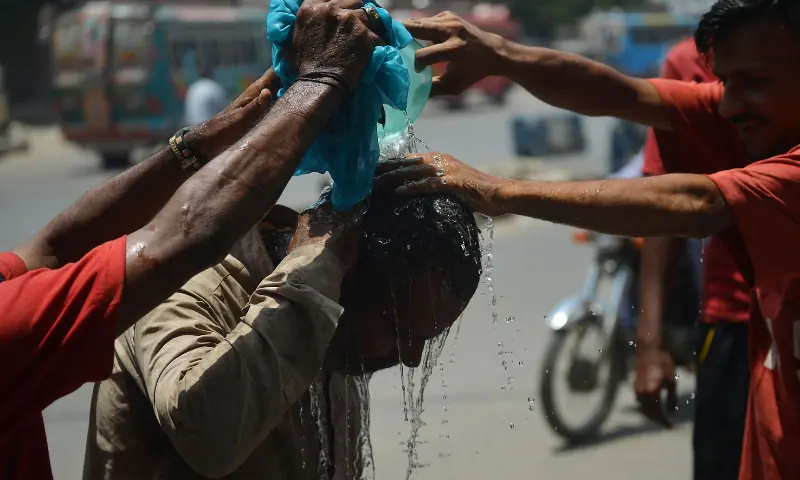
For Pakistan, the connection has been particularly direct and particularly painful. The April fuel price crisis that sent petrol to Rs 458 per litre and diesel to Rs 520 was a direct product of what the conflict did to global oil markets — and the subsequent price cuts that the government managed through rapid policy response, while welcome, have not fully returned prices to pre-conflict levels. Every month that the blockade continues is another month in which Pakistani households pay more for fuel than they would in a stable regional environment, and the cumulative economic cost of that sustained elevated pricing is significant for a country where energy costs represent a large share of household budgets.
The Trump administration's confidence that it can manage the impact on global oil supply while continuing the blockade rests on several assumptions about American production capacity and strategic reserve management that will be tested by the reality of sustained disruption. The United States has tools to influence oil markets — it can release oil from its Strategic Petroleum Reserve, it can encourage domestic producers to increase output, and it can coordinate with allied producers like Saudi Arabia to add supply. But these tools have limits, and the longer a disruption lasts, the more those limits become apparent.
The Diplomatic Contradiction — Blockade Extension and Peace Talks Simultaneously
The most significant tension in the White House meeting's revealed content is between the plan to potentially extend the blockade for months and the parallel diplomatic process that has been attempting to create conditions for a negotiated resolution between the United States and Iran. These two tracks are not simply different instruments of the same strategy — they are, in important respects, pulling in opposite directions.
Iran has made it explicitly clear, through President Pezeshkian's direct statement to Prime Minister Shehbaz Sharif, that it will not engage in meaningful negotiations while the blockade remains in place. From Tehran's perspective, asking Iran to negotiate while an active blockade squeezes its economy and its oil revenues is not a good-faith invitation to dialogue — it is an attempt to extract concessions under coercion. Iran's consistent public position is that the blockade must end before substantive negotiations can begin.
The Trump administration's position, by contrast, is that the pressure of the blockade is precisely what creates Iranian incentive to negotiate, and that removing or easing the pressure before Iran makes concrete commitments would simply allow Tehran to delay and manoeuvre without delivering anything meaningful. This is the classic "maximum pressure" theory of negotiating leverage — maintain maximum pressure until the other side concedes, then ease pressure as a reward for concession.
The problem is that the two positions are genuinely incompatible in their current forms. Iran will not negotiate seriously under blockade. America wants to maintain the blockade until Iran negotiates seriously. Without a bridge between those positions — some way of creating movement on both sides simultaneously that allows each party to claim they are acting from strength rather than weakness — the diplomatic process stalls, the blockade continues, and both sides absorb costs while waiting for the other to blink first.
Pakistan's mediation role has been focused precisely on finding that bridge — some formulation that allows the blockade to be addressed in a way that gives Iran enough relief to justify returning to the table, while giving the United States enough assurance of Iranian seriousness to justify the political cost of any adjustment to its pressure strategy. The revelation that the Trump administration has been reviewing plans for months-long blockade continuation makes that bridge-finding harder rather than easier, because it signals an American commitment to the pressure strategy that reduces Iran's confidence that concessions will be met with proportional relief.
What Oil Company Executives Bring to National Security Meetings
The presence of major oil company executives in a White House meeting about Iran blockade strategy raises legitimate questions about the appropriate relationship between private commercial interests and decisions that have enormous geopolitical and humanitarian consequences. It is worth thinking through those questions honestly rather than either ignoring them or reducing the situation to a simple narrative about corporate influence over government.
Oil company executives bring genuinely useful expertise to discussions about energy market management during geopolitical crises. They understand supply chains, production capacity, storage infrastructure, shipping logistics, and refinery operations in ways that government officials, however well-briefed, typically do not match at the operational level. Their input on how extended supply disruption would affect specific market segments, what production increases are operationally achievable and on what timeline, and what the commercial implications of different strategic scenarios look like is legitimately valuable for policy planning.
At the same time, the commercial interests of major oil companies in high oil prices are real and create a potential misalignment between their preferred policy outcomes and the public interest in stable, affordable energy. A policy that is good for American oil producer profits may not be the same as a policy that is good for American consumers, for global economic stability, or for the resolution of a geopolitical conflict in ways that reduce rather than increase long-term regional risk.
Democratic governance requires that these commercial interests are weighed against broader public interests rather than treated as the primary input to policy decisions. The process by which that weighing happens — whose voices are in the room, what framework is used to assess competing interests, and how transparent the decision-making process is to public scrutiny — matters for the quality and legitimacy of the decisions that result.
The White House meeting is notable precisely because it brings these questions to the surface in a particularly visible way. When a president meets with oil executives to discuss extending a military blockade, the question of who is influencing whom — and in whose interests the resulting policy is being shaped — is a reasonable and important public question, not a fringe concern.
The Global Impact — Who Pays the Real Price
Extended blockade strategy does not impose its costs evenly across the global community. It concentrates them heavily on oil-importing countries — particularly developing countries with limited financial buffers and limited ability to absorb sustained energy price shocks — while distributing benefits primarily to oil-producing countries and to the American energy sector.
The geography of who pays and who benefits from an extended Iran blockade is starkly unequal in ways that the geopolitical framing of the conflict tends to obscure. American consumers feel higher gas prices and reduced purchasing power. European consumers absorb higher energy costs that feed through into broader inflation. But the most acute impacts are felt in countries like Pakistan, India, Bangladesh, Sri Lanka, and much of Africa and Southeast Asia — countries where energy represents a larger share of household budgets, where economic buffers are thinner, and where fuel price increases cascade quickly into food prices, transport costs, and the basic cost of living.
Pakistan's experience is again the most directly relevant illustration. The April fuel price crisis produced by the early months of the conflict was managed through rapid government action, but at significant fiscal cost. An extended blockade lasting months would sustain elevated global oil prices that would continue to pressure Pakistan's import bill, its fiscal position, and the household budgets of ordinary Pakistanis who are already managing the consequences of a difficult economic period. The families filling motorcycle tanks at Rs 393 per litre would be filling them at even higher prices if the blockade continues to push global crude upward.
The decision-makers in the White House meeting — the president and the oil company executives — are not the people who will pay these costs. The costs will be paid by workers in Karachi and Cairo, by farmers in Bangladesh and Nigeria, by students in Manila and Nairobi who face higher transport costs to get to their universities. Their interests are entirely absent from the room where the blockade extension is being reviewed, and the policy frameworks being applied do not require their representation.
Energy Market Management — What America Can and Cannot Control
The Trump administration's confidence in its ability to manage global oil market impacts while continuing the blockade is based on a set of assumptions about American capacity to influence supply that deserve examination against the actual mechanics of how global oil markets work.
The United States has significant tools for influencing oil markets in the short term. The Strategic Petroleum Reserve — one of the world's largest — can be released to add supply to the market and dampen price increases. American shale oil production has demonstrated remarkable flexibility compared to conventional oil, with the ability to increase output relatively quickly in response to price signals. Coordination with Saudi Arabia and other OPEC-plus producers to increase their output can add further supply. In combination, these tools can meaningfully offset some of the supply disruption created by Iranian oil being removed from global markets.
But these tools have limits that become more apparent the longer they are required to work. Strategic Petroleum Reserve releases are finite — the reserve cannot be drawn down indefinitely without eventually being depleted to levels that compromise its strategic purpose. Shale production increases take time and capital — they do not happen overnight, and the economics of shale production at various price levels determine how quickly the response comes. Saudi production increases involve coordination with a sovereign country that has its own interests and that may not always align with American timing requirements.
An extended blockade lasting months — rather than weeks — would test all of these tools in ways that shorter-duration disruptions do not. The longer the disruption, the more difficult it becomes to fully offset its market impact, and the more the burden of adjustment shifts to consumers in importing countries who face sustained rather than temporary price increases.
The oil company executives in the White House meeting understand these limits as well as anyone — their businesses live and die by understanding energy market dynamics. Their participation in the planning process presumably involves an honest assessment of what market management is achievable over different timeframes, which makes their presence in the room genuinely informative about the administration's realistic assessment of what extended blockade strategy actually requires and what it costs.
Implications for the Pakistan-Mediated Peace Process
The most direct implication of the White House meeting's content for the diplomatic process that Pakistan has been leading is that it significantly complicates the environment in which that process is operating. A Trump administration that has just reviewed plans for months-long blockade continuation with oil executives is an administration that has, at minimum, mentally prepared for a long-term pressure strategy rather than being urgently motivated to close a deal quickly.
Pakistan's mediation has been working against a backdrop of urgency — the sense that the costs of continued conflict were creating pressure on both sides to find a resolution before the situation deteriorated further. If the American side has concluded that it can sustain the blockade for months while managing the market impact through coordination with the oil industry, that urgency is reduced on one side of the negotiating dynamic. Reduced urgency typically means slower negotiating progress, higher thresholds for concessions, and more patience for waiting out the other side rather than moving toward compromise.
For Iran, the knowledge that the United States is planning for months of continued blockade makes the calculus around returning to negotiations more rather than less difficult. If Tehran concludes that America is prepared to sustain the pressure indefinitely regardless of Iranian diplomatic engagement, it faces a choice between negotiating under conditions it has described as unacceptable or enduring extended economic pressure while waiting for American political conditions to change. Neither option is attractive, and neither facilitates the kind of flexible, constructive engagement that would allow the diplomatic process to produce results.
Pakistan will be watching the fallout from this meeting carefully and will be assessing how to maintain the momentum and credibility of its mediation role in an environment where the American side appears to be settling into a longer-term pressure posture rather than leaning urgently toward a negotiated resolution.
Final Thoughts
The White House meeting between Donald Trump and major oil executives about extending the Iran blockade is a window into how the American side of the Iran-US conflict is being strategically managed — and what it reveals is a combination of pressure strategy confidence, commercial interest alignment, and energy market management planning that is likely to extend rather than shorten the timeline for a negotiated resolution.
The costs of that extended timeline will be borne primarily not by the decision-makers in that White House meeting but by the consumers, workers, and households in oil-importing countries around the world who experience every month of elevated oil prices as a direct reduction in their living standards and their economic wellbeing.
Pakistan stands at the intersection of all of these dynamics — as a country whose economy has been significantly affected by the conflict's energy market impact, as the primary mediator attempting to facilitate a resolution, and as a country whose own strategic interests in regional stability give it powerful incentives to keep pushing for a diplomatic outcome even when the immediate environment makes that outcome harder to achieve.
The White House meeting makes Pakistan's diplomatic task harder. It does not make it impossible. And based on everything Pakistan has demonstrated about its resilience and its commitment to the peace process over the past several months, Islamabad will continue working toward a resolution even as the horizon for that resolution becomes less certain.