Trump Rejects Iran's Offer — Naval Blockade Will Stay Until Nuclear Deal is Signed
Iran Made an Offer — Trump Said No, and the World Holds Its Breath
For a brief moment this week, it looked like the most dangerous diplomatic standoff of 2026 might have found a workable off-ramp. Iran came to the table with a concrete proposal — reopen the Strait of Hormuz, allow international shipping to pass freely, ease the immediate economic pain on both sides, and postpone the hardest conversation about nuclear weapons to a later stage when trust had been rebuilt and tensions had come down. It was not a perfect offer. It was not even close to what Washington ultimately wants. But some analysts who had been watching the process closely described it as a genuine opening — the kind of step that serious negotiations sometimes require before the really difficult issues can be tackled.
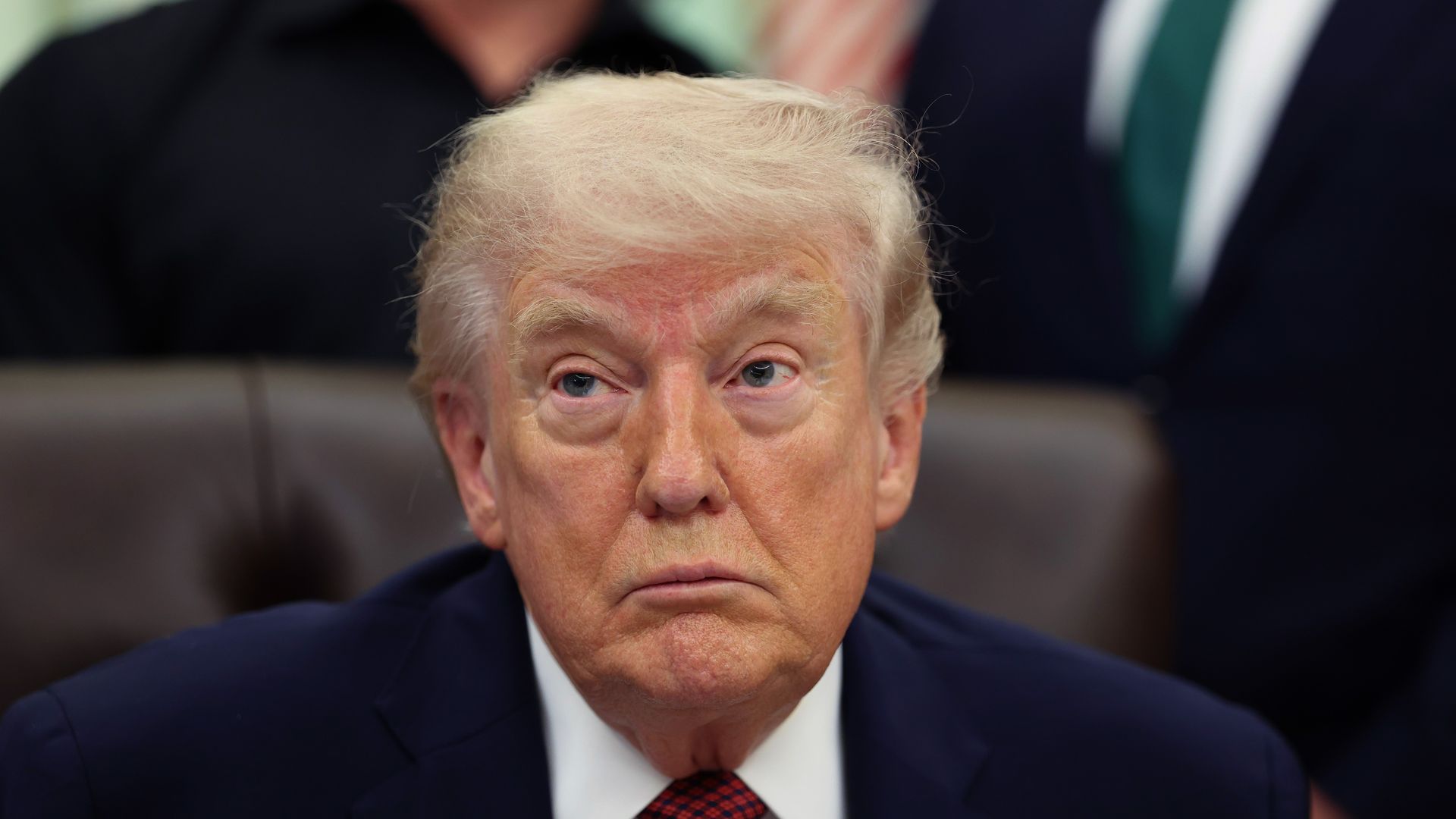
President Donald Trump rejected it completely. No partial acceptance. No counter-proposal that built on what Iran had offered. A flat rejection, delivered in a direct phone interview with Axios on April 29, with language that was blunt even by Trump's standards. The blockade stays until Iran agrees to give up its nuclear weapons programme entirely. No Strait reopening in exchange for blockade relief. No sequencing that puts the nuclear question aside while the immediate military standoff is addressed. Nuclear first, everything else after.
The rejection sent the diplomatic process — which Pakistan has invested extraordinary effort in building through months of patient, difficult work — back into a period of acute uncertainty. With Trump digging in on the nuclear demand and Iran threatening what it called "practical and unprecedented action" in response to the continued blockade, the path to a negotiated resolution looks narrower right now than it has at any point since the ceasefire that Pakistan helped broker on April 8.
What Iran Actually Proposed — Reading the Offer Carefully
To understand why the rejection matters as much as it does, it is worth understanding what Iran actually put on the table — because the specific content of the offer reveals something important about where Tehran's thinking is and what it believes it can deliver domestically.
Iran's proposal had two distinct components that together formed a package designed to reduce immediate military and economic tensions while buying time for the harder conversations. The first component was the reopening of the Strait of Hormuz — the narrow waterway between Iran and Oman through which approximately 20 percent of global oil and gas supplies normally travel. Iran effectively closed the Strait when the US-Iran conflict escalated, and that closure has been one of the primary drivers of the elevated global energy prices that have been felt from Karachi to Cairo to Chicago since the conflict began.
Reopening the Strait was not a small offer. For Iran, the Strait closure has been one of its most powerful sources of leverage — a demonstration that it has the ability to impose serious costs on the global economy in response to American pressure. Offering to reopen it in exchange for blockade relief was a significant concession of that leverage, one that Iran's hardliners would not have accepted easily and that the Iranian government could only have offered from a position of genuine assessment that the blockade was imposing unacceptable costs.
The second component was the explicit request to postpone nuclear talks. This is where the proposal's strategic logic becomes clearest. Iran knows that the nuclear question is the hardest, most politically charged, and most technically complex issue in the entire relationship with the United States. It is the issue on which Iranian domestic politics are most constrained — because hardliners who oppose any deal with America are most opposed to any agreement that touches Iran's nuclear programme, which they regard as both a strategic necessity and a national sovereignty issue.
By proposing to postpone the nuclear question, Iran was essentially saying — let's stabilise the immediate military situation first, build some trust, reduce the temperature, and then tackle the hard stuff from a position where both sides have demonstrated some good faith. That sequencing makes diplomatic sense. It is how many complex negotiations actually progress. And it was, by any objective assessment, a more flexible position than Iran had publicly signalled it was prepared to offer.
US Secretary of State Marco Rubio's reaction to the proposal was notably more measured than Trump's. Rubio acknowledged that the offer was better than Washington had expected — that Iran had moved further than anticipated in its willingness to engage. But Rubio also made clear that the administration's core demand was non-negotiable. Any deal must permanently prevent Iran from developing nuclear weapons. That requirement does not change based on what Iran offers on the Strait or on sequencing. It is the starting point, not the end point, of American demands.
Trump's Position — Maximum Pressure, Maximum Stakes
Trump's rejection of the Iranian offer and his subsequent public statements represent the clearest articulation yet of what the maximum pressure strategy actually requires in terms of Iranian concessions before any relief is provided. Understanding that position — and the reasoning behind it — is essential for understanding where the diplomatic process goes from here.
Trump's stated logic is internally consistent even if it is diplomatically demanding to the point of being potentially unachievable. The nuclear question is the central issue. Every other aspect of the Iran-US relationship — the blockade, the Strait, the regional proxies, the sanctions — is secondary to the question of whether Iran will permanently give up its nuclear weapons programme. From Washington's perspective, accepting any deal that does not definitively resolve the nuclear question means ultimately achieving nothing, because Iran retains the capability that makes it most dangerous and most able to resist American pressure in the future.
The blockade, in this framework, is not a negotiating chip to be traded for Strait access or for sequencing concessions. It is the primary source of leverage for extracting the nuclear concession that Washington considers the only meaningful outcome. Lifting or easing the blockade without receiving the nuclear commitment would, from Trump's perspective, simply relieve Iran of the pressure that is driving it toward concessions without receiving the concession that matters most.
Trump's Truth Social post, in which he said Iran "can't get their act together" and warned of "no more Mr. Nice Guy," is the public expression of this maximum pressure posture. It is designed simultaneously to signal resolve to Iran, to domestic American audiences, and to the international community watching the situation — to communicate that the United States has not run out of patience and that its demands will not soften because Iran has submitted a better-than-expected proposal that still falls short of the required concessions.
The confirmation that US Central Command has prepared plans for targeted military strikes on Iranian infrastructure — plans that Trump had not ordered as of Tuesday night but that are ready for implementation — is the operational dimension of the same message. The military option is not off the table. It is planned, prepared, and available. The decision not to use it is a choice that could be revisited if diplomatic conditions change.
Iran's Response — The Threat Behind the Words
Iran's reaction to Trump's rejection was firm, public, and notably specific in its threat language — which itself tells you something about where Tehran's internal calculations are right now.
A senior Iranian security source, quoted through state media, said that the naval blockade would soon be met with "practical and unprecedented action." That phrasing is carefully chosen. "Practical" signals that this is not rhetorical posturing — Iran is describing something operational, something it actually intends to do. "Unprecedented" signals that whatever Iran is contemplating goes beyond its existing repertoire of pressure responses — that it is considering actions that the situation has not yet seen.
What those actions might actually be is genuinely uncertain, and that uncertainty is itself part of Iran's strategic communication. If Iran specified exactly what it would do, it would both reduce the psychological impact of the threat and constrain its own options. By being specific about the intent — real, operational response — while being deliberately vague about the form, Iran maintains maximum flexibility while still communicating resolve.
Iran's Parliament Speaker Mohammad Bagher Ghalibaf's statement that patience had limits and that the answer to pressure was national unity is a different kind of message, aimed primarily at domestic audiences. It is a signal to Iranian citizens who are bearing the economic costs of the blockade that their government is not going to simply absorb unlimited pressure without responding — that there is a limit to how much Iran will endure before taking actions that change the situation on the ground.
The combination of the security source's threat and Ghalibaf's domestic reassurance gives a picture of an Iranian leadership that is under genuine pressure from the blockade, that made a real offer to try to ease that pressure through the Strait proposal, and that is now processing the rejection of that offer while trying to manage both its international positioning and its domestic political environment simultaneously.
The Strait of Hormuz — What Staying Closed Really Costs
With the Strait of Hormuz still blocked and no immediate prospect of a deal that would change that, the global economic costs of the standoff continue to accumulate in ways that are felt most acutely by countries and households that had no role in creating the conflict and have no ability to influence its resolution.
Brent crude oil prices have climbed back close to their wartime highs following Trump's rejection of the Iranian proposal. The market had briefly anticipated that the offer might lead to a deal and prices had eased somewhat — that easing reversed sharply when the rejection became public. Oil markets are efficiently processing the signal that the blockade will continue and that the Strait will remain closed for the foreseeable future.
For the countries most directly affected by elevated oil prices — Pakistan among them — the continuation of the standoff is not an abstract geopolitical story. It is a direct economic pressure that shows up in fuel prices, in transport costs, in the price of food that has to be moved from farms to markets, and in the cost of electricity generation that depends on imported fuel. Pakistan's Prime Minister Shehbaz Sharif has publicly acknowledged that the Middle East conflict is disrupting Pakistan's economic stability and that the government is working with provincial administrations to maintain subsidies in key public sectors as a result of the sustained pressure.
Every day that the Strait remains closed and the blockade continues is another day in which that pressure compounds — adding to the cumulative economic cost that Pakistan and dozens of other oil-importing countries have been absorbing since the conflict began. The households filling motorcycle tanks, the farmers running diesel irrigation equipment, the small businesses managing elevated transport costs — they are all paying, every day, for a diplomatic standoff that the parties most responsible for resolving it have not yet resolved.
The broader global economic impact extends well beyond fuel prices. Shipping insurance costs in the Gulf region remain dramatically elevated. Supply chains that depend on Gulf routing have been disrupted or rerouted at significant additional cost. The uncertainty that a prolonged standoff creates — the inability to plan around predictable energy costs — affects investment decisions and economic planning across multiple industries in multiple countries. The cumulative economic toll of the Strait closure, measured over weeks and months, is substantial and is being felt across the global economy in ways that aggregate statistics do not always capture adequately.
Pakistan's Position — Quietly Pushing, Still Committed
Through all of this — the rejected proposal, Trump's hardening position, Iran's threatening response, the continued global energy market pressure — Pakistan continues to work the diplomatic channels that it has been building and maintaining throughout this entire process. The work is quieter than it was during the headline-generating weeks of proximity talks in Islamabad, but it is continuing, and Pakistan's commitment to finding a path forward has not changed even as the immediate environment has become more difficult.
Pakistan's unique position — trusted by both Washington and Tehran in ways that almost no other country can claim simultaneously — remains its most important asset in this situation. That trust did not expire when Trump rejected the Iranian proposal. It remains available as a resource for whatever diplomatic movement becomes possible as both sides process the current impasse and assess their next steps.
The specific value Pakistan provides in the current moment is not the dramatic facilitation of proximity talks — that moment has passed for now, and the conditions for another formal round of talks do not currently exist. The value is more fundamental — maintaining the communication channels that allow both sides to signal flexibility, to test ideas, and to explore possibilities without publicly committing to positions that would be politically difficult to walk back if the exploration does not lead anywhere productive.
Prime Minister Shehbaz Sharif, Foreign Minister Ishaq Dar, and Army Chief Field Marshal Asim Munir — the three individuals who have been most central to Pakistan's mediation effort — are all still engaged, still making calls, still receiving messages, and still doing the work of keeping the diplomatic process alive even when the headlines suggest it is stalled. That persistence, maintained through multiple setbacks throughout this process, is what has repeatedly produced results when the immediate picture looked bleak. There is no reason to assume the current impasse will be the last difficulty the process survives.
Two Scenarios — What Could Happen Next
With Trump firmly rejecting the Iranian proposal and Iran threatening unprecedented action in response to the continued blockade, the situation has reached a fork in the road where the near-term outcomes divide reasonably clearly into two broad scenarios, with significant implications for everything that follows.
The first scenario is a return to dialogue — some version of continued diplomatic engagement that allows both sides to find a modified framework for the conversations they have not yet been able to complete. This could involve Iran submitting a revised proposal that addresses American concerns about nuclear sequencing while still providing enough relief from the blockade to be domestically defensible in Tehran. It could involve back-channel communication through Pakistan or Oman that identifies areas of flexibility not visible in the public positions of either side. It could involve a third-party proposal — from China, Russia, or a coalition of affected countries — that provides a face-saving framework for both sides to resume engagement without appearing to capitulate to the other's demands.
The second scenario is a prolonged impasse that gradually escalates — not necessarily to open military conflict, but to a state of sustained pressure in which the blockade continues, the Strait remains closed, Iran takes whatever "practical and unprecedented" action it has been threatening, and the global economy absorbs the compounding costs of an unresolved standoff while the parties on all sides wait for the other to blink first or for domestic political conditions to change in ways that create new room for movement.
The military strike option — the US Central Command plan that Trump has not ordered but which is prepared and available — is the wild card that could interrupt either scenario. If Trump concludes that the diplomatic process has stalled irreversibly and that targeted military strikes would break the deadlock more effectively than continued economic pressure, the situation could escalate in ways that are genuinely difficult to predict or control. The presence of a prepared military plan is itself a form of pressure that changes Iran's calculation — but it is also a potential path to outcomes that none of the parties, and certainly not Pakistan, would want to see.
The Nuclear Question — Why It Is So Hard
The central issue that is blocking progress — Iran's nuclear programme and the question of what commitments Iran is willing to make about it — is worth examining carefully, because it is genuinely difficult in ways that make quick resolution unlikely regardless of the goodwill or cleverness of the negotiators involved.
The United States' demand that Iran permanently give up any possibility of developing nuclear weapons is, from an American strategic perspective, entirely rational. An Iran with nuclear weapons would be dramatically more difficult to pressure, more able to project power in the region, and more capable of providing nuclear cover to its regional allies and proxies. Preventing that outcome is not an unreasonable American interest — it is one of the most clearly defined and most widely shared American foreign policy objectives of the past two decades.
From Iran's perspective, the demand to permanently give up nuclear weapons capability is equally rationally objectionable. Iran looks at the world around it — at Israel's undeclared but widely understood nuclear arsenal, at the fate of countries like Libya and Iraq that gave up or never acquired weapons of mass destruction and were subsequently subjected to military intervention — and draws the conclusion that nuclear weapons capability is a deterrent that protects sovereignty in ways that conventional military force and diplomatic relationships alone cannot guarantee. The demand to give up that deterrent permanently, without equivalent security guarantees that Iran has reason to trust, is a demand to be permanently vulnerable in ways that no Iranian government can easily accept.
The gap between those two positions is real and deep. Bridging it — if it can be bridged at all — requires either creative formulations that address American security concerns without requiring Iran to formally abandon its deterrent posture, or security guarantees for Iran that are credible enough to make the deterrent seem less necessary, or a level of mutual trust that simply does not currently exist and cannot be created quickly. None of those paths is easy or fast. All of them require more time, more engagement, and more willingness to explore difficult compromises than the current moment of rejected proposals and escalating threats is providing.
What the Rejection Means for the Wider World
Trump's rejection of Iran's Strait-for-blockade proposal is not just a bilateral diplomatic development — it is a signal to the international community about the terms on which the United States is prepared to resolve this conflict, and those terms have implications that extend well beyond Washington and Tehran.
For the Gulf states — Saudi Arabia, the UAE, Kuwait, and others whose economic activity depends heavily on Strait access — the continuation of the blockade and the Strait closure creates sustained pressure that their own economies can absorb in the short term but that becomes increasingly costly over a prolonged period. Their interest in a resolution is real and significant, and their ability to influence both Washington and Tehran gives them a role in the diplomatic process that is distinct from Pakistan's but potentially complementary.
For China and India — the world's two most populous countries and two of the largest importers of Gulf energy — the continuation of the standoff imposes economic costs that are large in absolute terms even if manageable as a share of their enormous economies. Both countries have their own diplomatic relationships with Iran and the United States and their own interests in how the situation resolves, and both have been watching the diplomatic process with an attention that reflects those stakes.
For the global trading system more broadly, the sustained closure of a waterway through which a fifth of global energy supplies normally travel is a stress test of the resilience and adaptability of international commerce that is being managed but that cannot be sustained indefinitely without producing significant structural adjustments in how global energy trade is routed and priced.
Final Thoughts
Trump's rejection of Iran's Strait-for-blockade proposal is a significant moment in a diplomatic process that has already produced more historic achievements than most observers expected and that now faces one of its most difficult tests. The proposal that Iran submitted was more flexible than its previous public positions suggested. The rejection was more absolute than some had hoped. And the combination of Trump's "no more Mr. Nice Guy" warning and Iran's threat of unprecedented retaliation has created a moment of genuine tension that the diplomatic process needs to survive if a negotiated resolution is ultimately to be achieved.
Pakistan remains in the middle of this — committed to the process, maintaining the channels, doing the quiet work that does not generate headlines but that has repeatedly made the difference between progress and collapse throughout this entire extraordinary diplomatic effort. That commitment does not have an expiry date based on specific setbacks, and the trust that Pakistan has built with both sides does not disappear because a single proposal has been rejected.
The path to peace is narrower today than it was yesterday. It has been narrower before and has widened again. Whether it widens again this time depends on decisions that will be made in Washington, in Tehran, and in the quiet conversations that continue through the channels Pakistan has worked so hard to keep open.
The world is watching, and hoping, and waiting. And Islamabad is still on the phone.