UK PM Starmer Says Britain Will Avoid Unnecessary Wars
Starmer's Clear Message — Britain Will Not Fight Wars That Don't Serve Its Interests
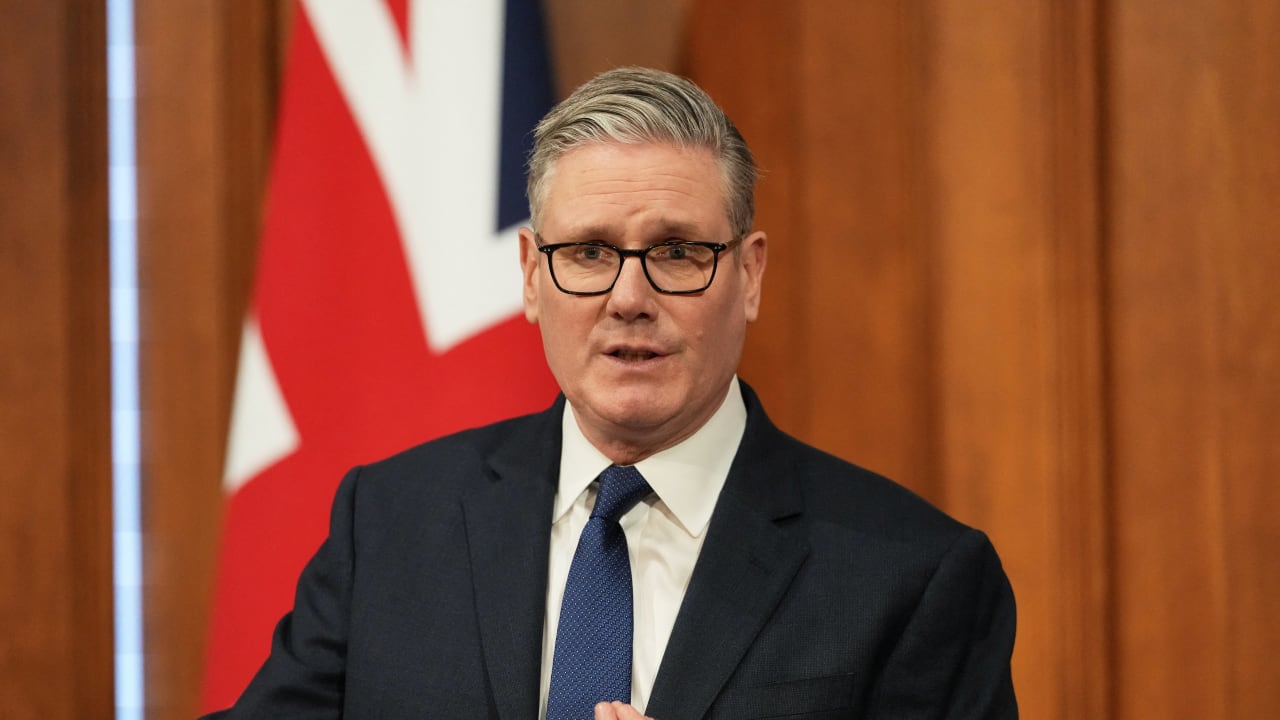
In a world where military alliances, international obligations, and the pressure of global events can pull countries into conflicts they did not start and did not choose, UK Prime Minister Keir Starmer has drawn a line. Britain, he said clearly, will not participate in any war that does not serve its national interest. The country's people and their security come first. Everything else — alliance solidarity, international pressure, moral arguments about distant conflicts — gets weighed against that fundamental principle before any decision is made.
It is a statement that sounds simple but carries significant weight in the current international environment. Coming at a moment when global tensions are running at some of their highest levels in decades, with active conflicts in multiple regions and pressure on Western nations to take clear positions on all of them, Starmer's declaration is a deliberate and carefully considered signal to both domestic and international audiences about what kind of foreign policy Britain intends to pursue under his leadership.
The statement did not emerge from a vacuum. It reflects both the political realities that Starmer is navigating at home and the genuine questions that Britain — like most countries — is grappling with as it tries to determine its role in an increasingly complicated world.
What Starmer Actually Said — And What It Means
The specific language Starmer used is worth examining carefully, because the phrasing tells you something important about both the principle being articulated and the political context it is being articulated in.
He said Britain will not take part in any war that does not serve its national interest. That framing — national interest — is one of the oldest and most fundamental concepts in international relations theory, and deliberately so. It is the language of realism rather than idealism, of pragmatic calculation rather than moral obligation. When a political leader invokes national interest as the primary criterion for decisions about military engagement, they are explicitly placing the wellbeing of their own country's citizens above abstract international principles or alliance solidarity as the first and most important consideration.
He also said that protecting the country and its people remains the top priority. Again, the framing is deliberate. Not protecting the rules-based international order. Not defending democratic values globally. Not honouring alliance commitments as a categorical obligation. Protecting the country and its people — a formulation that is both politically resonant with a domestic audience and strategically meaningful in its implications for how Britain will approach specific decisions about engagement.
He added that decisions about war must be taken very carefully and only when absolutely necessary. That qualifier — absolutely necessary — is a high bar. It suggests a disposition toward non-involvement unless the case for involvement is compelling, rather than a disposition toward engagement as a default when allies are involved or when international situations deteriorate.
None of this means Starmer is saying Britain will be isolationist or will abandon its alliances. He explicitly said the UK will continue working with its allies. But the structure of the statement — national interest first, alliance obligations second — is a meaningful ordering of priorities that departs from the kind of reflexive Atlanticism that characterised British foreign policy for much of the post-war period.
The Global Tensions That Prompted This Statement
Starmer did not make this declaration in a moment of international calm. He made it against a backdrop of global tensions that are more acute and more multi-directional than they have been in a long time, and that are creating real and specific pressure on Western governments about their commitments and their willingness to act.
The ongoing Russia-Ukraine conflict continues to demand attention, resources, and political commitment from European governments. The Iran-US conflict that erupted earlier in 2026, which disrupted global energy markets and set off the diplomatic scramble that has been playing out through Pakistan's mediation efforts, has added another major active conflict to the already crowded international agenda. Tensions between other major powers in various parts of the world continue to simmer. And the broader question of how far Western solidarity extends — what allies are actually obligated to do for each other, and under what circumstances — is one that governments across Europe and beyond are quietly but seriously reassessing.
For Britain specifically, the question of military commitment has particular political salience right now. The country spent two decades engaged in the Afghanistan and Iraq conflicts — commitments that were costly in lives and in resources, that generated enormous domestic controversy, and whose strategic outcomes were, at best, deeply mixed. The political legacy of those wars — the public skepticism about military interventions, the parliamentary battles over authorisation for military action, the ongoing debates about lessons learned — shapes the domestic environment within which any British prime minister has to make decisions about engagement.
Starmer's statement is partly a response to that domestic political environment. He is telling British voters — many of whom are genuinely worried about being pulled into conflicts that do not directly affect them — that their government will not commit their country's military and their tax money to wars without clear and specific national interest justifications. That is a politically resonant message for a public that has not forgotten the cost of the last few decades of British military involvement abroad.
Britain's National Interest — What Does It Actually Include?
The phrase "national interest" is simultaneously one of the most frequently invoked and least precisely defined concepts in foreign policy discourse. Starmer's invocation of it raises the immediate question of what Britain's national interest actually encompasses in concrete terms — because the answer to that question determines how the principle plays out in specific situations.
The most obvious and uncontested dimension of British national interest is territorial security — the defence of the United Kingdom itself from direct military attack or invasion. On this dimension, there is essentially no debate. Every government and every political party in Britain agrees that defending the country from direct attack is a fundamental obligation that justifies military response.
The more contested dimensions involve indirect threats and broader strategic interests. Does maintaining freedom of navigation in key international waterways serve British national interest? Almost certainly yes — Britain is a significant trading nation whose prosperity depends on global commerce flowing through the sea lanes, and disruptions to those routes have direct economic consequences for British businesses and consumers. Does maintaining the security of close allies serve British national interest? Yes, to the extent that those allies contribute to Britain's own security and that their collapse would create threats that would eventually reach Britain directly.
Does defending democratic governance globally, or supporting international institutions and the rules-based order, serve British national interest? This is where the debates get more complex. Britain has historically argued that it does — that a world with functioning multilateral institutions, respected international law, and strong democratic alliances is a world in which Britain is more secure and more prosperous than a world without those things. But translating that general proposition into specific military commitments in specific conflicts requires judgments about proportionality, effectiveness, and achievable outcomes that are genuinely difficult and genuinely contested.
Starmer's statement does not resolve those contested dimensions. What it does is signal a disposition — a preference for caution, for high evidentiary standards before committing to involvement, and for a clear connection between the specific conflict and specific British interests before the government is prepared to act. That disposition does not exclude engagement in any of these areas. But it sets a higher bar for it than a more reflexively interventionist posture would.
The NATO Question — What This Means for Britain's Alliances
The most immediate practical question raised by Starmer's statement is what it means for Britain's commitments within NATO and its other alliance frameworks. NATO's Article 5 — the collective defence provision that treats an attack on one member as an attack on all — is the cornerstone of the Western alliance and the bedrock of European security architecture since the Second World War. How does a "national interest first" foreign policy doctrine interact with an alliance obligation that, by definition, extends national defence commitments beyond purely domestic calculation?
Starmer's answer, implicit in his statement that Britain will continue working with allies, is that NATO commitments remain intact — that defending a NATO ally from direct attack is itself a British national interest, because the credibility of collective defence is a public good that serves Britain's own security as much as anyone else's. The logic is that if Article 5 is not credible — if allies can simply invoke national interest calculations to opt out of collective defence obligations — then it provides no real security guarantee to anyone, including Britain. Maintaining the credibility of the alliance is therefore a British interest, not just an obligation.
Where the distinction matters is in the space beyond direct Article 5 obligations — the grey zone of conflicts and crises that do not trigger formal alliance commitments but where there is nonetheless political pressure on Britain to contribute military capabilities or political support. It is in exactly this space — the space of Iraq, Afghanistan, Libya, Syria, and now potentially various aspects of the current global situation — that Starmer is saying British decisions will be made on national interest grounds rather than on the basis of alliance solidarity or moral pressure alone.
That distinction is meaningful and will likely become important as specific situations arise that test it. The principle is clear enough in the abstract. The application of it to specific cases will be where the real substance of British foreign policy under Starmer becomes visible.
How Britain's European Partners Are Likely to React
Britain's relationship with its European neighbours has been complicated since Brexit, and Starmer's foreign policy statement will be received by different European governments in different ways depending on their own security concerns and their assessments of Britain's role in European security.
For the countries most directly exposed to Russian military threat — Poland, the Baltic states, and other eastern European NATO members — any statement that could be read as Britain hedging its defence commitments is likely to be read with concern. These countries have invested significantly in their own defence and in their relationship with the Anglo-American security architecture. A British prime minister explicitly conditioning his country's military engagement on national interest calculations raises questions, however fair or unfair, about the reliability of British commitment in a crisis.
For western European countries that have their own ambivalent traditions regarding military engagement — France with its independent strategic culture, Germany with its constitutional and historical constraints on military action — Starmer's statement will likely read as relatively unremarkable. The idea that nations make military decisions based on national interest is not controversial in most European capitals. It is the basis on which all foreign policy is ultimately conducted, whatever the official doctrine says.
The context of Britain's post-Brexit positioning also matters here. Starmer has been working to rebuild constructive relationships with European partners after the strains of the Brexit years, and his foreign policy posture is in some ways an attempt to reassure European allies that Britain remains a serious and engaged partner while simultaneously maintaining the domestic political credibility that comes from being seen to put British interests first.
The Domestic Political Calculation
No analysis of Starmer's statement would be complete without acknowledging the domestic political calculations that shape it. British politics is currently navigating a period of genuine uncertainty about the country's international role, and the public mood on military engagement has been significantly shaped by the experience of the last two decades.
Polling consistently shows British public skepticism about military intervention abroad, particularly when the connection to direct British interests is not clear. The Iraq war, in particular, left a lasting mark on British political culture — the combination of the controversy around the decision to go to war, the failure to find weapons of mass destruction, the long and costly insurgency that followed, and the sense that Britain was pulled into a conflict on the basis of intelligence that proved unreliable have created a residual public wariness about military commitments that any political leader has to take seriously.
Starmer's "national interest first" framing speaks directly to that wariness. It is a promise to voters that the government will not commit their country to conflicts on the basis of alliance pressure, moral arguments, or geopolitical calculations that do not have clear implications for British security and welfare. That promise has genuine political value in the current environment, and it is not surprising that a leader navigating a challenging domestic political situation would want to make it clearly and publicly.
The risk of the framing is that it can be read as a licence for inaction in situations where British engagement might actually matter — where the cost of non-involvement, accumulated over time, ultimately becomes greater than the cost of early engagement would have been. The history of international conflicts is full of cases where early and credible deterrence would have prevented larger conflicts that eventually cost more in every dimension than the deterrence would have. A "national interest first" doctrine, applied with genuine caution about the definition of national interest, can slide into a passivity that serves national interest less well in the long run than it might appear to in the short run.
Starmer is aware of this risk. His qualification that Britain will continue working with allies, and his acknowledgment that decisions about war must be taken very carefully rather than avoided categorically, suggest that the statement is intended as a calibration of approach rather than a retreat from engagement. But the line between careful calibration and excessive caution is not always easy to hold in practice, especially under the pressure of specific situations that demand clarity about what Britain is and is not prepared to do.
The Broader Pattern — A World Reassessing Its Commitments
Starmer's statement is not an isolated development. It is part of a broader pattern visible across multiple countries as governments reassess the commitments they have accumulated over decades of international engagement and ask hard questions about what they are actually able and willing to sustain in an increasingly demanding global environment.
The United States under Trump has been asking similar questions — loudly and sometimes abrasively — about the burden-sharing arrangements within NATO and about the terms on which American military power is deployed globally. European countries have been forced, partly in response to American pressure and partly in response to the Ukraine conflict, to think more seriously about their own defence capabilities and the extent to which they can rely on others to provide their security. Countries in the Global South are increasingly asserting their right to non-alignment and to making their own calculations about where their interests lie rather than falling into line with either Western or Russian and Chinese positions.
The emerging international environment is one in which the easy assumptions of the post-Cold War period — that Western alliances were essentially self-sustaining, that international institutions would manage most conflicts, and that the rules-based order was robust enough to handle challenges without requiring constant active maintenance — are being tested and in many cases found wanting. Countries that assumed they could outsource significant portions of their security to alliance structures are discovering that those structures require more active and more costly maintenance than they had planned for.
Starmer's statement is one contribution to the collective conversation that governments around the world are having about what their international commitments should look like in this new environment — more honest, more specific, and more grounded in national capacity and national interest than the aspirational language of the post-Cold War period sometimes allowed.
Final Thoughts
Keir Starmer's declaration that Britain will not participate in wars that do not serve its national interest is both a straightforward political statement and a carefully calibrated foreign policy signal that will be parsed by allies, adversaries, and observers around the world.
At its most basic level, it is a promise to British voters that their government will not commit their country's military and resources to conflicts without clear and specific reasons rooted in British interests. That promise is politically resonant and not unreasonable as a general principle of governance.
At a more strategic level, it is a signal about the kind of international actor Britain intends to be under Starmer's leadership — engaged but not reflexive, allied but not unconditionally so, willing to act but demanding a high standard of justification before doing so. That posture has both strengths and risks, and how it plays out in practice will depend on the specific situations that test it.
What is clear is that Britain, like most major countries right now, is in the middle of a genuine reassessment of its international role and its willingness to bear costs that are not clearly connected to its own interests. Starmer's statement is an honest reflection of that reassessment. Whether it represents wisdom, caution, or the beginning of a retreat from international engagement that Britain will eventually regret is a question that only time and events will fully answer.
For now, the message is clear. Britain will choose its battles carefully. And it is telling the world exactly that.