
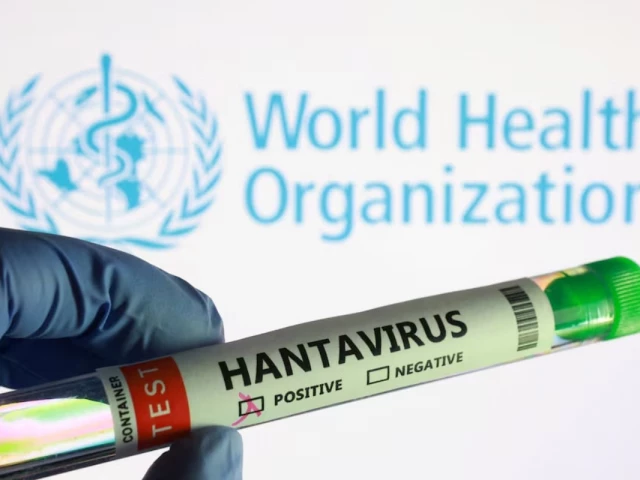
WHO Races to Contain First Ship-Borne Hantavirus Outbreak After Three Killed on Cruise Ship
GENEVA — World Health Organization officials are racing to draw up emergency guidance as a cruise ship hit by the first-ever recorded hantavirus outbreak sails towards Tenerife, with three people dead and at least eight others infected or suspected of carrying the deadly virus. The unprecedented outbreak on a commercial cruise vessel has triggered a global health response, with experts scrambling to adapt existing protocols for the nearly 150 passengers still aboard.
Half a dozen current and former WHO officials and hantavirus experts said the outbreak could be managed by adapting standard public health steps, like isolating sick passengers or those who may have been in contact with them. None of the passengers on the ship now have symptoms, the ship's operator has confirmed.
The Outbreak
The hantavirus outbreak has claimed three lives among at least eight suspected or confirmed infections, marking a significant public health event as it represents the first known transmission of the virus aboard a cruise ship. The vessel is expected to reach land on Sunday, where enhanced screening and quarantine measures will be implemented.
- Andes Virus Strain — The outbreak involves the Andes strain of hantavirus, the same strain that caused an outbreak in Argentina in 2018-19 that infected 34 people and killed 11
- Incubation Period — The Andes strain has a long incubation period, with WHO recommending daily temperature monitoring for at least 42 days for those with links to the outbreak
- Transmission — The virus spreads through close and prolonged contact, chiefly when a patient is already symptomatic
- High Fatality — Hantaviruses can have fatality rates of up to 50%, making rapid containment critical
WHO Response and Guidance
"If we follow public health measures and the lessons we learned from Argentina ... we can break this chain of transmission. This doesn't need to be a large epidemic," said Abdi Rahman Mahamud, director of the WHO's alert and response coordination department.
The WHO is drawing up comprehensive guidelines that include isolating sick people, monitoring and quarantining other passengers, and implementing contact tracing for anyone who has already left the ship. National governments will make the final decisions on implementation.
International Measures
Several governments are already implementing containment plans. The UK government announced on Friday morning it would repatriate its citizens on a flight under strict infection-control measures, with passengers asked to isolate for 45 days and undergo testing as required.
Officials are also seeking guidance from Argentina, where the previous Andes virus outbreak was successfully contained in 2019 through basic social distancing measures. "We essentially learned that once you implement basic measures of social distancing, that diminished the circulation and the outbreak burned out," said Gustavo Palacios, a professor at Icahn School of Medicine at Mount Sinai who advised on the Argentine outbreak.
Passenger Classification
Passengers are being split into high-risk and low-risk contacts based on their interactions with sick travellers. The WHO may also recommend that some people with links to the outbreak take their temperature daily for at least 42 days and be given a phone number to call if they feel unwell.